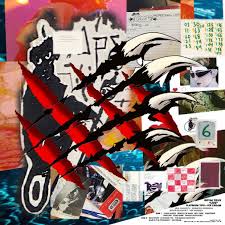
Royal Trux – Platinum Tips and Ice Cream (2017)
“Junkie Nurse”, the first track on the live album released alongside Royal Trux reunion tour, lets you know exactly what they are about. It is a slurred, sleazy, staggering account of stealing prescription drugs. Neil Hagerty’s guitar and Jennifer Herrema’s vocals are dragged in off the streets after a night passed out under a flyover. The track has apparently been recorded on somebody’s phone. It is a complete mess, and glorious with it. This is what Royal Trux have to offer.
Despite their unconcealed heroin habits and disdain for the sensibilities of music corporations, Royal Trux achieved major label status in the 1990s, holding out among the post-grunge wave of signings until Virgin gave them the terms they wanted. They responded with two albums the last of which, ‘Sweet Sixteen’, featured a famously grim toilet bowl as a cover. The band then returned to Drag City and released a sequence of of four turn-of-the-century albums which, in failing to fit the indie, grunge or rock templates on offer, sounded like nothing else. Then they split, leaving a trail of ludicrous drug stories and the respect of their peers, who saw through the junkie couple headlines to the originality of their songs. Hagerty brought his spiky, feedback-laden guitar to The Howling Hex, a slightly more structured cousin to Royal Trux.
Given their disdain for musical convention, a reunion to hit the nostalgia market has to be more than it seems. Fifteen years after splitting, Hagerty and Herrema have again been lurching around Europe and the States, making a series of brief appearances on stage during which they argue, drink and sometimes play songs. Their gigs have ended abruptly when one or other has no longer been able to stand up. ‘Platinum Tips and Ice Cream’ faithfully records this atmosphere of uncontrolled chaos, punctuated with moments of exceptional coherence.
‘Platinum Tips…’ strips apart tracks from the full range of their career, rendering them looser, dirtier, nastier and messier than their originals, quite an achievement. If you thought “Waterpark” from ‘Veterans of Disorder’ was too fresh-faced and clean on the original, Royal Trux have fixed that for you. If you were hankering after “Esso Dame” from their first, self-titled album all the way back in 1988 it’s here, sounding as though Sonic Youth could really learn a thing or two. “The Banana Question” from ‘Accelerator’ is ridiculous and irresistible, a rerailing, rollercoaster of a song. Royal Trux are experts in doing precisely what they please, and this album is the ultimate expression of their truly uncontrollable energy. They have dedicated themselves completely to subverting both the indie nostalgia industry and their own back catalogue, and the results are part performance art, part musical genius. The album is essential for understanding what Herrema and Hagerty are trying to achieve.
Moon Duo – Occult Architecture Vol. 2 (2017)
If you missed Occult Architecture Vol. 1, released in February, you will be pleased to know that prior knowledge is not required to enjoy its companion piece. Moon Duo, an off-shoot of Wooden Shjips consisting of Erik Johnson and Sanae Yamada, are themselves only five albums into their career. Like the slow motion, glacial psychedelia in which they specialise, they evolve at the speed of spaced out sloths, but evolve they do. While Vol 1 was a dark, sometimes satanic record, Vol. 2 is its inverse, full of light, hope and expanded minds.The two Occult Architecture releases, broken in two partly because 90 minutes is a lot for one album, are undeniably Moon Duo records. They are deep-lying, underwater, troves, grooves buried in thick sand. Their echoes, like the band’s previous music, pull the rays of the sun down into the dark depths through guitar-heavy psychedelic sounds. However, the full weight of Escape, Mazes and Circles has lifted a little. While not exactly a pop record, it has a lighter, more melodic atmosphere which connects back to The Electric Prunes, The Seeds and The 13th Floor Elevators, as well as Blue Cheer.
Opening track ‘New Dawn’ builds uncertainly before lurching into a familiar Moon Duo groove and soft, crooning vocal. However, tracks that follow are downright gorgeous, with titles that reflect the new levels of blessedness that the Duo have, through means best known to them, manage to achieve. If satori is not located somewhere within the joyful seven minutes of hi-hat shimmer and bouncing guitar that is ‘Mirror’s Edge’, we may as well abandon the search. ‘Sevens’ has effervescent drums and lyrics that are difficult to catch, but concern journeys around the sun. ‘Lost in Light’ then slows the same riff right down, to eerie effect, giving the vocals more echo and space, while guitars start to wail and screech. It is accompanied by a ludicrously psychedelic video. This is the still centre of the album, and the final track, ‘Crystal World’, resurfaces with a cheerful bongo beat and airy electronics.
Occult Architecture Vol. 2 requires full immersion, but then so does the rest of Moon Duo’s music. They do not compromise, diving straight in the deep end. If you are willing to follow, it can be hard to hear other music in the same way again. Vol. 1 and Vol. 2 together deal comprehensively with dark and light, good and evil, which is probably as much as you can ask from any band. If you liked Moon Duo before, you’ll like this. If you didn’t, Vol. 2 might just draw you into their trippy orbit.
Bardo Pond – Under the Pines (2017)
In the week My Bloody Valentine resurfaced on stage, waving or drowning in a rip tide of feedback, you might conclude there is something in the air. With a fortuitous timing Bardo Pond have also chosen to release their last-but-one album, Ticket Crystals. First out in 2006, it bears certain resemblances to the MBV sound, but influences are a starting point rather than a destination for Bardo Pond.
The Philadelphia five-some have been around since the mid-90s, developing a complex, fascinating, psychedelic sound and an impressive underground reputation. Proof that they have a quality fan base came last year when Alexander Tucker wrote included an entire song about them, ‘Sitting in a Bardo Pond’, on his quiet masterpiece Third Mouth. The song represented them as a portal to a parallel reality, a fair assessment of their mission. Ticket Crystals is an immersive, drug-fuelled album that intrudes on reality and alters it without asking permission.
It is always good to set out your stall with the first track on an album, to make a statement. ‘Destroying Angel’, an uncompromising title for a song, grabs the listener by the hair and drags them under. It begins with some misleadingly gentle acoustic guitar, quickly joined by a wall of low frequency twin guitar grind. This is familiar Bardo Pond territory, and they do it exceptionally well. In comparison to more recent bands such as Wooden Shjips, their brand of swirling, kosmiche guitar rock is almost playful. Unlike Shjips, who will not let anything distract them from the groove, Bardo Pond have time for improvised, near-jazz riffs that sweep across the heaving malestrom. However, there are pastoral elements to the music as well, hinting heavily (in both senses) at Led Zeppelin and rotating around Isobel Sollenberger’s all-purpose psych-rock vocals (“Sweet dreams, straying to the sun” etc.).
Having opened up rifts in multiple time-space continua, the band start to frolic in the resulting space. ‘Isle’ is flute-driven, the guitar rumble more distant and subterranean, occasionally bursting through Sollenberger’s ecstatic singing, which is about constellations and stars. Its flutey-ness, and the reappearance of flute (also Sollenberger) throughout Ticket Crystals, seemed to offend reviewers when first released, apparently on the basis that flutes are ‘prog’. In fact, Bardo Pond’s use of the flute is effective and original, giving new life to a misunderstood instrument. Like ‘Destroying Angel’, ‘Isle’ is 10 minutes of powerfully balanced band dynamics, with a delightful false ending involving a lone guitar, squealing in ecstasy.
The centre of the album is three shorter tracks. ‘Lost Word’ deconstructs the mix into layers of multi-tracked vocals, bells, guitar lines and flute, entering the domain of Bardo Pond favourites the Sun Ra Arkestra, and delivering a layered, complex soundscape. ‘Cry Baby Cry’, by contrast, is a surprise: a cover of perhaps the most overlooked and trippiest of the Beatles’ White Album tracks. It’s a neat selection, but covering Beatles’ songs always seems a fairly pointless exercise, unless you plan to seriously mess around with them.’ ‘Endurance’ resumes normal service, a pulsing track about an endless walk.
‘FCII’ is where Bardo Pond conquer their peak, with 18 minutes of extremely spaced out music. We are deep in space, innumerable light years from home. The engines are fluttering in and out of life, the ship is drifting, but the stars flicker and gleam while colours whirl and snake in the black void. This is clearly the track Bardo Pond enjoyed the most, and it is peerless stuff, a vast, high, open soundscape.
It is hard to follow a track that fits the band like a glove, but Ticket Crystals offers up two 11min 11secs closers. ‘Moonshine’ has a gentle, unworldly melody and lyrics to match (lyrics are not really Bardo Pond’s strong point, or indeed the point of their music). Muscular guitar lines give way to washes of reverb and feedback, although perhaps with less impact that similar tracks than earlier in the album. Finally, ‘Montana Sacra II’ is an improvised soundtrack segment to part of Alejandro Jodorowsky’s famed cult film The Holy Mountain. Although highly atmospheric, with dialogue playing in the background, it would undoubtedly work a lot alongside the film for which it was recorded.
Ticket Crystals, despite a couple of weak spots, is a powerful album that has gained in status and influence since it first came out. Any record that can make your vision wobble through sheer intensity of sound deserves respect. For anyone who likes exotic improvisation, disconcerting volume levels and mind-altering aural assault from seriously good musicians who like to get high and stay high, this is for you.
ANOHNI – Paradise EP (2017)
Buried past the end of the final song on Paradise, the voice of an unidentified woman asks “Everything is going upside down. How are we going to work on it, work on it to make it better? All of us.” Before we reach her words of warning, we have encountered an ominous funeral march intro, a dystopian vision of hell, an impassioned rant directed at Christians and a lot of other people, a song in which a mother repudiates her own child, a song about hating God and, just to finish it off, a ecological apocalypse. It is fair to say that ANOHNI has taken up where they left off with Hopelessness, confronting the ills of the new, fragmented, hate-driven politics head on.
Paradise, consisting of six songs, showcases the remarkable, unlifting confidence of the last year’s acclaimed Hopelessness. Transformed in a new identity, the former Antony Hegarty became a prophet – her commanding voice searing and impossible to ignore on songs such as ‘Drone Bomb Me’. Paradise is a coda, but no throwaway extras release. A carefully assembled set of songs creates a different atmosphere to its parent album, with Daniel Lopatin joined on production by Hudson Mohawke to add a new level of clubby bounce to the ditch dark subject matter.
‘In My Dreams’ opens with rushing winds, a wistful solo organ melody and massed harmonies, but this proves to be a decoy. The organ fades and the big, club beats of title track ‘Paradise’ take its place, full of the snare rolls and Mohawke. Exceptionally listenable, it combines statements of existential despair – “Hopelessness, I’m here not here” – with enormous, stomping beats and a delicate melody, and eerie duck call effects. It is a heady mix. If ‘Paradise’ is the high point, songs such as ‘Jesus Will Kill You’ (pan pipes, a grunty sample, deep bass), ‘You Are My Enemy’ (AHNONI’s purest vocal tones, church organ, door slamming kick drums) and ‘Ricochet’ (the lyric “I’m going to hate you, my God, for making me this way”, plus steam hammer percussion) deliver the goods. Paradise walks the fine line between eternal Goth gloom and irresistible tunes, while leaving none of society’s ills unaddressed. More power to AHONHI for expressing our collective anger and telling it like it is.
Laura Marling – Semper Femina (2017)
Semper Femina is already Laura Marling’s sixth album, and with each release she stands out further from the pack. Her last record, Short Movie, had Marling living in California and singing like a Californian. She gave interviews about cutting her ties and going on the road looking for adventure on the road, which were both impressively assured and slightly disturbing. On Short Movie Marling had not found whatever she was looking for, and her powerful songs were also unsettled. Semper Femina was also recorded in LA, but it exudes new Joni Mitchell levels of songwriting sophistication, and English voice set against the vast skies of another continent. It is also a less angry, more confident work, and her best yet.
The album’s title reworks an infamous line from Virgil, “Varium et mutabile semper femina” – “Woman is forever changeable and fickle.” Marling snips its meaning so it becomes “Woman is forever”, a declaration of intent. The nine substantial and complex songs on Semper Femina are narrated by women, whose identities mesh with Marlings, examining who they are, where they are going, what they will become.
‘Soothing’ is a simmering retort to an unwanted lover, from a narrator who may or may not be alive. A brooding acoustic guitar riff sends out a warning like a threshold hex. ‘The Valley’ is a mellow, troubled ballad slowed down to a heat haze crawl, with strings and softly plucked guitar rolling around a lyric concerning about a woman who is “down there in the valley”. The energetic ‘Wild Fire’ brings out the Joni in Marling most strongly, as her voice drifts across the Atlantic and takes on a soulful edge. She sounds fantastic, the song relaying conversations with another woman, a lover possibly, who is warned “You can stop playing it all out on me.”
‘Wild Once’ is a finger-picked contemplation, as Marling seeks to recover the lost wildness of childhood: “You are wild, and you must remember” she sings, her measured vocals covering hidden menace. On the contemplative ‘Always This Way’ Marling declares her intention of making her own way, despite “Twenty-five years and nothing to show for it.” The final song “Nothing, Not Nearly’, featuring a growling electric guitar, could be an epitaph to her time in the States. She declares that the only thing she learned “In a year when I didn’t smile, not really” is that nothing matters more than love “No, nothing, no, not nothing, not nearly”. It is seriously rousing.
Semper Femina shows Laura Marling continuing to grow in stature as songwriter. She has an ability to weave narrative songs in an out of her own life to create a powerful picture of people in place and time. Building on her formative folk origins has allowed to her to write original songs about what she knows, which seem to have been around for ever. There will be another six albums before we know it.
Alasdair Roberts – Pangs (2017)
Alasdair Roberts, from the recesses of the alternative Glasgow music scene, has grown steadily and inevitably in stature. As a modern folk magus, he sings old songs as though they were new, and writes new songs as though he had unearthed them carved into granite by ancient, nameless hands. His discography has been a secret, enduring pleasure – eight albums of intensely felt, intellectually rigorous, beautiful songs, delivered in a traditional style that sounds exceptionally fresh. He sings them solo, on tiny stages and back rooms across the country, stepping from the crowd with his guitar to leave listeners transported, rooted to the pub carpet. He also sings with a string of collaborators – the ‘& Friends’ of his previous release, ‘A Wonder Working Stone’ – who lay colour and texture under his reedy voice and dancing acoustic guitar.
‘Pangs’, long-awaited, at least among Roberts’ many fans, is a mature work, in which exceptional songs are given room to breathe, loving worked upon by musicians including Alex Neilson of Trembling Bells, serial Scottish guitarist Stevie Jones, and a parade of Glasgow-based instrumentalists. The result is a classic of its kind.
The title track, which opens the album, has the eerie familiarity of a song that must, surely, have been written in the 17th, not the 21st century. It is a lament for a future that only awaits “the day our king comes o’er the border”. The sorrowful melody, over a deep, funeral procession bassline and muffled snare drums, Roberts keening a communal lament, suggests a death march that can never end. The opening verse – “Friend of mine, come in to dine / and drink with me now times are harder / bitter nuts and sour wine / and all we find within the larder” – sets a dismal tone, and the abdication of responsibility for change to the king who will never arrive becomes a direct reflection of our political culture as democratic lights go out across the Western world.
However, not all is gloom, and the glory of ‘Pangs’ comes in its gorgeous shifts of tone, from despair to ecstasy. On ‘An Altar the Glade’ a pair of scurrying acoustic guitar echo each other across a sinister yet bouncy woodland parable, complete with barking dog. ‘The Breach’ rolls around a fiddle melody worthy of Dave Swarbrick in early ‘70s Fairport Convention.
Elsewhere, cheerfulness levels reach new heights, with a Morris tune threatening to become a boogie on ‘The Angry Laughing God’, and ‘The Downward Road’ bringing a folk-rocking abandon to particularly arcane lyrics (“Sparrows twelve were the birds he moulded / moulded of the living clay”), telling a tale of creation and morality worthy of a treatise on medieval alchemy.
The lyrics are alive with antiquated poetics, a style that is entirely unique to Roberts. His writing is beautiful and captivating, but neither separate or distant. He sings as though an unbroken folk tradition had continued in a parallel culture, drawing our present, dark times into its embrace and making our concerns part of an ancient cycle in which reality and magic interweave across time. Every song on ‘Pangs’ matches its lyrical density with delightful layers of subtle instrumentation, the sound of a band born to play together. It is perhaps as a conductor and enabler of co-operation, the pole for a shifting group of players, that Roberts has the most to offer. As ‘Vespers Chime’ declares, “We will live in magnificence if we can,” a much-needed manifesto for a glorious future.
 Tom Bolton