The Comedy of Errors

Image by Pete Le May

The Comedy of Errors by William Shakespeare – Barbican Theatre, London

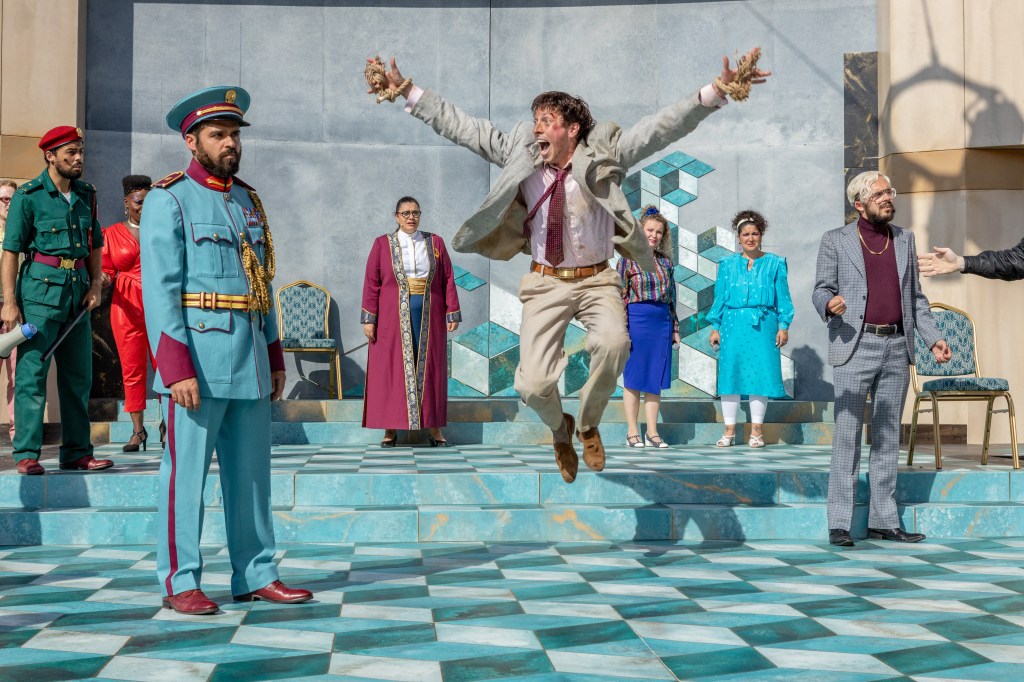
Like all theatre companies, the Royal Shakespeare Company has experienced a tough 18 months, so it is fortunate that artistic director Gregory Doran’s complete cycle of Shakespeare’s plays, derailed by the pandemic, had reached The Comedy of Errors when the curtains went down in 2020. No Shakespeare play is better placed to provide the pure entertainment that has proved a hit with returning audiences. Directed by Philip Breen, now established as the RSC’s comedy specialist, the production transfers from Stratford-upon-Avon, where it played in the temporary Garden Theatre. Honed in the open air with nowhere for the actors to hide, it is a riot.

Breen and designer Max Jones have conjured a 1980s Ephesus, overrun with gleefully realized costumes. Dresses are teal, tights are cerise, shirts are splashed with geometric pastels, and braces are in evidence. Military uniforms are in fetching pale blue or green from a Tintin fantasy South American republic. Pale stone walls and a chequered marble floor suggest a Mediterranean setting, but the ambience is that of a parallel, heightened, frantic version of reality. 

The mood is carefully balanced between oppression and anarchy. The chill of the first scene, as Antony Bunsee’s gaunt, abject Egeon is sentenced to death for passport offences, dissolves as the dignity of the Duke of Ephesus and his courtiers is dismantled in the escalating chaos. A few scenes are needed to wind up the tension caused by the confusion between two sets of identical twins – the Antipholus brothers and their servants, the Dromios. Hedydd Dylan’s excellent Adriana, pregnant and furious, marches on her supposed husband and, haloed in hairspray, delivers an inspired rant about fidelity. From then on, the production cannot be stopped.

The pairs of twins are passably similar in appearance but are distinct characters. Guy Lewis plays Antipholus of Syracuse, newly arrived in town, as the naive victim of events beyond his control. Rowan Polonski’s Antipholus of Ephesus is all sharp suits and moneyed front. This makes it all the funnier when the provocations finally become too much and he loses it completely, leaping about in a manic fury that terrifies the entire theatre. Breen carefully builds the farce to a sustained peak, releasing the tension in a series of sustained physical comedy masterclasses. Lewis spends an entire scene wrestling an officer into increasingly unlikely positions, while trying to explain himself to Dromio. Polonski’s star appearance at a ribbon-cutting ceremony is derailed with inventive use of the scenery. Lewis and Broadbent turn hoary jokes about an amply proportioned kitchen maid into a strange stand-up routine. A live barbershop quartet soundtracks the entire performance, as much part of the action as the rest of the cast. 

Jonathan Broadbent, as Dromio of Syracuse, is initially more suave than his twin (played by Greg Haiste), who is always heading for a pratfall. His disintegration in the face of provocation is a delight, but the two also share a surprisingly moving final reunion scene. The darker aspects of the play are also highlighted, masters and mistresses showing a disturbing tendency to beat them both at every opportunity.

The production features many other enjoyable performances. Avita Jay’s Luciana is the beleaguered, outraged voice of normality. Baker Musaka has a lot of fun as Angelo, the goldsmith, first saucy then outraged then fearful, as he is menaced by “merchants” to whom he owes money. These come in the inspired form of criminal boss William Grint, a deaf actor who signs his lines, and his Russian bodyguard (Dyfrig Morris) who interprets his threats, which are made in gory dumb show. Riad Richie makes the most of his background role as a guard with scene-stealing antics that turn him into an audience favourite. Toyin Ayedun-Alase’s Courtesan wears a full Grace Jones catsuit and hair, and has the presence to match.

Farce is a difficult genre to get exactly right, but Breen does the play and the company proud. His awareness of RSC history, handled lightly, brings an extra layer of pleasure: a black and white chequered shopping bag, a tribute to Ian Judge’s wild 1990 production, or the ginger Dromios, reminiscent of Jonathan Slinger and Forbes Masson in Nancy Meckler’s 2005 version. His production brings people together in the shared enjoyment denied for so long, but also succeeds in drawing out impressive nuance from a play that can seem shallow in the wrong hands. The final scenes bring the mood down from high farce to an almost Winter’s Tale-like redemption, as the reunited twins circle each other in wonder and their family reappears all around them. It is the culmination of a triumphant evening, and a production that has the quality to fill the Barbican up again. 

Endurance

Endurance by Jennifer Jackson – Battersea Arts Centre, London

Endurance takes the form, disconcertingly, of an endurance test for the main performer, Jenni Jackson. Emerging from a Bolivian carnival costume with outsize demon head, she turns out to be dressed for running. Lacing up her shoes in silence, she begins a series of curving, 6 second runs from one corner of the stage to the other and back again. She continues this, more or less, for nearly an hour, becoming more and more physically distressed. A monitor projects her heart rate and a computerised voice, also captioned onto the screen, offers commentary, encouragement, advice, discouragement and alarming predictions in a computerised voice. The stream of Jackson’s thoughts is revealed to us, ranging from funny – unhinged motivational messages and failures to get out of bed to train – to wider cultural context – her Bolivian mother, the carnivals of La Paz and the story of Bartolina Sisa, a 17th century Aymaran resistance leader, dismembered by the Spanish. Her own life is also drawn into the mix, including an experience of sexual harassment in public and an apparent betrayal. The computer voice is male, and Jackson seems to struggle against the sometimes controlling messages projected onto her by men. At one point the voice just repeats her name, again and again, as her heart rate soars. Then she breaks free, somehow finding the energy to perform a moving and very impressive dance piece with a besuited carnival figure of death who appears from nowhere.

There is lot going on in Endurance, too much at times. In the absence of any information for the audience, it is impossible to know who directed or worked on the show, but it could certainly be tightened to focus its effect. Nevertheless, it is quite an experience. Jackson’s running is a conceptual art performance in itself. The audience feels a growing affinity for Jackson as she tires and enters the pain zone, and some concern as her heart rate rises far beyond her supposed maximum. Her total physical commitment makes this an exceptional piece, while as a dancer she completely convinces. Jackson opens up in a way that is both captivating and disturbing. When she finally speaks, in her North Warwickshire accent, we have a real sense of relief that she has made it. Perhaps the questions about her identity that swirl through her head as she runs have reached some form of resolution.

Footfalls & Rockaby

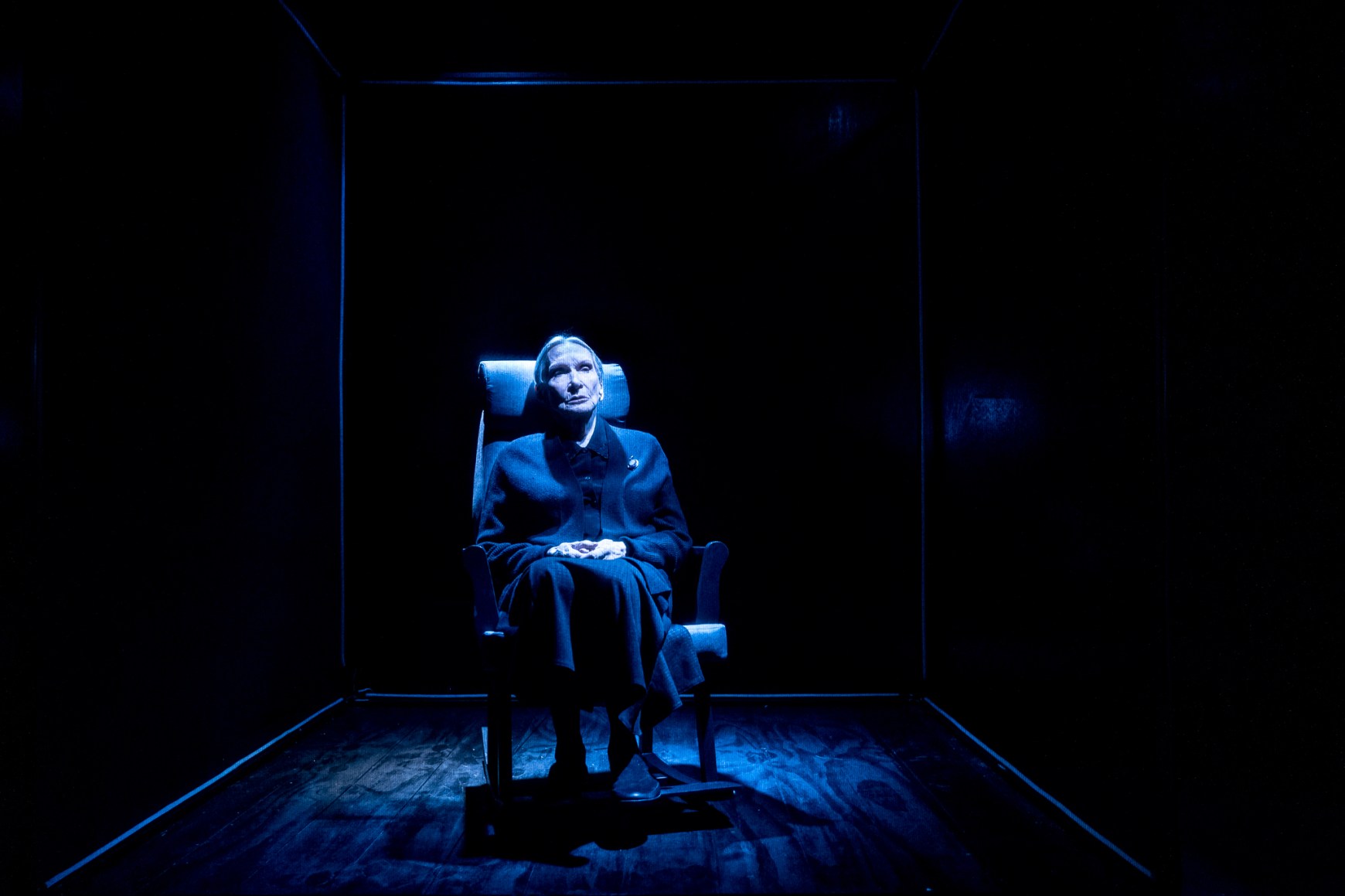
Images: Grant Archer

Footfalls and Rockaby by Samuel Beckett – Jermyn Street Theatre, London

In the tiny, pub theatre-esque Jermyn Street Theatre Samuel Beckett’s two monologues, Footfalls and Rockaby, exert a powerful hold. The performers appear ghost-like, illuminated against the blackness with space defined only by strips of white neon. These form a cage around Siân Phillips in Rockaby, rocking back and forth on her chair, ticking down her final hourse. In Footfalls, the light creates an edge against which Charlotte Emmerson leans her head when she finally stops pacing, counting her nine steps across the room and nine back. The double bill, directed by Richard Beecham, brings together late Beckett pieces, from the late ’70s and early ’80s that work well together. Both are about women counting down time, with only one possible outcome.

Emmerson, on Simon Kenny’s neat, two platform set, paces a raised rectangle of space, beating out rhythms in her movement and speech. Something undefined has happened to leave her in this state, a ghost of a person with only rituals to show she is still alive. The voice of her mother, off-stage, asks “Will you never have done … revolving it all … In your poor mind?” Emmerson, working within Beckett’s strict stage directions, reveals desperation and resilience as two sides of the same coin. She is mesmerising, part of play that seems to stop time.

When Phillips enters, it seems for a moment that she is the unseen mother from Footfalls, but the transition is between plays to the stiller, even more musical Rockaby. In a chair, rocking gently, Phillips part is mostly pre-recorded with occasional comments as she listens to the voices in her head. Beckett’s poetry is particularly absorbing, with lulling, repetitive patterns of speech matching the rocking of the chair, soothing the unnamed character as she sinks away. The repeated phrase “Till in the end / the day came / in the end came / close of a long day” is a mantra with the power to close down a life. Dame Siân’s rich voice is perfect for this role, and the Beckett’s writing does not bring the terror of death into the theatre, but rather it’s inevitability.

Beecham’s production is top quality theatre, with a well chosen and beautifully cast pair of plays performed in a magically unlikely space that feels like a leftover from a lost West End of dive bars and characterful landladies. In fact, it’s an essential piece of the London theatre scene, and there can be few places in the world where the best performers around will play in such an unglamorous setting. We should be grateful for the Jermyn Street Theatre for serving up unbeatable evenings such as this.

Don’t Look Over Here, Andrew Lloyd Webber

Don’t Look Over Here, Andrew Lloyd Webber by Sh!t Theatre, Camden People’s Theatre, London

Sh!t Theatre’s approach is entirely unique – a potent combination of extreme silliness and penetrating political critique. In a succession of award-winning shows, from Letters to Windsor House to Sh!t Theatre Drink Rum with Expats, they have tackled violence, corruption, hypocrisy, sexism, migration, racism and a great deal more. They blend this with a fascination for areas of pop culture most performers probably think beneath them, such as Dolly Parton in Dollywould and their ridiculously amusing Love Actually parody-tribute, Sh!t Actually. Now Rebecca Biscuit and Louise Mothersole return with a show-in-development piece at Camden People’s Theatre, their spiritual home. Everyone is keen to discover what insights they have developed during lockdown. It soon turns out that they have mostly been listening to ‘Evita!’ and taking on interns.

The show is presented by two epically out-of-their depth work experience interns, who have taken on the donkey work while Rebecca and Louise relax in the corner, emerging only to deliver the big musical numbers. It also becomes apparent from film footage, a Sh!t Theatre trademark, that the interns have been disturbingly exploited, although they seem not to realise it. Their duties include non-stop dancing in the garden and bathing Rebecca and Louise, together. Their employers’ behaviour may have been influenced by their research into the life of Argentinian dictator Juan Perón, his doomed wife Eva and his second wife, ex-dancer Isabella. The latter, who became the first female leader of a country in the modern era when Perón died in 1974, is not quite the feminist icon her CV might imply. Calling herself Isabelita, she was best known for running death squads to enforce her right-wing dictatorship before fleeing into exile in Madrid, where she escaped prosecution. She and Perón are less remembered for embalming Eva’s body and hanging it in their dining room. The full, fascinating Gothic horror of the Perón era does not feature in ‘Evita!’ written, as Sh!t Theatre put it, “by Conservative peer Andrew Lloyd Webber and UKIP donor Tim Rice.” They are in the process of correcting this, rewriting several numbers to reflect the story as they see it, to hilarious and probably illegal effect. It will be a tense wait to discover how Louise and Rebecca will complete the show, as they claim to be planning a visit to find Isabelita, who is still alive in her 90s, somewhere in Madrid. As long as they survive their research phase, this has the makings of their best show yet.

If You Love Me This Might Hurt

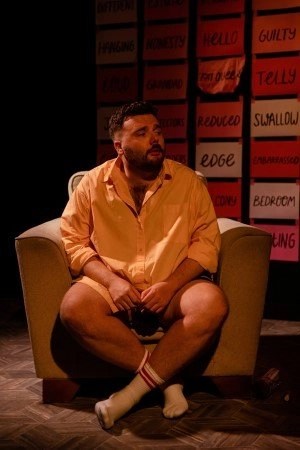
If You Love Me This Might Hurt by Matty May – Camden People’s Theatre, London

First impressions of Matty May’s one man show at Camden People’s Theatre are that it could be a tough night. The set is an armchair, positioned in front of a wall of words that hint at stories of disfunction, grim sex, pain and self-harm. As May himself confirms, he will be talking about his suicide attempts, but he reassures us that we needn’t worry about him and he feels happy to discuss these matters with us. This caring and conversational approach gives the show a character that elevates it above the standard confessional. He tell us what it has been like being gay – with his family in working class Barking, at school and then as an adult. It is easy to imagine how tough it could be, and May confirms some of our expectations: bullying, contempt, sexual objectification and depression being some of the things that have led him to attempt suicide on a number of occasions. But the darkness is balanced against humour and warmth. Matty’s nan has been a crucial source of loving support in a chaotic family situation, while those who have stood up for him, such as the girls in his sixth form who tore into boys plastering the walls with mocking posters, play a big role.

May has produced the show with Daisy Hale, and they keep it simple. Transitional moments in his story are marked with subtle music and lighting changes, while May throws the occasional dramatic pose and enjoys a little lip-syncing. These ideas are not over-used, and serve to structure the evening without overshadowing May himself. He is the main attraction, not a polished performer but able to convince the audience that he is for real. He wins over everyone with his mixture of vulnerability and honesty. His embarrassment and distaste at having to recall visits to gay saunas and other excesses is entirely without artifice, and we feel for him. The standing ovation at the end of the show includes every member of the audience. Yes, it hurt: yes, it worked!

Is God Is

Is God Is by Aleshea Harris – Royal Court Theatre

Aleshea Harris’ Is God Is arrives from the US with a high reputation, and talks a good game. A hip hop, Afropunk, spaghetti Western sounds irresistible and the set up – two sisters who cross the country to avenge their mother – promises much. However, it doesn’t really live up to expectations. It starts dramatically, with a sheet of fire crossing the stage, scarring sisters Racine (Dame-Jasmine Hughes) and Anaia (Alfie Fuller) and supposedly killing their mother. Not long after she turns up, years having passed, hideously scarred, dying, and demanding her daughters avenge her by finding and killing their father and his family.

Nehassaiu deGannes’s performance as the mother (She) is a highlight. She is very funny under her enveloping bandages, making ludicrous demands of the children she’s not seen for years. However, the play only really works as a comedy, and it becomes increasingly hard to locate the laughs. As the journey progress, the characters become less amusing. The two half brothers, one arrogant the other nerdy, are less than hilarious, and a scene with a corrupt, pill-popping lawyer misfires. Meanwhile, the defining characteristic of the action becomes the scenes of ultra violence that aspire to Tarantino, but lack the comic inevitability that makes his films so watchable. There’s more to Tarantino than lots of killing, and the play feels unmoored from any social setting or reality, existing in an unreality that strips its events of any significance. There’s an Afropunk odyssey out there to be written for sure, but unfortunately this isn’t it.

What If If Only

Image: Johan Persson

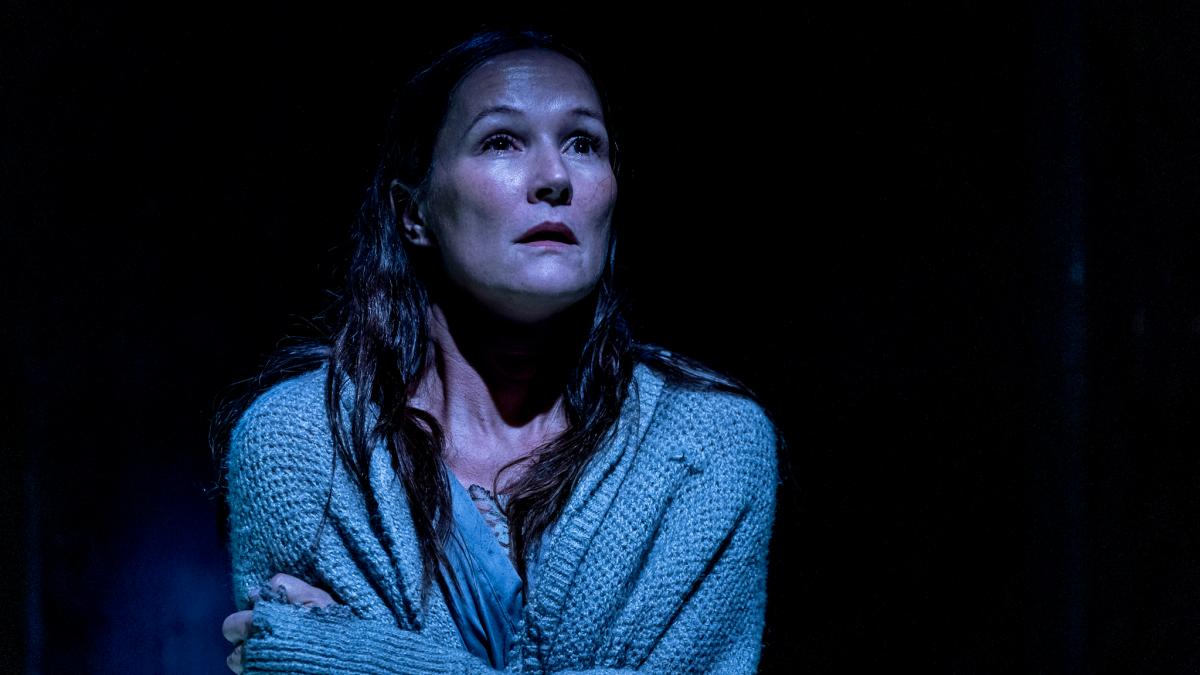
What If If Only by Caryl Churchill – Royal Court Theatre, London

A new twenty-minute play by Caryl Churchill is perhaps the most Royal Court thing, ever. It can be paired with Is God Is, running alongside it, but really twenty minutes of Churchill is all you need from an evening. Featuring two consummate actors, John Heffernan and the wonderful Linda Bassett, it is a study in focus, clarity and meaning. The main character, Someone, played by Hefferan sits at a table and talks. It emerges, from a discussion about art, reality and apples, that his partner is dead. She has been dead for some time, having taken her own life. Bassett then appears as personification of the Future, like a modern version of a Dickens ghost, harder and with no easy answers to offer. Bassett’s performance, a stream of dialogue that seems programmed into her, is a technical masterclass. She also manages to seem both appealing and disturbing unhuman at the same time. Perhaps even more alarming is Child Future (Samir Simon-Keegan) on the night I saw it, who has not happened but is bursting to get going. Churchill’s writing is honed to the bone, every word hitting home. She conjures the everyday eeriness of the supernatural, as she did in Imp, and in the process has invented a new sort of confounding horror that shakes your sense of reality to its foundations. Churchill is a genius, and our best living playwright, but you knew that already.

Home

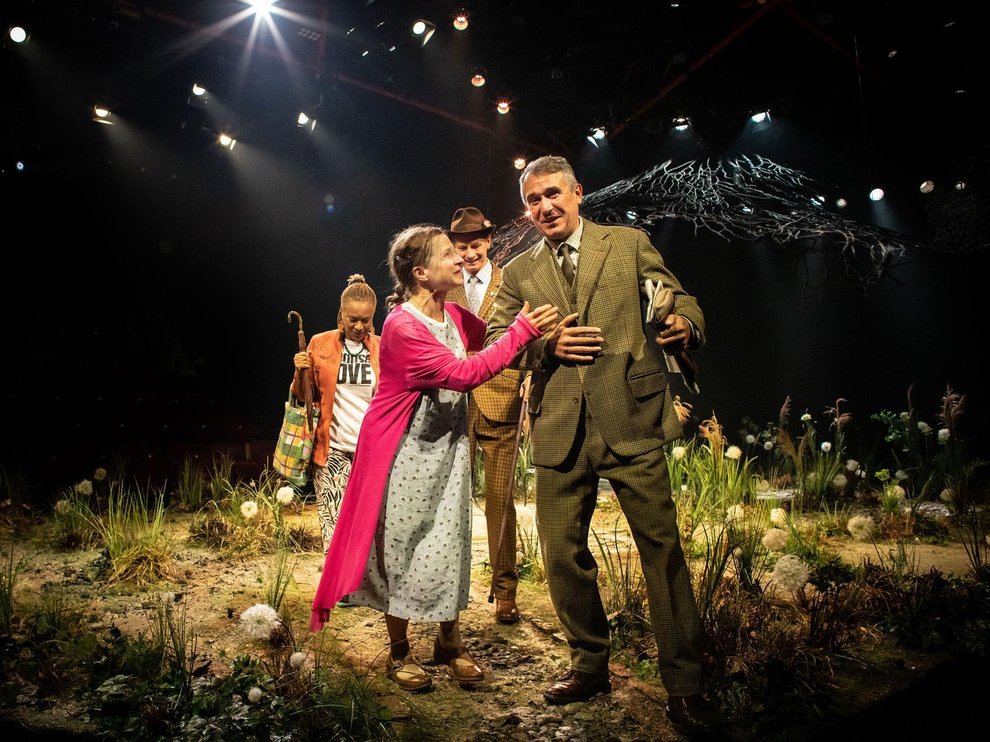
Image by Helen Maybanks

Home by David Storey – Chichester Festival Theatre

Although David Storey is a somewhat forgotten writer, wildly successful from the late ’60s to the late ’70s as both a playwright and novelist, but then just as suddenly out of fashion, Home is the play that is consistently revived. Not only does it offer four excellent roles, but it has managed to slip free of the time in which it was written (it premiered in 1970) and continues to speak to subsequent generations. It famously begins with two men talking, persistently, about nothing. As their conversation progresses their inability to finish sentences, reach points or say anything other than commonplaces and banalities becomes first funny, then disturbing. Their conversation takes place in a garden, which in Josh Roche’s Chichester production is a hyper-real set by Sophie Thomas, past its best and collecting litter around the edges. The world beyond the garden is unclear and, although we begin to understand the kind of place these people inhabit, we gather little to tie us to a place and time beyond references to cousins employed in the colonies.

The two men are then joined by two women, who undermine their apparent self-assurance by poking fun and making crude jokes. They seem to be enjoying themselves rather more, but soon we see just how vulnerable each character really is. Storey was ahead of his time in writing sympathetically about mental illness and people who, in his era, were usually hidden where no-one could see them. All four are likeable but brittle, holding together with each other’s support, most of the time at least. The performances are excellent. John Mackay is a willowy, Scottish Jack, a gentleman striving to put on a cheerful and assured front. Daniel Cerquiera’s Harry is sadder, more solid, inclined to tune out of the conversation. Both are fine actors, more often seen in secondary roles, and it is a treat to see them in the leads where they deliver moving and absorbing performances – putting to be memories of Gielgud and Richardson in these roles. Hayley Carmichael’s Kathleen is an East End housewife whose obsessions with inneundo tips into childlike mania, an unnerving piece of acting. Doña Croll’s Marjorie is confrontational with others, a tactic to conceal how she really feels.

Home is a sad and elegaic play, which seems to have gained significance in the decades since it was first performed. Storey absorbs us into the self-contained world of characters who are trapped within themselves, making poignant efforts to connect and to keep the darkness at bay, in a garden that is both and interior and an exterior world. It is not clear that the audience has any right to stand outside in judgement, or whether we belong with them, enclosed within the same walls.

Hamlet

Image by Helen Murray

Hamlet by William Shakespeare – Young Vic Theatre, London

Cush Jumbo’s Hamlet has been a long time in the making. In fact, what with the pandemic and the Young Vic’s long lead times for shows (which allow for some serious forward planning) I booked my tickets around three years ago. Sitting in the front row, it feels as though her performance has been seething and macerating inside her for all that time. She is, from her first appearance on the stage, a wired, angry, upset Hamlet, with more energy than anyone else at Elsinore. Her reaction seems a reasonable response to a court that carries on as though everything is normal when from the outside it appears a grotesque parody of civilised order. Adrian Dunbar’s Claudius and Tara Fitzgerald’s Gertrude are disturbingly urbane, a pair of high achievers who wear tasteful, expensive outfits and power as their natural state. The gilt columns of Anna Fleische’s set resemble a corporate lobby, with more than a hint of Trump’s lift. This Denmark has been slowly and insidiously corrupted until the very fabric of its court is a by-word for greed and hubris.

Hersov, however, chooses not develop the political implications, and his production strips the text down to a family affair. There are as many ways to cut Hamlet as they are productions, but it can be argued that entirely removing Fortinbras and the wider existential threat makes it harder to understand what drives Claudius. Dunbar is respectable and easy until things stop going his way, when he has no problem ordering murder, but the cuts do constrain his part. Fitzgerald is also a little short of opportunities, although that is more Shakespeare’s fault than Hersov’s. However, these are minor issues in the context of Jumbo’s performance, which is electric. She is clearly experiencing a creeping breakdown, driven by grief and anger, and is in a dangerous state. By the time she stabs Polonius she has already come close to knifing several people, and violence is only a matter of time. The big speeches seem forced out of her by the turmoil in her head, and her disintegration during the second half is truly upsetting. This production brings out the insanity of the climactic fight with Laertes, where everyone seems to have lost their reason and descended into the maelstrom together.

It’s hard to take your eyes off Jumbo, but the cast features a number of notable and enjoyable performances. Joseph Marcell’s Polonius is both funny and exceptionally annoying. Norah Lopez Holden delivers a fine Ophelia, whose sibling teasing of Jonathan Ajayi’s Laertes is very convincing, making her destruction by the men around her all the more grim when it comes. Rosencrantz and Guildenstern are well played by Taz Borlar and Joana Borja as vodka-toting student millennials, chillingly cynical presences looking for opportunities to grab. Jonathan Livingstone’s Horatio is an everyman, watching as the world falls apart around him. Hersov’s production is a particular but compelling account of the play, but Cush Jumbo claims this role both for female actors and for herself with a Hamlet that sets the tone for the 2020s, struggling to cope in a world gone badly wrong.