Treasure Island

download

Treasure Island by Robert Louis Stevenson adapted by Bryony Lavery – National Theatre (Olivier)

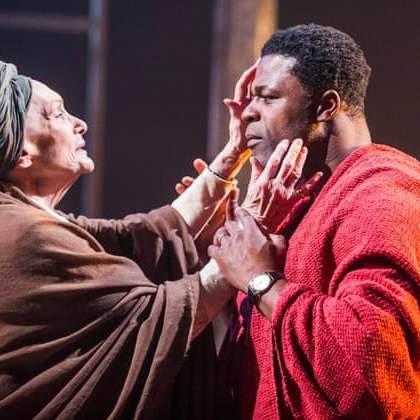
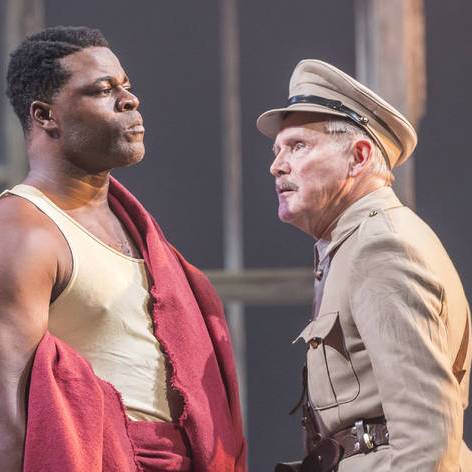
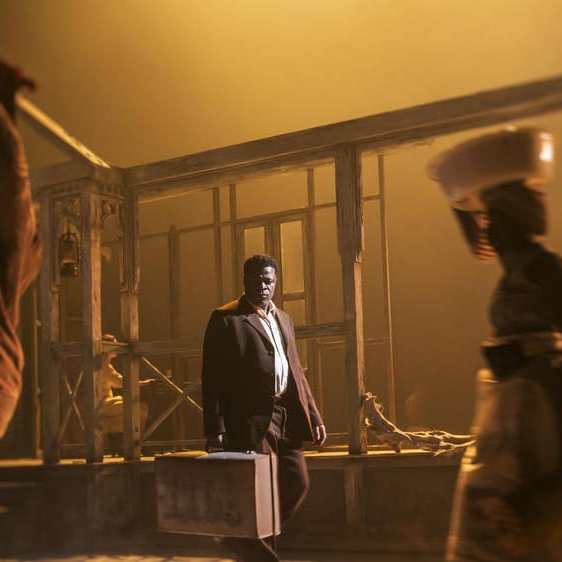
The excitement still builds on a Thursday night, when many of us sit down to watch theatre as though it was analogue television in the four channel era. Admittedly, the National Theatre’s shows are available for a week on Youtube, being there at 7pm seems the right thing to do. This week’s offering is from six years ago, an adaptation of Treasure Island by Bryony Lavery. The shortcomings of filmed theatre are more obvious when it involves shows staged in the cavernous Olivier Theatre, with a stage too large to fit on screen in its entirety, even in long shot. However, Lizzie Clachan’s atmospheric set makes quite an impression, making full use of the theatres extensive machinery to revolve, raise and lower vast sections of stage as the action moves from inn to dock to ship to island to tunnels. The Olivier is very well suited to shadowy corners where mad pirates and their parrots might lurk, and the staging has suitably epic qualities.

The highlights of the evening come from the lead performers. Patsy Ferran as narrator and protagonist Jim Hawkins is a treat. She is also a girl, a change from the novel that the script plays with throughout, making a light-hearted critique of the times by continually confusing the other characters. Arthur Darvill’s Long John Silver is less salty and more human than the traditional perception of the character, and therefore more sinister in his manoeuvrings. Neither plays their part for comic effect, which is the prevailing tone for the rest of the show. While there is certainly room for comedy, Treasure Island is memorable for younger readers because of its enthralling drama and life-and-death dilemmas. Too much of this has been jettisoned in exchange for a succession of sailors intended to be funny because of their single character trait – the crazy one, the hungry one, the dull one and so on. This is a mistake because the new material is not up to the standard of the writing it replaces or necessary to the story, meaning that momentum is lost in the later stages. However, this is still a show that will have left a big impression on anyone lucky enough to see it at the right age – perhaps in front of their television in a quarantined front room.


Jane Eyre

download (1)

Jane Eyre by Charlotte Brontë, devised by the company – National Theatre: Lyttleton

Only the second week, but the National Theatre’s Thursday night broadcasts are already a fixed point in our adrift, theatre-free lives. I’ve often wondered how the experience of living a town with only one theatre, and seeing everything they put on, would compare to London, where there are easily ten shows you might see for every one you do. Now I know. It means that you watch productions like Jane Eyre, which did not grab me at all when it was on in real life. I’m not a fan of classic novels adapted for the stage, expectations shaped by the RSC’s leaden productions of Great Expectations and Midnight’s Children in the 2000s. But this Jane Eyre is very good, and nimbly avoids the pitfalls of novel theatre.

Guided by director Sally Cookson, the show was improvised by the company. It treads lightly, despite coming in at 3 hours, and there is never the sense that this is a secondary substitute for the real thing, or that everything from the book has to be crammed in regardless. Michael Vale designed a set of ladders and platforms, which serve to play out journeys of the literal and physical variety. Costume changes – dressed lifted off and on by the crowding cast, carry great symbolic weight. The machinery of the show is on stage for us to see, including a band installed centre stage. Music plays an important role, between scenes as shorthand for what is left unsaid and as a vehicle for the madwoman in the attic, Bertha. Silent in the book, she sings on stage with Melanie Marshall, wearing a red dress, using her beautiful voice to express the silenced.

An energetic cast is led by Hannah Bristow as Jane, always at the centre of her own story, bringing her life and destiny under control with brave, wise decisions at the key moments. Tim Delap’s Mr Rochester, by contrast, is a man trapped in his own melodrama who can only be at peace when he is no longer able to dominate. The scenes that linger from childhood readings – the terrifying, haunted ‘red room’, the death of Helen Burns at school, the fire in Mr Rochester’s bedroom, Jane’s marriage offer from a missionary – are all carefully staged, with Cookson expertly managing the devised energy that sparkles throughout. Jane Eyre is a revolutionary book in many ways, challenging the repression of girls and women at every stage of their lives, and sending out a clarion call for the primacy of imagination and romance. The National Theatre’s production does an exceptional job of staging a book that turns out, surprisingly, to be fine performance material.


One Man, Two Guvnors

nt-at-home_one-man-two-guvnors-2-1280x720

One Man, Two Guvnors by Richard Bean (after Carlo Goldoni) – National Theatre at Home

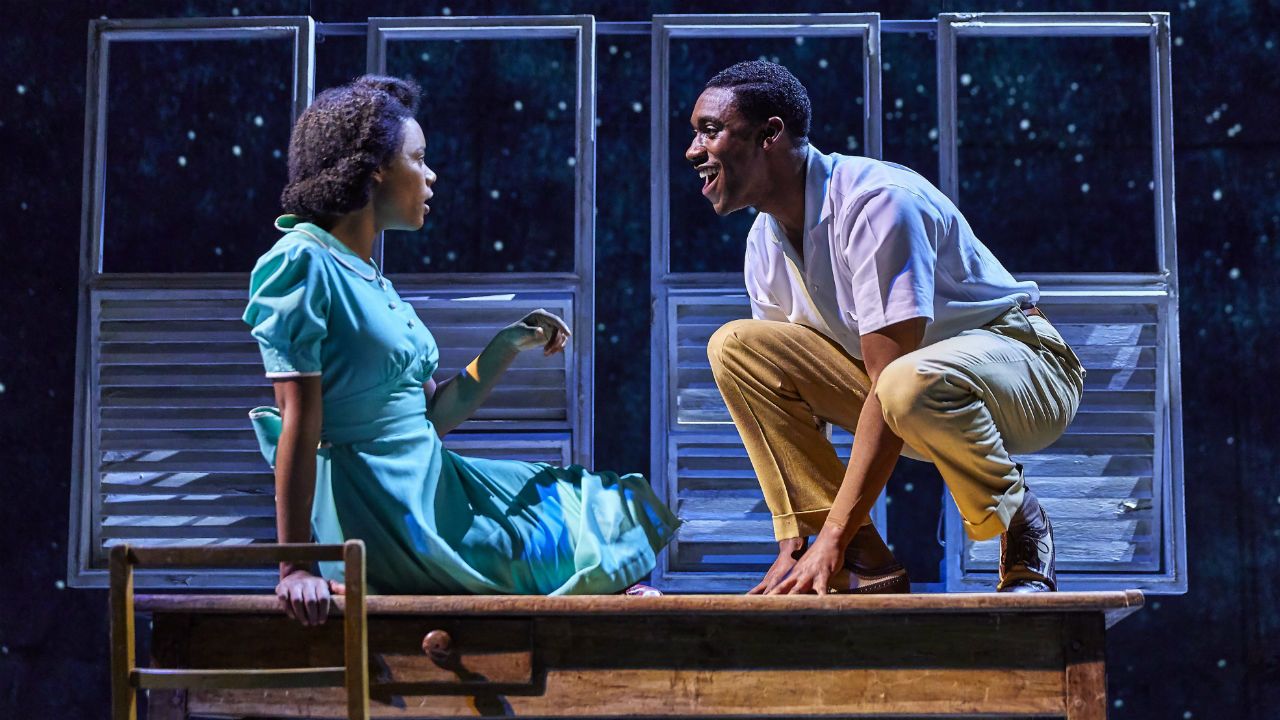
After the theatres closed, the National Theatre was quick to announce a free mini-season of online shows from their NT Live broadcasts, which immediately became the only evening bookings in thousands of newly empty diaries. The first Youtube show – Nicholas Hytner’s mid-2000s mega-hit, One Man, Two Guvnors – had a real sense of anticipation. It was the perfect choice for a national morale boost being, as Hytner noted, meant for nothing except to make the audience laugh and, although the only reason for showing it was separation, it proved a much-needed shared experience.

The NT at Home broadcasts are strange. They replace the live experience of watching a play with a ghostly vision from the past. We watch people experiencing something, sitting within touching distance in their thousands, on a night 6 years ago and we try to join in. Re-living the past so intensely is eerie, and it’s hard to forget that we are using it to block out the present. Later – if there is a later – perhaps there will new performances created for the medium of shared sofa viewing. But, for now, we have the comforts of Goldoni’s 18th century farce reinterpreted as English panto nostalgia, in the impossibly distant past of 2014.

Richard Bean’s version is famously set in a 1960 Brighton, among lawyers, gangsters, crossed lovers and the beginnings of a changing society. There are plenty of rough exteriors, but everyone has a heart of gold. One Man becomes something more almost entirely through the remarkable energy of the performers, who all work very hard to be as silly as possible without derailing the show. Led by James Corden (Lyn Gardner, whose live-tweet were an unexpected bonus of quarantine theatre, quoted Susannah Clapp description of him as ‘the Essex Nureyev’), the cast is on fire. Corden bounces, beachball-like, around the stage and hits his peak in the first half during the riotous scene where he tried to serve dinner to both his masters at the same time, without either knowing, while eating most of it himself. He works beautifully with Oliver Chris, as posh boy master Stanley, who is triumphantly ridiculous, and Jemima Rooper as master no. 2 Rachel, dressed as her own dead brother and oozing Brighton Rock menace. And then there’s Tom Edden’s legendary performance as Alfie, the ancient deaf waiter with palsy, on his first day in the job. His rattling progress across the stage carrying the plates and his pratfalls off the staircase are as funny now as they were then.

The cast pull each other up to the same level of excellence, so it’s not all about Corden. The show has mostly aged well, but in Bean’s adaptation women have neither equal stage space nor the best parts. Now, they probably would. The nostalgia also depends on fading memories of a pre-60s world, which are losing their direct currency. It’s funny to think that the problems of Goldoni’s original, which makes little sense to 21st century audiences, will visit Bean’s version too. But just now there’s every excuse to enjoy ourselves and not worry about the future, which will come soon enough.


Afterplay


4676

Rory Keenan and Mariah Gale in Afterplay. Photograph: Tristram Kenton/the Guardian

Afterplay by Brian Friel – Coronet Theatre, London

I’ve been putting this review off, for lots of reasons. Theatre is, amongst other things, what I do. Although I was well aware of the turbulent history of the stage in this country, interrupted by plagues and politics, it had never crossed my mind for a moment that I would find myself writing in a time when the theatres were closed. If audiences feel bereft, the effect on performers, writers, producers and all those for whom this is both life and livelihood is hard to imagine. But we are all in the boat, waiting for something that may happen in the unforeseeable future. In the meantime, I still have one last play to write about, from before the theatres closed. I went out on a high.

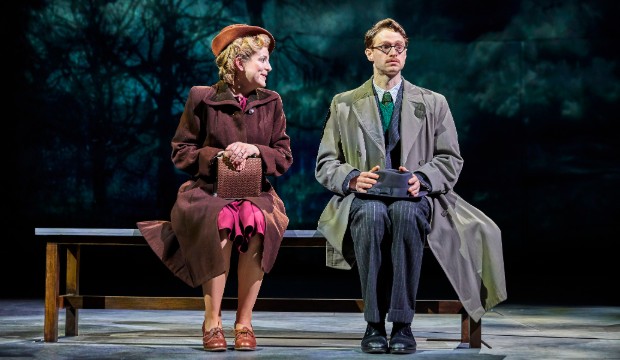
Afterplay, at the lovely Coronet Theatre, was a revival of Brian Friel’s one-act play imaging the aftermath of Chekhov. Two characters from different plays – Sonya from ‘Uncle Vanya’ and Andrey from ‘Three Sisters’ – meet by chance in a Moscow cafe in the 1920s, in a different time. after the Russian Revolution. They both sense something in common and together they compare and explore their experiences, before going their separate ways. It is a perfect miniature with the precision of writing and thinking that Brian Friel often produced – drama without a flourish, just clear-eyed, razor sharp character study. To describe this as ‘slight’, as one reviewer did, is to suggest that a short storey is a waste of time compared to a novel. Something about Chekhov’s endings, which leave everything and nothing possible, evidently nagged at Friel, as did these two characters. At the end of their respective plays, both are trapped – Sonya rejected and stuck on the estate, Andrey a disappointment to his sisters and himself.  Afterplay updates their stories, explaining their presence in Moscow and dismantling the fronts they have both erected for others.

The two performers, Mariah Gale and Rory Keenan, are well attuned to their parts. Keenan is a highly convincing combination, caught between the old pomposity and a genuine interest in Sonia. Gale is kind and vulnerable, without bluster to protect her, and ultimately just as desperate if not more so. Both performers are excellent – unshowy but entirely engaging, just as the play demands. The production by John Haidar is, was, finely paced and nuanced, bringing out the depth of writing experience that placed Friel in a position to follow up his hunch, that Chekhov’s characters had something more to tell us.

Friel does not suggest time would have solved Sonia’ or Andrey’s problems, or that anything would. He doesn’t provide a different ending for either – there is hope, but as always it’s in the future. But he provides a story, a coda that tells us that if nothing else both Andrey and Sonia are still alive, and that is worth our attention. Of course, like all theatre it tells us – the audience – that we are alive too. We will have to find other ways to remind ourselves of this, the only thing that matters, over the next few months.

The Cutting Edge

The Cutting Edge 2020 Maggie Steed, Jasmine Hyde (c) Alex Brenner, no use without credit (_DSC0358-dxo)Photo © Alex Brenner

The Cutting Edge by Jack Shepherd – Arcola Theatre, London

Jack Shepherd is the author of some impressive plays (including the excellent ‘In Lambeth’ – a meeting between William Blake and Thomas Paine) as well as a much-loved actor, a director and a jazz musician. He has more going on than most which is, perhaps, why ‘The Cutting Edge’ is his first new play for 13 year. It has a high calibre cast, but  is unlikely to be remembered as one of his best. A middle-aged couple have left the rat race for a farm where they struggle to become self-sufficient. Their exhaustion and uncertainty is disrupted by the intrusion of a pair of ageing rebels who arrive on a motorbike, drink all the gin and generally add to the stress of preparations of a party later that evening. It sounds like a set-up for a drama of crisis and resolution but, unfortunately, not that much happens.

The problem with Shepherd’s play is a lack of focus. It is never entirely clear what the real driver really is. Several themes are aired: the naivety of moving to the country to get away from city stress; the unequal burden of looking after a partner who is depressed; women’s choice between responsibility or escape; and the indignity and emptiness of being a drop out in old age. The play is ostensibly about art and commodification. The couple whose in whose kitchen we spend the evening, Anna and Chris, met on an art magazine. He was a high flying critic who had a breakdown when he came to see his work as empty. However, the wide-ranging speeches about modern art seem hackneyed, and leave the audience none the wiser about what really matters to Shepherd. The era the play addresses is also confusing. The action explicitly takes place in the late 1980s, but it features props that appear 21st century and there is no sense of social context to help locate individual dilemmas.

The evening is enjoyable for its cast. Maggie Steed as artist Elvira, visiting the house where she was happy as a child, now sits in front of bars rather than easels. Her version of herself is a couple of decades out of date, and Steed is fabulously fragile, a walking liability it’s hard not to love. In contrast, Jasmine Hyde is excellently long-suffering as Anna, making soup live on stage throughout the first half. She cleans up after everyone literally and emotionally, her cheerful facade is in constant danger of collapse. Michael Feast, as her biker companion Zak, is brilliantly committed and convincing – a chancer too old to get away with it any more, but still working the charm. However, despite the combined skills of its performers, ‘The Cutting Edge’ lacks pace and drive and the key moment of crisis, which always seems around the corner, never arrives.


Nora: A Doll’s House

jCCXHWTA-600x400

Nora: A Doll’s House by Stef Smith based on Henrik Ibsen – Young Vic, London

Henrik Ibsen’s play ‘A Doll’s House’ has one of the most famous endings in theatre, deeply shocking when first staged, as Nora walks out on her husband and children. She leaves only the faintest of hints that marriage, perhaps, has a future. It is typical of Stef Smith’s reimagined version at the Young Vic that this climactic moment is then deflated, with three third party narratives about what happened next. In ‘Nora’ nothing is left to the imagination, everything is signposted and the focus and impact of the source material goes missing along the way. It is the culmination of a frustrating evening that fails to improve on Ibsen’s original either in terms of coherence or dramatic impact.

Smith has written about three version of Nora, each 50 years apart, living in parallel marriages – equally stifling and oppressive – in 1918, 1968 and 2018. The three women replicate the same dilemmas in their three eras suggesting that, although circumstances have changed, the position of women has remained fundamentally the same. This is an interesting thesis, but unfortunately ‘Nora’ does not explore it with sufficient clarity. Instead, there are constant, unsubtle references to social issues of the time – women getting the vote, contraception, legalisation of homosexuality. These give the impression of a checklist, diluting the play’s focus, while variations on the original plot also confuse. Nora (1968) leaves with her friend Christine, after discovering the courage to declare her hidden love, a twist which is parachuted in late on. Nora (2018) has nowhere to go because, as she mentions for the first time during the final 30 seconds of the play, cuts have closed the local shelters.

Nora’s dark secret – the fraudulent loan she has taken out – carries particular weight in Ibsen’s play because women did not then have the right to make their own financial arrangements. This absolutely crucial fact doesn’t make sense in all three of the time periods in ‘Nora’, so the reason for the fraud is lost. The play’s fragmentation has the effect of dissolving its inherent drama, with all three Noras on stage throughout, interchanging arbitrarily, and scenes that constantly flip eras. This leaves husband Thomas particularly exposed as he is required to change character in the middle of key scenes, becoming earlier or later versions of himself. This structure no doubt contributes to a performance style that relies too heavily on people from the past speaking in funny voices. The tension that Ibsen builds so effectively is scattered to the three winds. On paper, the concept of using ‘A Doll’s House’ to explore women’s experiences in the subsequent century makes sense, but in practice ‘Nora’ does not work. Ibsen’s play is regularly revived because it still packs an unrivalled dramatic punch, and ‘Nora’ only succeeds in showing why intent alone does not make good drama.

The Welkin

the-welkin-review-national-theatre-lucy-kirkwood-maxine-peake

The Welkin by Lucy Kirkwood – National Theatre: Lyttleton

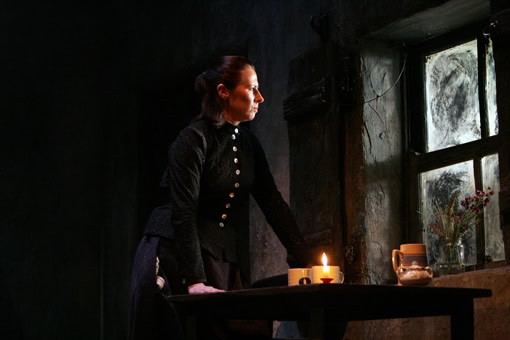
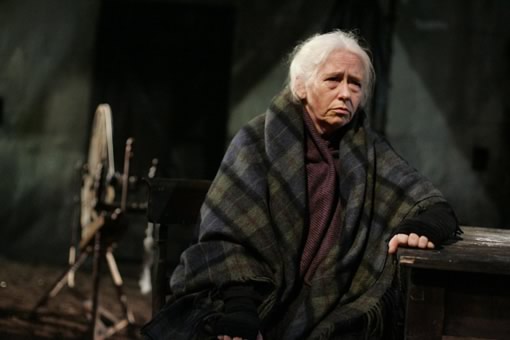
The title of Lucy Kirkwood’s new play is an antiquated term for the heavens – both the sky itself, and the heavenly judgement beyond. The condemned woman at the heart of this ambitious enthralling show, in the words of Haydn Gwynne’s Lady Cary, has no recourse on earth and “must look to the welkin” for her salvation. The year in 1759, and Lady Cary is one of a “jury of matrons” brought together to examine Sally Poppy (Ria Dmitrovic). Convicted of the brutal murder of a child, which she admits, she has “pleaded the belly” and twelve local women are summoned to confirm or deny her claim.

Kirkwood has lighted on a clever device, a little known historical setting that allows her to write a sort of ‘Twelve Angry Women’: a tightly woven, tense drama played out in a single room, with a cast consisting principally of twelve women. They are supervised by a male employee of the court who, symbolically, is forbidden to speak. Kirkwood’s writing is impressive, and she clearly relishes the task of teasing out the characters of the twelve and of using – and not over-using – the rich language of the time. From Maxine Peake’s midwife, Lizzy Luke – a woman in a position of responsibility, with more on her mind than she admits – to Mary Middleton (Zainab Hasan), who believes her house contains a haunted tankard, every character is real and often funny, as well as heart-breaking. It is difficult to single out performances, because the exceptionally strong ensemble work is the point of the show, but June Watson is inimitable as Sarah Smith, whose wisdom is based on experience.

The Welkin is a tragic story and the setting, with women in charge, is at odds with everything else outside the room. It provides a temporary respite from beatings, childbirth, never-ending hard work, and a constant status as a second-class being. Kirkwood uses this lens to focus important themes, but allows them to emerge naturally from the pressures placed on the women in the room, and the way they talk when they are alone together. Peake is excellent as the conflicted Lizzy, the play’s moral compass, while Ria Dmitrovic adds to her fast-growing reputation as a key actor of her generation with a performance full of spite and vulnerability. Haydn Gwynne is also a fine, haughty presence although her story arc is, perhaps, the play’s weakest aspect. Expertly directed by James Macdonald, the play opens with a tableau of women doing the domestic tasks from which events to come provide a brief respite, and is calmly staged with space for characters to breathe and the occasional, well-judged coup de theatre. These include an extraordinary scene with  the cast, in the only breach of the play’s setting, singing an home-made acapella version of Kate Bush’s ‘Running Up That Hill’, asking for the ‘deal with God’ that can never come. It is a moment of wonder, in a play that delivers on many fronts: as an epic, as a comedy, as a historical drama, as a voice for the voiceless, and as a thoroughly entertaining night out, with performers of the highest quality. Rufus Norris has just signed up for five more years in charge of the National Theatre and, judging by The Welkin, his mission to stage serious, new writing by women is properly on track.


The Incident Room

The incident Room Production photos.

The incident Room Production photos.

The Incident Room by Olivia Hirst and David Byrne – New Diorama Theatre, London

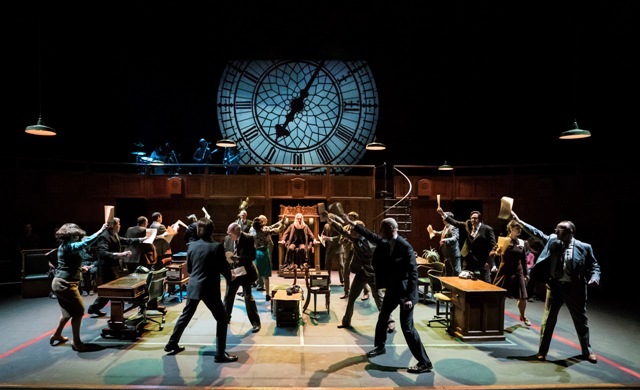
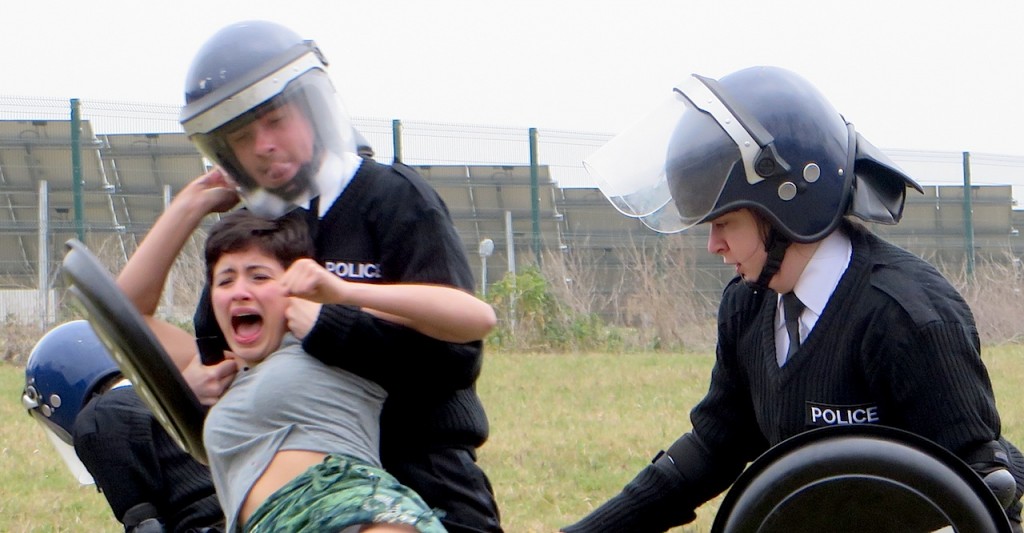
The grinding, five-year Yorkshire Ripper investigation was an essentially a filing problem. At the very end of the pre-computer age, even the largest inquiry team ever assembled could not find the answer, hidden all along in the mountains of data. Instead, West Yorkshire Police went through a  collective breakdown that laid the bare the failings of the 1970s social order, particularly the treatment of women, as brilliantly documented in Gordon Burn’s book ‘Somebody’s Husband, Somebody’s Son’. The Incident Room, acclaimed at the 2019 Edinburgh Fringe, takes us into the claustrophobic Millgarth Incident Room at the heart of the case, where the horrifying, and bizarre real life drama played out.

The play, devised by the whole cast, focuses on Megan Winterburn, an investigating officers and one of the first women on the West Yorkshire force. Hers is a story based on real life, just like the rest of the drama, and we eventually discover she went on to hold senior rank. In 1975, though, she is an overlooked for promotion in favour of inferior male colleagues, her contributions are overlooked and she is asked to do the typing. Her position in the force reflects the situation outside, where the police only start to take Peter Sutcliffe’s brutal murders seriously when he beings attacking ‘innocent women’ rather than prostitutes. As the killings continue and public panic grows, Assistant Chief Constable George Oldfield loses his perspective and makes disastrous decisions, driven by personal obsession. Women take the brunt and are subjected to a police curfew to keep them safe rather than, as is pointed out, the men who might attack them. The exponential growth of information that packs out the set, made principally of a floor-to-ceiling filing stack, represents the staggering proportion of men in the north using prostitutes.

Simply recounting the events of the time is fascinating. It is a time that seems stranger and further away by the moment. However, in Beth Flintoff and David Byrne’s production, The Incident Room does much more than that. A strong ensemble cast drives the show forward. Charlotte Melia, as Meg Winterburn, is on stage throughout – a strong, sympathetic pivot for the evening. Colin R. Campbell is excellent as the beleaguered Oldfield whose arrogant tips him over the edge. Kay Brittan puts in a pair of show stealing performances as an investigator and a victim – Maureen Long, the only person to survive an attack – who is tiny, fierce and heartbreakingly lost.  The writing is sophisticated, explicitly avoiding simplistic judgements and leaving the audience space to see the layers. Meg is dogged by a female journalist – played by Natasha Magigi – who constantly questions her decision to work within a failing, male-led system. The play frames events as a retelling, many years later, allowing Meg to ask why she didn’t question the way she was treated at the time, as the Hollywood version would have it.

The Incident Room is not only dramatic and engrossing – recreating the fevered claustrophobia of the time – but also multi-layered and satisfying drama, a proper assessment of a story that gripped, terrified and obsessed the nation. This excellent production confronts our dark past head on.


I, Cinna

img_1085Photo by Helen Murray

I, Cinna (The Poet) Write a Revolution by Tim Crouch – Unicorn Theatre, London

Tim Crouch has developed a line in one-man shows based on characters from Shakespeare show do not get their dues. I, Cinna is his fifth and is based on the character who, perhaps, has the toughest time of all. Cinna (the poet), has a single scene in Julius Caesar in which he is mistaken for Cinna (the conspirator) and murdered by a blood-thirsty mob. He is, as Crouch puts it, in brackets. This unpromising material quickly becomes a multi-layered exploration of the power of words and writing, the influence of rumour and social media, and the question of whether the poet has a duty to be politically engaged.

Crouch’s performance as the anxious poet, who wears a ‘This is what a poet looks like’ t-shirt, is subtle and highly persuasive. He draws the audience into his attempts to write an explanation of the charged political events outside his front door as Caesar offered the crown of a republic. The small things (“Mark Antony – with no ‘h’. What’s that about?”) combine with the unstoppable flow of events that we know will lead to his death, even if he does not. As footage of street violence is projected onto a huge sheet of crumpled paper, Cinna fills a wastepaper bin with discarded drafts as he fails to find his subject.

The familiar events from Shakespeare unfold on his laptop and phone, in a manner that is both dramatic and  entirely credible without straining for relevance. Cinna enjoys the Soothsayer’s online column, which warns about the Ides of March. He is amused by the reports of chaos the night before (“The graves opened up, thrusting up  their dead? No way!”). Then the ‘Breaking News’ alerts start to ping, as he sees live footage of Caesar’s assassins steeping their hands in blood, and Mark Antony winning over the crowd. Cinna is a republican, and his dismay when Antony’s propaganda works propels him outside to his scripted doom.

Cinna finds his subject, but so do we. Crouch uses audience participation in a sparing but effective way, giving us all a notebook and pencil and instructing us to write. It would give away too much to say what he asks, but the audience is asked to look into its soul in a way that is surprising, and revealing. The production, directed by Naomi Wirthner, is a small masterpiece of unshowy writing and performance that is some of the best small-scale theatre of its time, equally satisfying to audiences of young people and adults. Crouch makes theatre that punches way above its weight, and I, Cinna cuts to the heart of what it is to have a voice, and to decide how to use it.