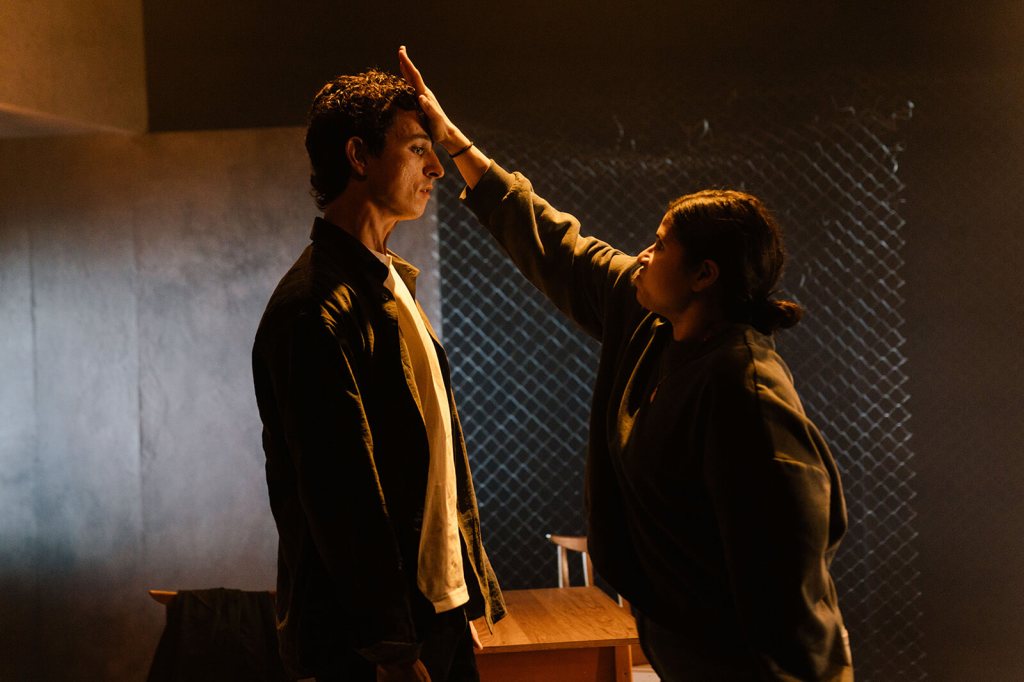
The title of Jon Berry’s new play is the Welsh word for November which, as well as the month, suggests a time of year when the mood darkens. In a rural context, it is also when the animals are fat enough to slaughtered. The foreboding title is a fair representation of the drama, which is ambitious, era-spanning and disturbing. Set in a single location – a farm house somewhere near Trawsfynydd in Snowdonia – it takes place in five time periods, from pre-history to the present. The stories in each are connected by the influence, generally malign, of their shared place. The show opens with the cast of four scooping up handfuls of the earth and eating them, sending the unambiguous message that the place is within them, whether they want it or not.
The play concentrates on four stories: a young man trying to escape his farming inheritance in 1758; a grim tale of power and sexual abuse in 1902; worklessness and a failing marriage in 1975; and a writer winning fame by exploiting family tragedy in 2024. The all-Welsh cast of four give appealing performances, and switch very effectively between their various roles, which are neatly indicated by small changes in costume. Saran Morgan plays a series of young women, always fighting back against expectations. The young men played by Bedwyr Bowen are trapped by society, place and expectation, in capable of getting out. Carri Munn’s characters range from self-deluding and dangerous, to furious at the restrictions of place and society . Glyn Pritchard’s older men are similarly varied, by turns predatory, self-destructive, and possessing all the power and authority. The set, by Rebecca Wood, is a crescent of tall slats which can channel blinding light towards the audience, or focus beams like a stone circle, connecting events beyond their time.
Jon Berry’s ambition is impressive, and Tachwedd is reminiscent of Alistair McDowall’s similarly time-hopping play, The Glow. The impressionistic prehistoric scenes, involving a wild boar hunt, add an exciting element of the mysterious and undefined to the social history that powers the main scenes. It is difficult to weave themes together across such large timespans, and the play’s thesis is not entirely clear. Berry’s describes the play as being like “a distintegration tape” running in a loop until it becomes “saturated” and falls apart. Events layer up in a single location across time, creating shadows that cannot be erased. However, the drama would benefit from stronger shared threads to justify the telling of these particular stories, than just the soil that connects them.
Nevertheless, Tachwedd gives us a defiantly unpretty social history of North Wales. It is a serious play that, despite its tragic events, has strong characters and humour too. Berry has fun, for example, unpicking the hypocrisies of literary agents. Well-managed by director Jac Ifan Moore, the play is an entertaining, and often powerful evening which thoroughly defies expectations. It is also a testament to Theatre 503’s crucial work developing new writing for the stage, and giving London exposure to creative artists from Wales.
Sonali Bhattacharyya’s new play, directed by Milli Bhatia, is an indictment of the UK immigration process, designed to destroy people, but it is no mere documentary. The grinding injustice of a system that uses people rather than treating them as humans has been widely and deservedly exposed on stage in recent years. Bhattacharyya, though, takes her story in an expected and memorable direction. Two sisters, Nikita (Zainab Hasan) struggles to help her sister Riya (Safiyya Ingar), who has spent her whole life in the UK, stay ahead of deportation for want of a piece of paper from fifteeen years ago. She can’t prove that her late mother lived continuously in the UK because she worked in an undocumented job. Nikita also works at a charity, where she is powerless to help refugee and friend Tahir (Diyar Bozhurt) as his hopes of asylum are brutally dashed. But then things get very weird indeed. Her mother’s ex-colleague Mrs B (Ayesha Darkar) gives Riya an mysterious vial and a set of scribbled instructions, from which she creates a sort of golem: The Fawn (Dominic Holmes).
The arrival of The Fawn as a Frankenstein’s Monster-type character takes the show into exciting territory. Holmes gives a disturbing, electrifyingly physical performance as he learns to move, uncoiling like a spring. Soon he becomes a presentable companion and lover, who can speak the language of those who get what they want. He serves Riya’s needs, transforming into her protector, throwing their rapacious landlady (Dharkar again) off her stride and then more. Riya discovers that she can get what she wants, but at a price.
Bhattacharyya’s play is fascinating if lacking in focus, taking some time to set the scene, and ending rather abruptly, but her ideas are impressively unsettling. Bhatia draws a fine performance from Dominic Holmes in particular, who has the kind of eerie stage presence that will surely have drawn the attention of casting directors. Ayesha Dharker also stands out for her gleeful, sinister performance as Mrs B, drawing on dark powers to fight back against the country she is obliged to live in, and her contrastingly turn as the snobbish, money-grabbing landlady, Shashi. King Troll has a lot to recommend it, and the New Diorama continues to develop the new writing we need.
Anna by Laboration Arts Company – Istrian National Theatre, Pula, Croatia
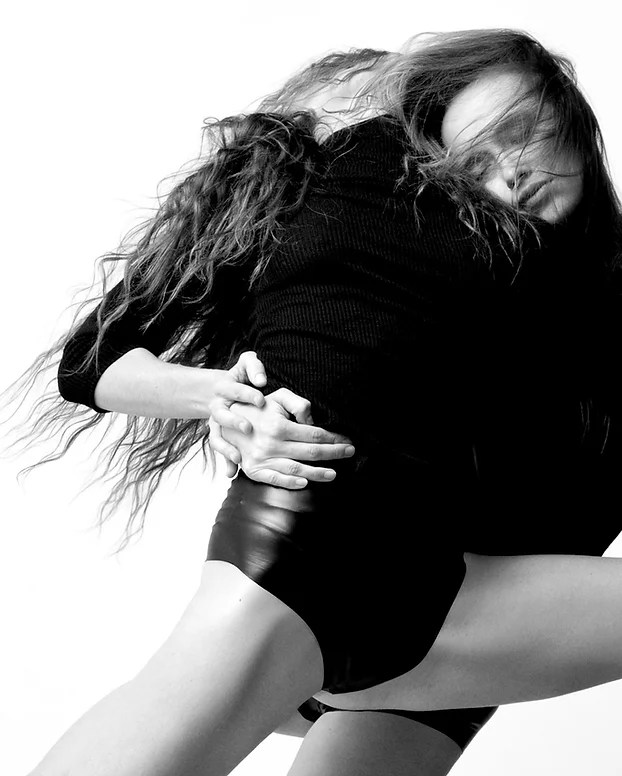
Laura Arendt and Alex Blondeau dance as a duo, in a piece that pays tribute to five forgotten German women: nuclear physicist Lise Meitner, anti-Nazi activist Sophie Schloss, racing driver Clärenore Stinnes, composer Clara Schumann, and choreographer Pina Bausch. While the concept sounds unwieldly, the dance is anything but: flowing, varied and constantly compelling. Performing in a stage ringed by light, the pair beautifully together, at one point almost becoming a single dancer. Anna packs a remarkable amount of exceptional dance into 40 minutes, and responds to the lives of the five fascinating women in a way that is never literal, but moving, funny and inventive. Contemporary dance of a very high standard,
Coriolanus by William Shakespeare – National Theatre (Olivier), London
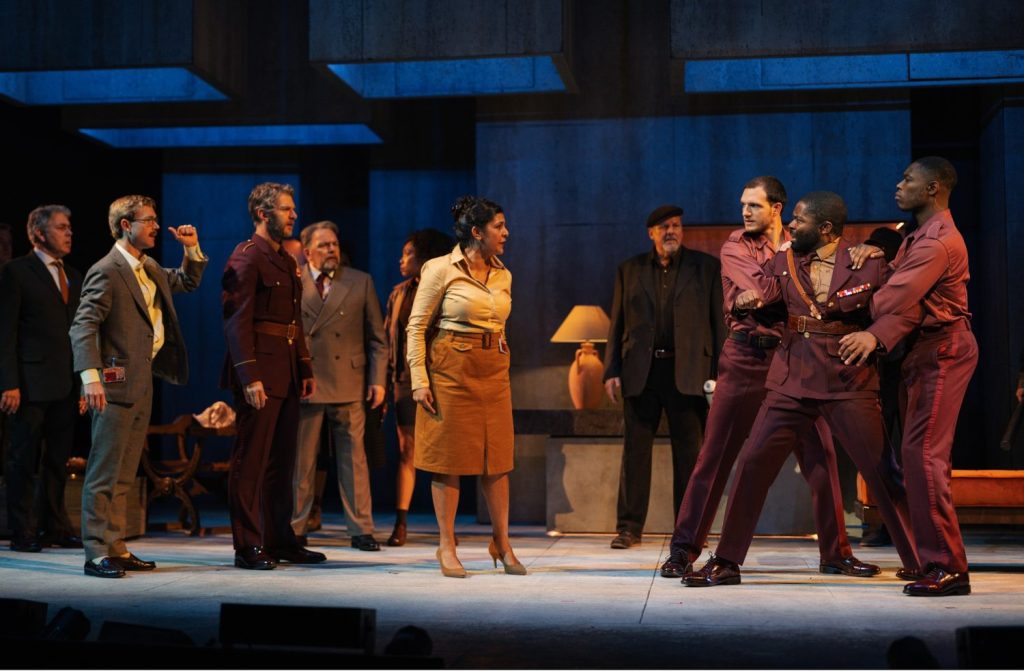
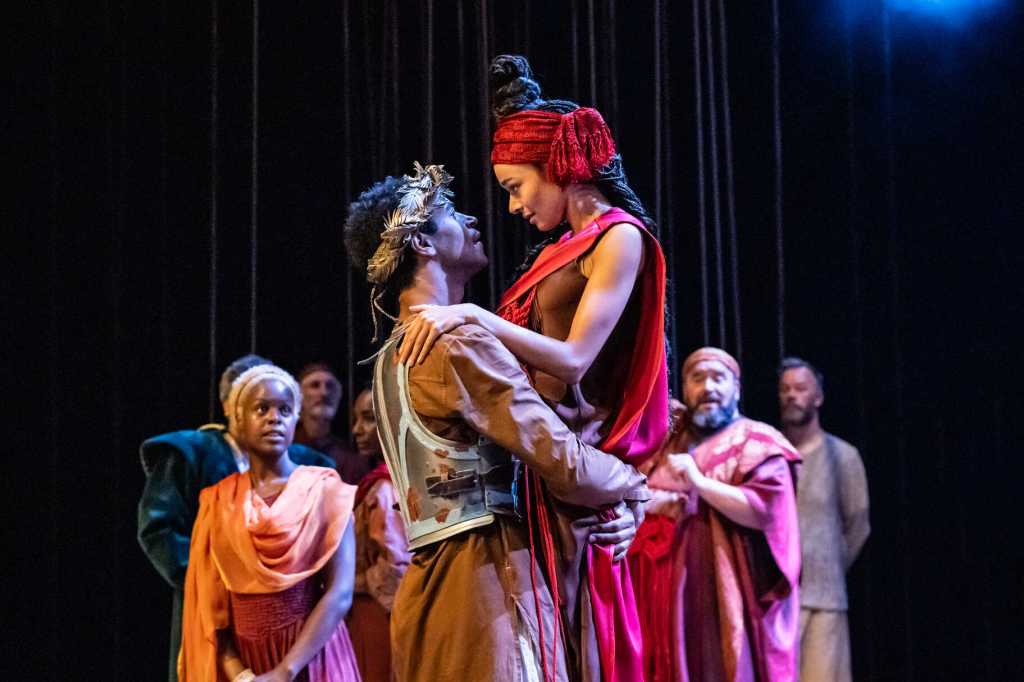
Lyndsey Turner’s production of Coriolanus begins not in the street, but in a high-end museum of antiquities where a reception is being held for wealthy dignitaries. The revolting citizens spray graffiti on a Roman wolf statue and confront a suited figure with a glass of champagne: David Oyelowo at Coriolanus. His initial appearance is more mild-mannered than the traditional portrayal, but it is a clever piece of direction. Clearly one of the patricians from the start, Oyelowo is an operator who fits in with the system, but soon begins too lose his cool. His transformation into a demagogue, bringing down everyone with him as he heads towards ultimate disaster, is a brilliant performance.
It is a long-overdue return to the British stage for Oyelowo who, having played Henry VI in the RSC’s early 2000s histories cycle and a breakthrough in Spooks, left for the US where it was much easier for a black actor to find work. The fact he is back is cheering, and Coriolanus shows how much we have missed his skills. He finds ways to make one of Shakespeare’s least likeable characters sympathetic, and also increasingly disturbing. Patricia Nomvete, as his mother Volumnia, is a cold and self-interested character, more interested in the theory of war and heroism than her son, and ultimately motivated to save herself. It seems that Coriolanus is seeking a father, who Shakespeare does not mention. His love/hate relationship with mortal enemy Aufidius – Kobna Holdbrook-Smith, who seems to know Coriolanus will be the death of him – is often played as sexual attraction, but it could be that he is seeking a father figure to validate his reckless behaviour.
There are consistent ensemble performances all round from a play that is always about the reaction of the crowd. Peter Forbes plays a helplessly torn Menenius, who cannot fill the gulf in Coriolanus’ life depsite his best efforts, and Kemi-Bo Jacobs brings cold fury to the rather thankless part of his ignored wife, Virgilia. Es Devlin’s stunning set is also a star. She has created brutalist a concrete frame, mirroring the National Theatre, which hovers above the stage to create a chic, yet looming, gallery, or lowers to the ground to become a hidden labyrinth of claustrophobic chambers. Turner’s staging of the play’s final moments, with a Christ-like image of the dead Coriolanus projected onto the sheer concrete wall of the set, boldly advance the play from its grim final scene. Oyelowo, stabbed to death by a mob second before, is immediately transformed in death into a hero. A statue of him appears in the museum of classical antiquities, and a 21st century child stops to stare. It is not what happened that matters: it is how the story is presented.
In the basement studio at the Arcola Theatre, instruments are set up for a band rehearsal. Joe (James Westphal) is playing a song to himself on the keyboards, when Ellie (Laura Evelyn) walks in. We soon realise they’ve not seen each other for many years, and Joe has invited his former bandmates back to Salisbury for a reunion gig. When Ross (Royce Cronin) eventually shows up, no-one seems sure they want to be there. Can a group of friends recapture the hope and excitement of being young, or is it a terrible idea?
Barney Norris’ new play, which he also directs, combines conventional drama with songs, performed live by a group of actors who have some impressive musical skills. They combine covers with original songs devised by the cast. Each band member has their moment. Joe’s song reveals his loneliness since the band (we never learn their name, except that they didn’t like it) broke up. Ellie, at a personal crossroads, delivers an excellent version of Tom Waits’ ‘Take It With Me’, a beautiful song about legacies. Ross, the only one with a professional music career, sings The Cure’s ‘In Between Days’, which seems to be about his brief, unresolved relationship with Ellie. But Ellie and Joe were together too, and as the band members talk a hidden story emerges, and we discover that a corrosive secret has been lurking over the years since they last met.
‘The Band Back Together’ has strong elements, but a problem with its structure. The play is two hours long with an interval, but the first half, dominated by the awkwardness of people who don’t know how to talk to one another any more, drifts. When the second half arrives, the play gains momentum and emotional charge, to the extent that the first half seems redundant. The music and themes work together, injecting energy. It feels as though a tighter work is struggling to get out.
Norris also identifies intriguing themes, but they feel underdeveloped. The gig is supposedly a Novichok benefit gig, harking back to the 2018 Salisbury poisonings. The characters treat this as a joke, but the question of what happened to Salisbury when the world’s cameras left deserves exploration. So does the concept of the city as the place that, as Ross puts it, “everyone imagines they come from”.
The rootlessness of people from a small English town, and their struggles to forge an identity for themselves, seem like important themes, but would benefit from greater examination. The trio of protagonists, tied together by the past and dark personal secrets, echoes the structure of Brian Friel’s masterpiece ‘Faith Healer’. Friel’s characters were pushed to the physical margins, the forgotten towns of the far north. That the equivalent could now be Salisbury, a damaged place at the heart of England’s dreaming, is an intriguing concept.
Cronin, Evelyn and Westphal give engaging performances, and bring out the hollowness that hangs over these 30-somethings. Very few can make a living from music in the 21st century, and even Ross has been forced to exchange creativity for hack work. The characters are forced to face the probability that their late teens really were the best time in their lives. The Band Back Together’ is an entertaining, but flawed evening, in which the characters express themselves most eloquently through other people’s music.
Upstairs at the Royal Court the set, by Madeline Boyd, consists of a pair of spookily perfect white trainers hung from the wires above. This is all we need to signify ‘G”s London setting and teen characters, but Tife Kusuro’s defies expectations of urban drama about social issues. Her new play is a complex, layered and ambitious work that ignores the boundaries between forms, and a work that signals an exciting talent.
‘G’ concerns three black school friends – Khaleem (played by Ebenezer Gyau), Joy (Kadiesha Belgrave), and Kai (Selorm Adonu). Their relationships are close, funny and fractious, as teens are, but there is more going on. Kai and Joy are trying to summon the Baitman (Danny Harris-Walters), rumoured to be the spirit of a black boy who died. The trainers belong to him. As the backstory unfolds, we realise the three are being questioned by the police over an incident, and have been caught on CCTV. Then their alter egos emerge – versions of themselves in balaclavas, trapped in glitchy movement sequences as though frozen by the cameras.
The play is a rich, dense thicket of London teen slang. Kusuro’s dialogue is complex and fascinating, and her characters expressive and real. The language draws us into a parallel world, where to be young and black is to be followed around Londis as a matter of course. It becomes apparent that ‘G’ is about the experience of being under surveillance, and the way black teens are excluded from society as a matter of course. Kai runs an illicit business in school, selling balaclavas. The Royal Court stage is neatly configured like a catwalk, with the audience seated on both sides facing each other, making us study one another as well as the performers. But Kusuro’s work is also reminiscent of ’80s and ’90s horror, for example ‘Candyman’, as the young protagonists open up portals to another terrifying dimension – except that, for these characters, the terror is the truth about the world they inhabit.
The combination of realism and fantasy in ‘G’, and the use of movement, are bold and clever. With choreography by Kloé Dean, Monique Tuoko’s production incorporates powerful elements of dance. In the masked scenes, where the characters move like zombies caught in a video loop, the play breaks out of conventional speech-based performance to express themes that are strange, disturbing and beyond words. Faced with challenging material, the cast is exemplary, giving fully committed performances. Ebenezer Gyau is charming, charismatic, and driven to the edge. Selorm Adonu is twitchy, sensitive and very funny. Kadiesha Belgrave is sharp but desperate not to be noticed, and her friendship with Kai is remarkably touching as a trans theme emerges. Harris-Walters delivers menace and daring, whether wrapped in bandages or dressed in ice-white street gear.
‘G’ is audacious and engrossing writing which taps into a reality that is part of every London neighbourhood, and cities beyond, but runs parallel to the lives of many. Tife Kusuro puts powerful cultural identity and uncomfortable, urgent political themes on stage together and, seemingly without effort, makes them a distinctive, original stage experience. The production showcases her skills and potential, as well as those of the excellent young cast. Director Monique Tuoko, after recent shows including ‘Fair Play‘ at the Bush and ‘Wedding Band’ at the Lyric Hammersmith, is building an impressive CV.
Lynn Faces by Laura Horton – Summerhall, Edinburgh An all-female punk band led by Lynn, Alan Partridge’s abysmally treated assistant, is a eye-catching concept. Laura Horton’s play is about a woman, played by herself, taking back the initiative in her life. It is an uneasy mix of farce and darker underlying themes of coercive control. Horton’s supportive group of friends are willing to humour her punk gig ambitions, but really their support is helping her confront the toxic relationship she is struggling to escape. This is rather undermined by the idea that the group is hopeless at music, and don’t have the perspective to see this. While songs like ‘My Snazzy Cardigan’ are funny, the play can’t decide whether it wants to take its characters seriously or not, meaning the audience doesn’t know either.
Divine Invention by Sergio Blanco – Summerhall, Edinburgh A man sits at a table, surrounded by objects – books, a microscope, a bone – and a pile of paper. He tells us he is going to read a 30 page text he’s written, and then does so, remaining seated throughout. It sounds like the opposite of drama, but Sergio Blanco’s play as performed by Daniel Goldman is strangely engrossing. The text is above the nature of love, a reflection on Romeo and Juliet apparently commissioned by the Globe Theatre. It unfolds as a shattering personal experience, but the identity of the writer and story-teller remain opaque. Blanco is a Franco-Uruguayan writer, Goldman his translator and collaborator. What happens in the piece is based on reality, but the boundaries keep shifting. The show is a strangely mesmerising hour, conjuring an emotional landscape in our heads.
So Young by Douglas Maxwell – Traverse Theatre, Edinburgh
So Young addresses one of society’s greatest taboos – an older man and a younger woman. Can a relationship with a generation gap be healthy, genuine and based on choice? A couple, played by Lucianne McEvoy and Andy Clark, have a comfortable, convincing relationship but it becomes apparent that their visit to an old friend (Nicholas Karimi) is overshadowed by the recent death of his wife, breaking up a close-knit group. And he has a new partner, Yana Harris, who is at least twenty years his junior. Feelings of unresolved grief at the loss of a friend combine with confusion over what to feel about his new life. Douglas Maxwell’s drama is classy, uncomfortable writing that leaves us wondering how we would react in similar circumstances, and whether we’d be right.
Batshit by Leah Shelton – Traverse Theatre, Edinburgh
Leah Shelton’s one woman show takes the experience of her grandmother, who spent time in an institution during the 1960s. Shelton exposes the mysogyny of Australian society which, in those days, pathologised women who were not happy in the traditional role of a wife. The theme is important, but the show fails to deliver the insight required to take it beyond what we might expect. Alternative performance techniques are deployed, from archive footage to singing and audience reaction, but they distract rather than enlightening. With limited information on how her grandmother really felt, plus extensive discussion of her medical records, the show feels a little exploitative and prioritises effect over focus.
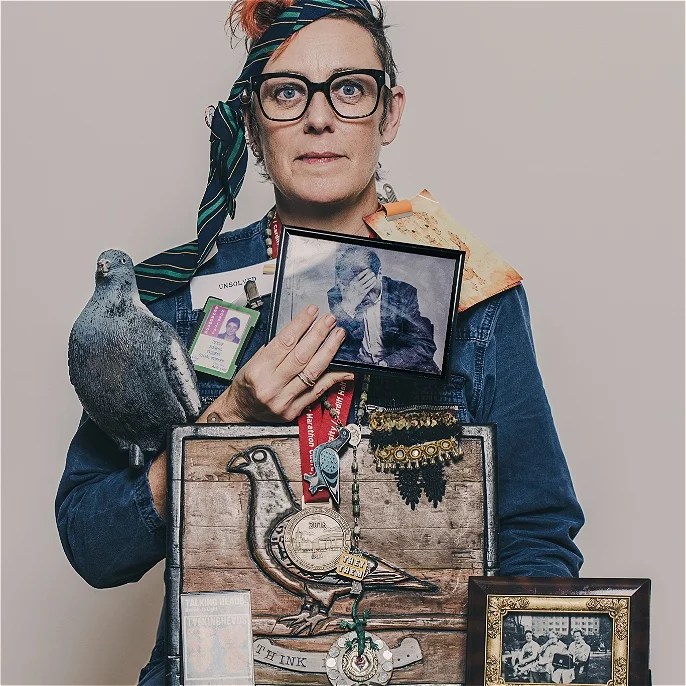
DAR Rogers has created a highly personal show, an intimate story-telling experience delivered in a naturalistic style. With a room full of props, Rogers tells her own life story in a style that is disarming and deceptively casual. She talks about identity and gender difference, but what makes the show special is her use of movement. She is not a dancer, so when she dances it is truthful and moving. Co-creators Becky Davies and Jo Fong (herself known for the excellent The Rest of Our Lives) have shaped this into something that makes complete sense on its own terms – funny, moving, and clever.
Shotgunned by Matt Anderson – Space at Surgeon’s Hall, Edinburgh
Matt Anderson’s two-hander tracks a relationship, from its end back to its beginning. Couple Roz (Liv Bradley) and Dylan (Brad Follen) have a conventional experience of meeting, falling for one another and moving in together, but when they have a miscarriage things become complicated and difficult. The drama is straightforward, but performances are very likeable and the theme of loss is explored in a way that feels convincing and real.
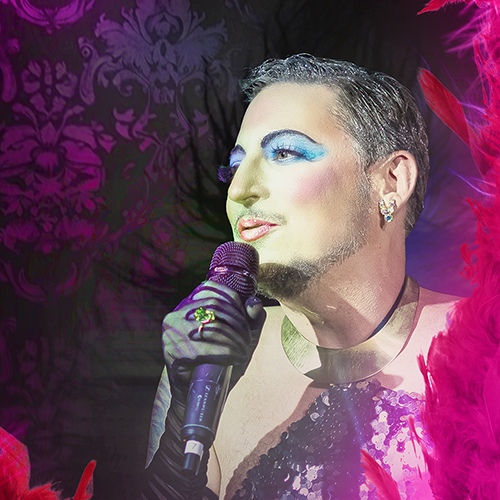
Salty Brine is a force of nature, a drag queen with a roof-raising voice. He creates a cabaret evening, complete with band and musical director, which ingeniously combines autobiography with songs from Annie Lennox’s 1992 album ‘Diva’ and ‘The Awakening’ by Kate Chopin. His love of literature is infectious and his stage presence magnetic. He turns Lennox songs into something far more intense and emotive than the original, and brings the audience with him from start to finish.
Show Pony by still hungry & Bryony Kimmings – Summerhall, Edinburgh
Shows about the reality of circus performance have been a feature of the last few Fringes. Show Pony continues the theme with a very personal account from three German artists – Lena Ries, Anke van Engelshoven and Romy Seibt – who explain that they are past their circus prime and worried about the future. Expressing themselves through their respective disciplines, they perform remarkable physical and acrobatic feats while illustrating how brutal their profession can be, especially for women. A fine combination of entertainment and an examination of social expectations.
Cyrano by Virginia Gay – Traverse Theatre, Edinburgh
Virgina Gay’s reimagining of Edmond de Rostand’s classic, Cyrano de Bergerac, is bold and brilliant. Gay takes a chainsaw to the old play, pulling apart its questionable sexual politics and looking for a new way to stage it that does not involve the sexually deception of Roxanne. A string of super-charismatic performances engage the audience throughout, not least from Gay who is a force of nature. Jessica Whitehurst’s Roxanne is a better person than everyone else in the play, while Brandon Grace as Yan (Christian) is hilariously pretty but dumb. They are supported by a chorus of three characters in search of a play, who bicker entertainingly throughout. The show is highly original, and a modern re-imagining that makes it hard to see how this play can every be the same again.
Loveletter by Camille O’Sullivan – Assembly Roxy, Edinburgh
Back for her 20th Fringe, Camille O’Sullivan’s exceptional voice and choice of repertoire has a loyal following. Combining her classics (Ship Song, Look Mummy No Hands) with new material (a remarkable version of Paranoid Android), Camille also pays tribute to her friends Sinéad O’Connor and Shane MacGowan with powerful accounts of their music. A special evening.
300 Paintings by Sam Kissajukian – Summerhall, Edinburgh
Australian comedian Sam Kissajukian was diagnosed with bi-polar after giving up comedy and embarking on an unhinged 5-month manic episode in which he painted 300 pictures. What could have been a tough story of mental breakdown is one of the funniest one-man shows on the Fringe, cheerfully blending theatre and comedy. Kissajukian, who now manages his disease, has complete perspective on what happened to him. His account of the extent to which he wound people up, especially a senior, unnamed, US tech entrepreneur, are wild, bizarre and expertly delivered. It is impossible not to love a show that tells heavy stories lightly.
The Flock by Roser López Espinosa / Moving Cloud by Sofia Nappi – Zoo Southside, Edinburgh
These two pieces, performed by the Scottish Dance Theatre company, are dazzling exhibitions of movement. The Flock, premiered in Catalonia, recreates the movement and murmuration of birds. Mark Drillich and Ilia Mayer’s propulsive electronic soundtrack combines with a virtuoso ensemble performance. Moving Cloud is performed to a Celtic folk soundtrack which, fascinatingly, combines reels and jigs with entirely different movement on stage. Dancing again as a group, the performers weave a constantly shifting tapestry which has the audience spellbound.
There is a style of contemporary dance that looks perfect and feels cold. Lewis Major’s Triptych features three dancers striking poses amid cones and blades of light cutting across the dark stage. Visually, it is a dramatic experience, but the surface seems to be everything. The inclusion of female nudity also feels titillating and cheap, included for effect. The result is a trio that fails to move.
You’ve never seen a performance like this. Australian company Pony Cam’s show is about burnout, and there’s no mistaking the theme. Four performers run for 10 minutes on treadmills. Then they switch and do it again, and again, and again. While they run they carry out a set of tasks – cooking a three course meal for two audience members, completing a long list of supposed leisure activities, performing an individual story, and (my favourite) completing a live grant application to Creative Scotland. They also aim to beat their collective distance record for the show and, if they miss any of their targets, promise the audience their money back. The result is frantic, chaotic, hilarious and genuinely quite dangerous. The performers physical commitment is astonishing and, by the time they wrap it up with a recreation of OK Go’s ‘Here It Goes Again’ video, they look shattered. It’s a superbly entertaining show.
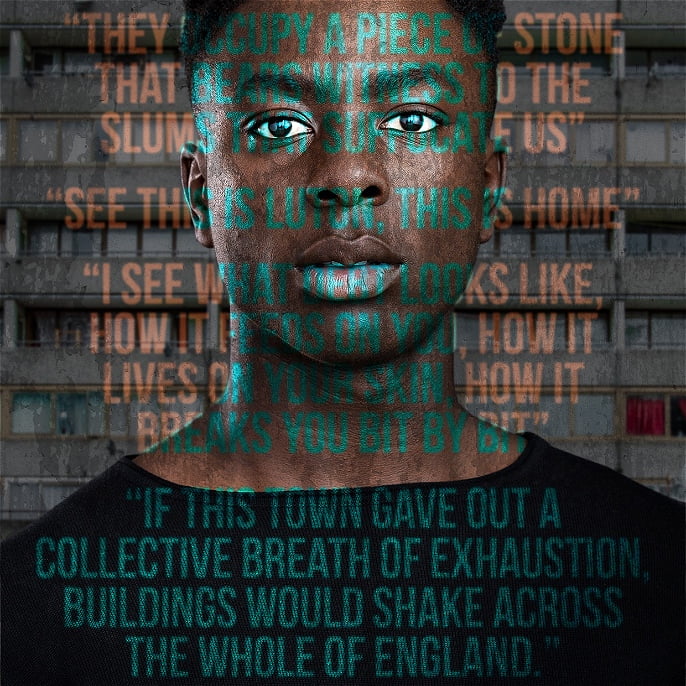
Chalk Line Theatre perform a coming of age story about young people in Luton. It’s a fairly conventional story of growing up and the dangers of bullies and knives, until it turns in an unexpected direction. Edmunds does a impressive job of representing the experience of being young and trying to find your way in an unforgiving urban environment. His young cast bring it alive, and the play delivers a message of hope that confounds the usual dramatic trajectory of inevitable tragedy.
QUEENS has a great scenario – Elizabeth I and Mary Stuart in purgatory as drag queens – and impressive costumes. The three German stars (there’s also Penthisilea, Queen of the Amazons – played by a woman) look awesome and have a lot of fun together. Other than that, it’s hard to pin down actual events. The show is more of a happening that anything that claims to have structure or narrative, definitely a candidate for fringiest show of 2024.
The defining image of the 2020 European Championships final, played at Wembley in 2021, was a fan, trousers down, flare blazing between his buttocks. Alex Hill’s one-man play tracks how someone might end up doing that. The central character, engagingly played by Hill, is an AFC Wimbledon fan (Dons supporters may well take issue with the club being used as a cypher for bad supporters). He gets in with a crowd of hardcore fans, drawn into drink, drugs and violence. As he gets more deeply involved, his best friend is cut adrift. Hill adeptly turns a story of toxic masculinity into a cautionary tale about what happens when men don’t talk to each other.
Kathrine Payne play, which they perform, combines multiple techniques to tell a story that the performer seems unwilling to explain or address. Disguised as a hardboiled detective conducting an investigation into what happened on a certain night, appearing as a French impresario, channelling vintage X-Factor, and Payne throw everything at us. It’s a thoroughly unpredictable show, in which everything is a distraction from the fact that the people closest to us can be the ones who hurt us the most. It’s funny, involving, and wildly inventive.
Pericles is perhaps the least well-regarded of William Shakespeare’s play: episodic, fantastical, thematically confusing, and written with an unknown collaborator (possibly, but not definitely, brothel-keeper George Wilkins). Even the Royal Shakespeare Company only undertakes it occasionally, the last time 18 years ago. So it is a bold choice for new RSC co-artistic director Tamara Harvey’s first Stratford Shakespeare and, it turns out, an inspired one. With a company of actors mostly making their RSC debuts, this production is a chance for Harvey to make a statement about how she and fellow boss Daniel Evans see the future for the country’s premier classical company. It is a major achievement that she leaves the audience wondering why they know so little about such a spellbinding play.
The plot of Pericles is absurd if judged as realism, but as a story with its origins in Greek myth the play makes a lot more sense. The titular character roams the Eastern Mediterranean beset by assassins, shipwrecks, and the apparent loss of his country, his wife and his daughter. It is a picaresque adventure, powered by terrible personal loss and impossible redemption. It is also a review of government, as Pericles encounters leaders who are in turn depraved, honest, deceitful and, finally, converted from sin to an honest life. Events derived from the realms of myth provide a lens for examining the way mortal men and women respond to power.
Jonathan Fensom’s simple set, draped with ropes and hung with astrolabes, turns the Swan Theatre into a ship. Or rather, it reveals that the much-loved auditorium has always been a ship – its wooden balconies decks and its thrust stage a prow. Striking, beautiful costumes by Kinnetia Isidore are Greek but also Levantine, Indian, Japanese – tunics and robes slashed with colour, setting the play in a distant, semi-fictional past. And Claire van Kampen’s music, full of swirling woodwind, with a modern song neatly inserted, places us firmly in a land of imagination. What brings these elements together is the use of movement, choreographed by Annie-Lunnette Deakin-Foster, with the full cast constantly on stage striking tableau or writhing en masse to create vivid settings out of nothing. We know which city we are in – and there are several – simply by the way they move. As a binding visual motif it is a brilliant concept, bringing unity to the disparate plot strands and timelines.
For this to work, the company has to work exceptionally well together, and Harvey’s cast is a tight and compelling group. They are led by Pericles, played by Alfred Enoch who, a somewhat naïve perennial optimist, is relentlessly ground down by the horrors he experiences until he is left mute, perched on the edge of the stage while the action continues without him. His reunion scenes with Marina, and with his lost wife Thaisa, are genuinely moving but, in a very well-judged performance, he leaves the distinct impression that his mind may be lost beyond redemption. He is permanently changed by grief, even though the people he thought lost have returned.
Harvey makes the clever decision to give the part of the play’s chorus, Gower, to Marina, Pericles’ daughter. This places Marina, who would otherwise not appear until Act IV, on stage throughout the play, albeit as a baby in a couple of scenes. It also makes the potentially distancing narration conspiratorial, and sympathetic, drawing us in. Rachelle Diedericks’ excellent performance is honest, open, and credible. We believe that she really can convert punters from their sinful ways, in the notorious brothel scenes. The play’s themes of hope, acceptance, and love are as relevant now as ever.
The cast is uniformly strong. Felix Hayes is darkly louche as the incestuous King Antiochus, and very funny as a gaping Pander and a somewhat touched Fisherman. Christian Patterson has the audience in the palm of his hand as the jovial King Simonides. Chukwuma Omabala is ravaged by disaster as King Cleon, in a Macbeths-style double-act with his scheming wife Dionyza (Miriam O’Brien, cooly understudying the indisposed Gabby Wong). Leah Haile’s Thaisa is totally assured, and Philip Bird’s staunch retainer Helicanus holds much of the play together. There are distinctive memorable performances in multiple roles across the cast, including from Jacqueline Boatswain, Sam Parks, Miles Barrow and Chyna-Rose Frederick. It is easy to imagine many of these actors becoming Stratford favourites in the years to come, part of a lineage neatly summed up by a departing audience member who remarked that he had seen Alfred Enoch’s father (Russell Enoch) in the first RSC season he watched, in 1970.
The production’s coherent vision makes light of the play’s supposed difficulties, and reveals it as an enchanting mixture of allegory, story-telling, romance and wish-fulfilment. Tamara Harvey’s revival of this unloved piece is something of a revelation. She makes a powerful case for a company that can bring fresh perspective to texts we think we already know, and give us the theatre we did not realise we needed. This is of course why the RSC exists and, on the evidence so far, the future looks very promising.
‘English’ is set in a classroom of the kind recognisable throughout the world: stackable chairs, melamine tables, a whiteboard. In Anisha Fields’ set, we can only locate it more precisely is because the door is open, revealing wall paintings outside that tell us we are somewhere in Asia. The class is learning English as a foreign language, studying for a qualification which, it becomes apparent, is crucial to the characters’ aspirations, whether for work, family or personal identity. Everything, in fact, depends on being an English speaker. Failure to speak ‘English’ holds you down and holds you back, even if you are only truly yourself in your native language.
Sanaaz Toossi’s play, which won the 2023 Pulitzer Prize for Drama, premièrs in the UK in a production directed by Diyan Zora, in her Royal Shakespeare Company debut. The show transfers from The Other Place in Stratford, the first RSC production at the Kiln in 15 years. Following ‘Cowbois’ at the Royal Court earlier this year, it is a further step towards re-establishing the RSC’s new writing presence in London. ‘English’ is a pre-approved, gold standard piece rather than a risky commission, but Diyan Zoya’s production gives British audiences a welcome opportunity to see for themselves what the fuss is about
The language class in question takes place in Iran, where Toossi’s family originate. It is set in an indeterminate era when CD and DVD players are teaching technology, any time between now and 20 years ago. It is a low-key but engaging piece, in which five characters – four pupils and their teacher – interact as the course progresses revealing, to us and to themselves, why they are learning English.
The play’s underlying theme is colonisation. Direct colonial rule may be mostly in the past, but the cultural power of the English language remains as powerful as ever. In countries across the world, respect, identity, employment, power are dependent on the favourable perceptions of English speakers. Toossi explores this theme with subtlety and power, cleverly using the actors’ normal accents to indicate that they are speaking Farsi, and Iranian accents when they speak English. This simple device neatly exposes the contrast between the fluency with which they express themselves in their own language and the straitjacket of a foreign tongue. Yet the pupils have different attitudes to English. Frustrated Ellam, played by Serena Mateghi, rails against the test and the teaching, but keeps coming back. Goli (Sara Hazemi) is young, adaptable and sees possibilities rather than barriers. Roya (Lana Joffrey) is a grandmother, out of her depth but determined not to be frozen out by her emigrée family. And Omid (Nojan Khazai) riles everyone by being just too good at classes. Overseeing them, the teacher Marjan (Nadia Albina) once lived in Manchester, and struggles with her cultural identity.
All the cast put in engaging performances, drawing the audience into the group’s dynamics. Many scenes have wit and charm, and are clearly based on a deep understanding of what it feels like to never belong, either in Iran or in the West. The play’s perceptive politics are its strength, but Toossi’s plotting and character management is less so. While the set-up is fascinating, very little that is unexpected happens in the play and plot development sometimes seems written too much by numbers. The sexual tension between Marjan and Omid does not tell us much, and the abrupt disappearance of Roya who, like the Fool in King Lear, is never mentioned again seems odd. The play is traditional in form, telling its story from start to finish through characters who mostly talk around a table. ‘English’ gives us plenty to think about. However, the lack of any reference to the situation of the characters, particularly the women, within Iranian society creates a gap in our understanding of what is really happening, or how people make decisions about their lives. The production also leaves us seeking a level of disruption, challenge or experimentation that is absent, to give us the sense we have seen something truly unexpected.









 Tom Bolton