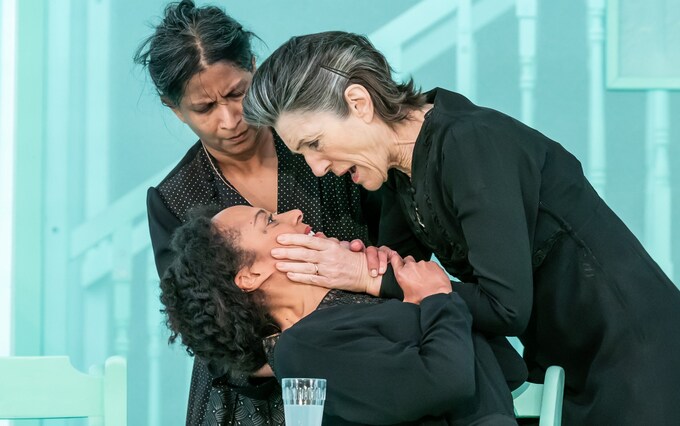
The titular House of Bernarda Alba, as directed by Rebecca Frecknall for the National Theatre, is laid out before us like a doll’s house with the front removed. Merle Hensel’s set exposes two floors of rooms – bedrooms where the tortured, insanely oppressed women of the house sit alone and brood, and the downstairs living room, kitchen and yard where they talk to and gradually destroy one another. The house, where Harriet Walter’s matriarch Bernarda plans to shut up her five adult daughters for a supposedly traditional eight-year mourning period, is shut off from the outside world. The only, fateful, interaction comes through illicit encouters over the high gate. Frecknall stages sone scenes as taking place simultaneously, dialogue overlapping in different parts of the house, a clever device that enhances the claustrophobia and the realism of events.
Harriet Walter’s performance is central to Lorca’s dark but fascinating play, an brutal allegory of fascism, religion and sexual oppression. Traditionally, she is a dragon but Walter plays her as a surprisingly sympathetic character. While she dominates her daughters and is violent towards them, we have the strong impression that her social conditioning has led to act this way. It is impossible to take your eyes off her as she wrestles with her family’s seething frustrations. Performances across the board are excellent. Lizzie Annis is perfect as a Martirio, boiling up just below the surface. As Magdalena, Pearl Chanda’s spirit is turning to bitterness, directed at those around her. Rosalind Eleazar as Angustia is the oldest daughter, and the most terrified that she will never marry and leave the house. As Emilia, Eliot Salt is younger, with a kindness that does not serve her well. And the doomed youngest daughter, Adela, is played by Isis Hainsworth as a very convincing teenager, thoughtless and heedless in a way everyone is at her age.
The family also includes Thusita Jayasundera as all-knowing housekeeper Poncia and Bryony Hannah as the maid, providing a commentary as household tensions built. Frecknall brings the world outside into the house in the form of stylised movement sequences involving the wordless Pepe El Romano, the external male disruptor who will tear the house apart. She also stages a shocking scene in which the reported pursuit of a local woman who has killed her baby bursts into Bernarda’s living room, as a mob seizes their quarry, like a tableau of a mythical hunt. This is a key moment in a play that is about society rather than events in a private house, and how the two are inextricably linked. Frecknall’s excellent production reveals the play’s continued power, 87 years after its author was murdered by a state he could clearly see coming for him.
Christina Kirk and Marylouise Burke. Photo by Ahron R Foster.
InfiniteLife by Annie Baker – National Theatre: Dorfman, London
Following a string of remarkable shows at the National Theatre, including The Flick, John and most recently The Antipodes, Annie Baker is back as perhaps the most anticipated playwright writing today. Loungers set against a decorative cement block wall (the set designed by dots) fill up with women who are all, we discover, undergoing fasting treatment for chronic pain. We cannot see beyond the unappealing wall, but the cast gaze out towards us and a view of what they describe as a parking lot behind a bakery. If this is purgatory, and metaphorically at least it may be, it is highly unpromisin. The ordinariness of the setting is a classic Annie Baker trope, where places, events and people appear at first glance to be of little great significance but increasingly carry a strange weight. There aren’t really any conventional events, just talk, but the conversations that ensue between the characters are powerful and compelling.
The attraction of Baker’s work is her characters, who often seem almost too real in the way they speak and behave to be allowed on a stage. Ginnie (Kristine Nelson) is in charge, asking the questions of new arrival Sofie (Christina Kirk). The relationship between the women on stage is full of minor tensions, occasional squabbling and kindness. Each gradually reveals the effects, sometimes horrifying, of pain that cannot be cured. Yvette (Mia Katigbak) unrolld a deadpan list of complaints that hits a level of absurdity which is both funny and awful. We feel guilty for laughing and for doubting her account of what has happened to her, because one of the play’s themes is the invisible trauma experience by women, whose experiences of pain and much else besides are disbelieved and discounted. There is a man too, Nelson, played by Pete Simpson with perfect poise as a ridiculous yoga-trousered, open-marriaged dude. He is very funny, but his account of his health, when it comes, is perhaps the darkest and most unlikely of alll.
There is a great deal going on below the surface in Baker’s plays, which makes thinking about them afterwards a very satisfying experience. For instance, Sofie is trying to read George Eliot’s ‘Daniel Deronda’, from which she at one point she reads out a particularly dense sentence. Is the book’s plot, involving bad marriage choices and outsiders doomed to watch from the sidelines, providing commentary on her life? Christina Kirk’s performance as Sofie is exceptional. She controls the play’s progress, forwarding the action with announcements such ‘Eight hours later’. Younger than her companions, she is both poised and nervous in equal measure and extraordinarily vulnerable. Baker, who has a quiet history of identifying and busting theatrical taboos, gives her a scene which is the first I can recall to show female masturbation on stage. It forms part of her mysterious sexuality, tied up and dictated by her pain where the border between fantasy and reality has melted away.
Infinite Life is a subtle play, crossing meditations on philosophical questions of whether pain really exists if it can only be experience subjectively, with the messy realities of life in 21st century America. It is charming, funny, raunchy, cerebral, tear-inducing and strange in equal measure, directed expertly by James Macdonald. When Eileen (a wonderful performance by Baker favourite Marylouise Burke) lays her hand on Sofie’s head as she is about to leave for home, she conveys the impression that something supernatural is happening – a moment of healing. And for the audience, it really is.
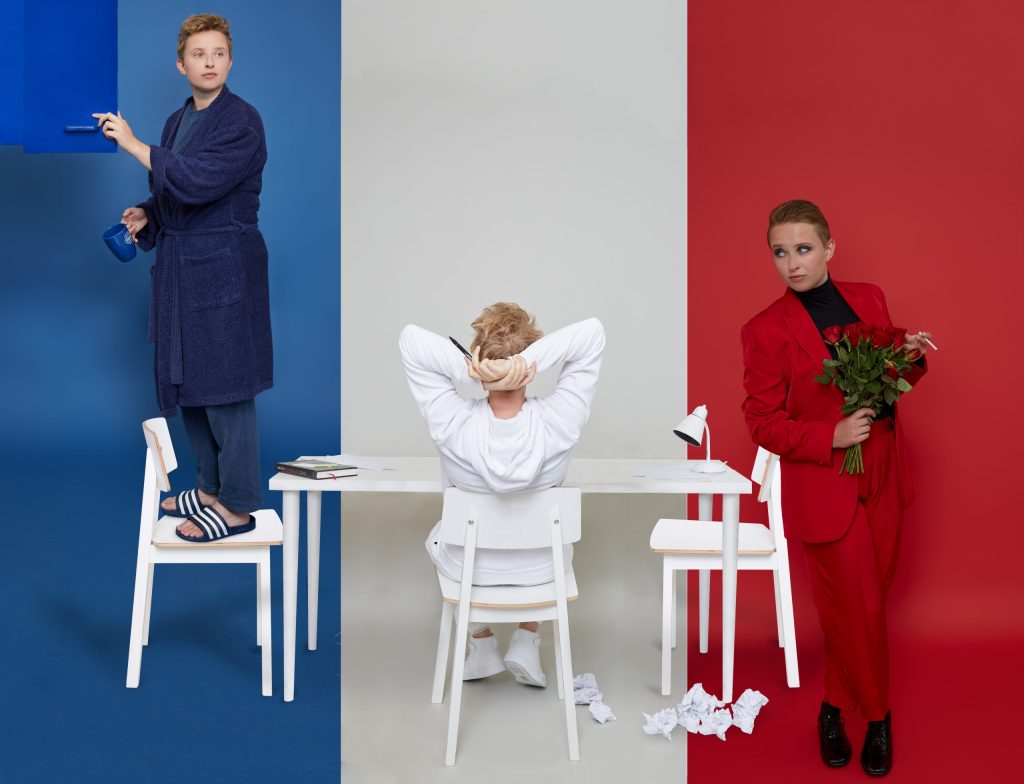
Hannah Maxwell’s single-handed show is a beautifully structured piece of fringe theatre, combining the personal and the confessional while making it seem new and different – quite an achievement. Maxwell is deeply charming, cultured and slightly aloof, at least at first. She is in control, and we believe her implication that she once worked for the security services – she seems like the kind of person who easily might. Of course, it is an illusion – no-one, after all, is really in control. Moving in with her grandparents in Luton to look after her dying grandfather, and then her widowed nan, has left her suspended between duty and the London life she has left behind, with its big highs and deep lows. Watching Eurovision with her nan leads a stalkerish obsession with French singer Barbara Pravin, which is both funny and believable. The show is about working these things through.
Maxwell has the audience in the palm of her hand from the start, instantly sympathetic. Crucially though, she can also surprise. Her staging is a neat balance between clever and silly, and never gratuitous – making Oat So Simple in collaboration with the audience, managing her nan’s medication via a giant pill organiser, delivering a final killer ballad in French – are cleverly judged. She plays with the contrast between her artistic life as a gay woman in London, and the suburban family background that is also part of her, whatever her instinct to deny it. She delivers a powerfully understated show about identity, happiness and the importance of connecting between generations. She also concludes that being an obsessive fan is probably not a good thing, which is good life advice for us all. Maxwell is a fringe favourite for a very good reason: she makes the complete shows that so many performers aspire to, but which are so difficult to pull off.
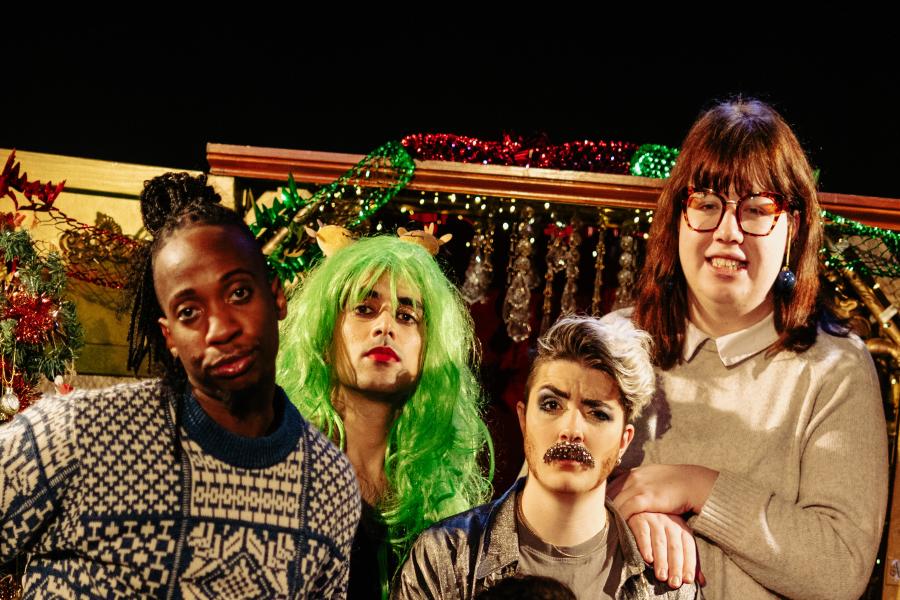
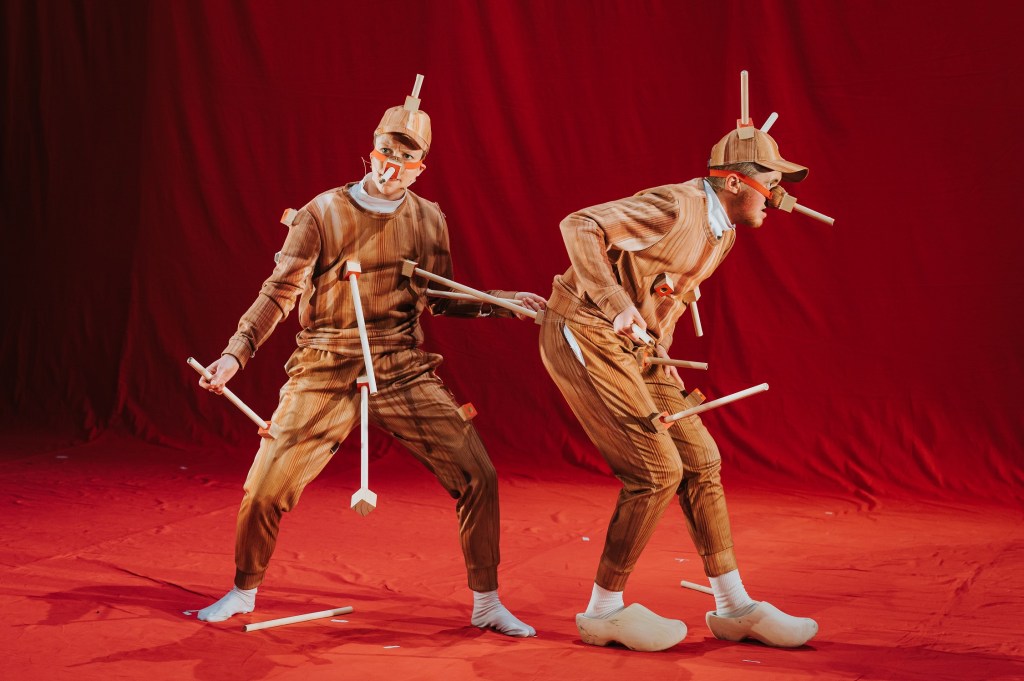
Cade & MacAskill – Rosana Cade and Ivor MacAskill – are a performance duo whose work draws on their personal experience of gender fluidity and transition. They take the Pinocchio story, which they have been working on for five years, as a mechanism for interrogating their own experience as a couple, blending real life and fiction in a compelling and original show which keeps the audience on its toes, never quite sure what they are going to do next. ‘The Making of Pinocchio’ is staged in a film studio, the action simultaneously shown on a big screen at the front of the stage, so we see both what is really going on and the illusion crafted for the camera. This is technically impressive and very funny. Cade, as the ancient Gepetto, stalks around in a pair of giant wooden glasses doing a ludicrous and very amusing old man act. Gepetto crafts a puppet from a tree, played by MacAskill in a wood effect costume equipped with sockets from which phallic branches protrude. After the first scene, though, the traditional narrative breaks down and the pair delve into their own lives, and MacAskill’s experiences taking testosterone and transitioning into a male body.
The show is delightfully and ingeniously staged, constantly playing with the illusion created by the camera perspective, making characters appear much larger or smaller than they really are. As the camera operators circle the stage (wielding cameras made of wood), they build a tension between the way we present ourselves and what we really are that goes to the heart of the pair’s gender identities, as well as the role of a performer. Pinocchio’s motivation, to “become a real boy” raises more questions than it answers, and leads Cade & MacAskill to affirm their own identities separately from social expectations. “We’ve always been here, and we always will be” says MacAskill of trans people like himself. The show is courageous in the way the performers expose themselves, literally and metaphorically, in their search for agency. It is also very funny, with some surreal and dirty scenes, one of which imagines Battersea Arts Centre’s artistic director in a way he is most unlikely to have expected.
The creative team, which includes designer Tim Spooner, responsible for the combination of red drapery and weird wood effects, and camera operator Jo Hellier who both appear throughout, are an essential part of the show’s success. Cade & MacAskill are not figuring things out on their own: they are part of a community, reinforced by a supportive audience, which is making a queer journey together and living lives that are based on understanding, mutual support and real freedom. ‘The Making of Pinocchio’ appears casual on the surface, but reveals multiple layers of technical expertise and creative theatre-making. It is a humane and forward-looking production that places Cade & MacAskill at the forefront of challenging, questioning, communal queer theatre narrative.
The Yellow Wallpaper by Charlotte Perkins Gilman adapted by Stephanie Mohr – Coronet Theatre, London
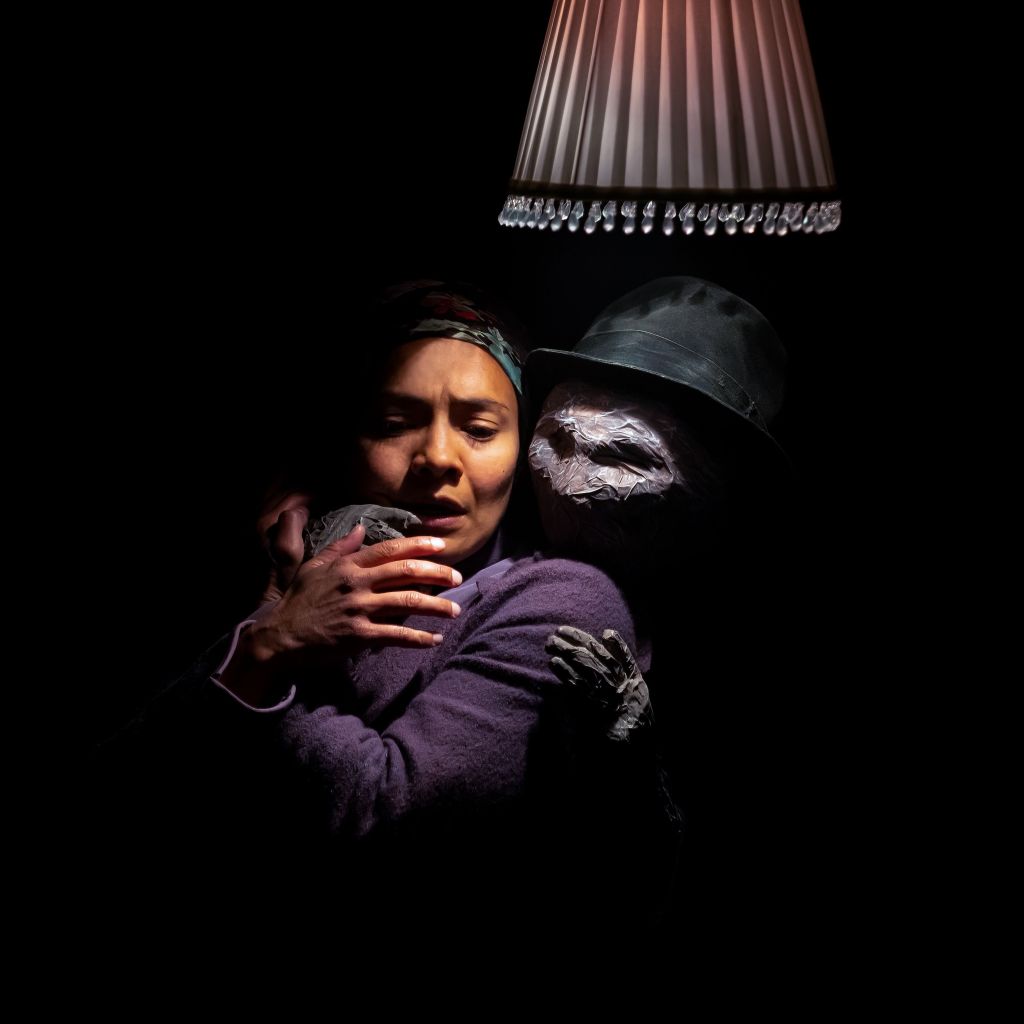
Stephanie Mohr’s production of The Yellow Wallpaper locates us inside the head of the woman who narrates Charlotte Perkins Gilman’s 1892 novella. The story, an important piece of proto-feminist writing, describes the experience of post-partum psychosis from the perspective of a woman who has no agency over her life. Her husband, a doctor, knows what is best for her and keeps her confined to an attic room in a rented house, where she loses her grip on reality as something terrifying begins to emerge from the patterns in the wallpaper.
The production cleveryl expresses us the duality in the narrator’s mind by combining performance and dance. The narrator is played by French actor Aurélia Thiérrée whose part is faithful to the text of the novel. Her portrayal is both frail and powerful, drawing us into her world. What lifts this beyond a one-woman show is the staging. Surrounded by ropes, some monstrously fat, scattered nursery toys and hanging garments, Thiérrée is lost in a world of impediments placed in her way – and in the paths of many others like her – that have infiltrated her mind.
She is also haunted by Fukiko Takase’s silent dancer, projected for much of the show onto the rear wall. The audience enters the theatre through an adjacent room, bare except for a bed, where her movement is filmed. She rolls and writhes, showing the narrator’s mental confinement, but begins to morph into the sinister ‘creeping’ woman who moves in the ‘foul’ wallpaper. When she emerges, arching, bending and running low across the stage, there is a real frisson of horror. The production is perhaps too dependent on video effects that do sometimes seem basic, but the concept is highly involving. This kind of European work, combining traditional acting with movement and dance, is to be cherished on the rare occasions when it makes it across the Channel or the Irish Sea.
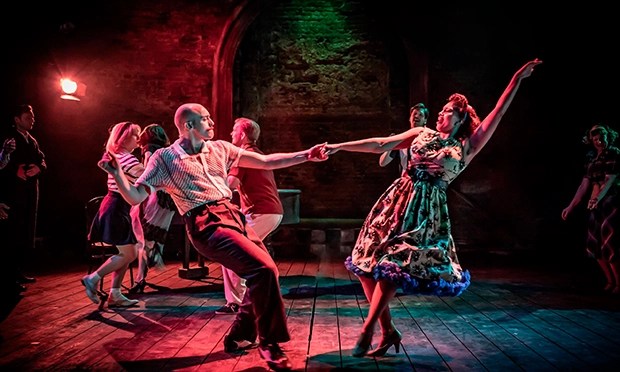
There is something about Beyoncé and Thomas Middleton. Within a few minutes, the cast of Lazarus Theatre’s production of The Changeling are strutting around on a table performing a thoroughly disturbing version of ‘Crazy in Love’. Perhaps it is a conscious tribute to Joe Hill-Gibbins’ ground-breaking Young Vic production a decade ago, which made telling use of ‘Single Ladies’. Either way, Lazarus and director Ricky Dukes conjure a similarly claustrophobic atmosphere of spiralling madness. Middleton and Rowley’s characters start to lose their grip on reality from the opening lines of the play, when Milo Mcdonald’s Alsemiro spots Beatrice Joanna at prayer. Soon, she has seen him too and the pair are besotted – but she is about to marry someone else. When Beatrice conceives a plan for her servant De Flores to kill her new husband, Alonzo de Piraquo, there is no coming back. A descent into plotting, sexual subjugation, murder, and a blood-soaked denouement – all the things we ask of a Jacobean tragedy – are guaranteed.
Contemporary songs are a very effective way to make strange and alienating behaviour more familiar, and Dukes uses them throughout the play at key points. He cuts the text unceremoniously to create a version with focus and a shorter running time, dropping a comic subplot set in an asylum. With it goes most of the work attributed to William Rowley, leaving us with Thomas Middleton’s brutal tale that delights in the detail of evil deeds while, naturally, providing dire warnings about the consequences of any such behaviour. Dukes’ production is a wild ride, and the changes dial the intensity up to delightfully frantic levels. Sorcha Corcoran’s set, which consists mostly of a vast Succession-style board-room table, seems perverse at first, constraining the action to the edges and requiring actors to twist in their seats to address the audience behind them. However, awkwardness is inherent to a play where every character is forced out of their comfort zone to confront dark desires and consequences. As dead characters sit around the table holding black balloons and smoke fills Southwark Playhouse’s smaller auditorium, this 17th-century fantasy feels as though it is happening to us, right now.
A cast of eleven features strong performances in the lead roles. Colette O’Rourke’s Yorkshire Beatrice can go from nought to sixty in a second, her calm surface vanishing in all-encompassing passion – terror, hate, fury, love. Locked into an oppressive society where she has no control we almost become convinced that, despite the disasters she triggers, she had few better options. O’Rourke is a natural, highly distinctive actor and, surely, someone on her way to bigger things. She has two powerful foils in Jamie O’Neill as De Flores and Mylo Mcdonald. O’Neill makes it clear that he has nothing to lose and, terrifyingly, will do whatever he pleases. Mcdonald’s Alsemiro is a trusting chump, but his fury when he eventually cottons is a wild eruption. Lazarus Theatre is an impressive outfit, consistently delivering energetic, engaging productions of the classics and it is a privilege to see their young performers working close-up, in small venues. The Changeling is the latest in a line of shows that are accessible but not compromised – urgent, no-holds-barred, clever and compelling theatre.
The Effect by Lucy Prebble – National Theatre: Lyttleton, London
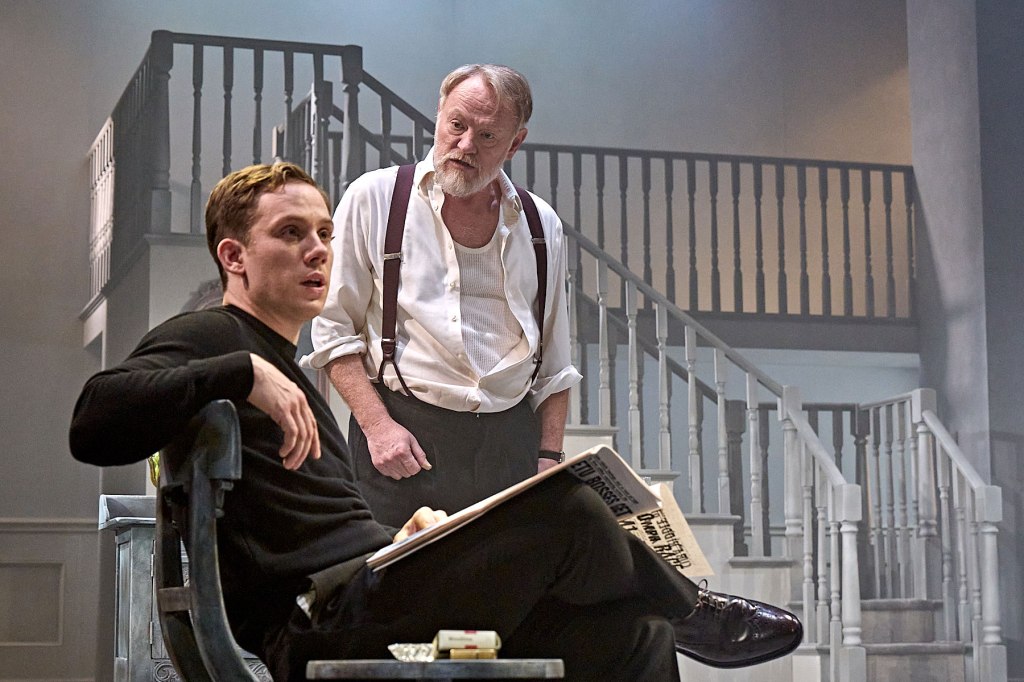
Ten years on from its National Theatre premiere, with Billie Piper and Jonjo O’Neill, The Effect is back and it proves the staying power of Lucy Prebble’s writing. The staging, directed by Jamie Lloyd and designed by Soutra Gilmour has plenty of wow factor. The Lyttleton has been reconfigured with seating under the proscenium mirroring the stalls opposite. In the middle, a catwalk of a stage glows sci-fi white. Spaces for each scene are defined by glowing squares and intense downlighting, creating a setting outside of time in some unspecified past/present/future. Costumes are white, for the two drug trial test subjects, black for the two doctors. It looks very cool.
The Effect is structured through parallel relationships. Connie (Taylor Russell) and Tristan (Paapa Essiedu) are signed up to a residential trial and are falling for each other, but is just the drugs? Are they in control? And what is control or choice if everything we do is governed by brain chemicals. Dr Lorna James (Michele Austin) and Dr Toby Sealey (Koba Holdbrook-Smith), running the trial, have a past and a complex relationship. The play is a subtle, clever commentary on depression, pharma, and power relations between men and women. It benefits from four excellent performances. Essiedu is funny, manic and unpredictable, in contrast to Russell’s character who is self-contained, repressed even, and on the brink. They play beautifully together. So do the two doctors, separated by the full width of the stage. We can tell that we are only seeing a small part of who Austin really is, and that so much is held back. Holdbrook-Smith, whose bass voice is astonishing, is all front, concealing just as much.
The Effect is undoubtedly a modern classic, given a thrilling, engaging staging that shows how little Prebble’s work has dated. The questions she asks – the way the medical profession treats depression, how the pharmaceutical industry twists truth for profit, and how little we understand our own minds – remain entirely current.
It seems 2023 is the year we rediscovered the nuclear bomb. Against a backdrop of renewed nuclear jeopardy following the Russian invasion of Ukraine, ‘Oppenheimer’ became an unlikely summer blockbuster, and on the stage Katherine Moar’s debut ‘Farm Hall’ played at the Jermyn Street Theatre. Now the Southwark Theatre presents a tenth anniversary revival of Alan Boyd’s ‘Operation Epsilon’, which deals with exactly the same scenario as ‘Farm Hall’. In 1945 the invading Allied armies arrested ten men they considered to be Germany’s leading nuclear scientists, and flew them to a house in Huntingdonshire. holding them for six months while their conversations were covertly recorded. The Allies wanted to hear their reaction when the atom bombs were dropped on Japan, and to discover how close Germany had come to building an A-bomb of its own. Partial transcripts of their conversations were declassified in the 1990s, and have been a object of fascination ever since. What did these men think they were doing? Were they trying to build a bomb for the Nazis? How did they justify their work to themselves, or to anyone?
Operation Epsilon has a cast of eleven which, despite the broad stage at the new Southwark Playhouse Elephant location, is a tall order. Andy Sandberg, who also directed the original production in New York, does a sterling job of managing his actors, aided by Jamie Howland’s two-level cutaway house set, with its huge living room. The cast provides good entertainment as a bunch of egoists obsessed, for the most part, with their research and blind to the terror around them. They bicker, jostle for status and re-engineer their backstories, aware that a reckoning is coming for anyone who worked for the Nazis. Nathaniel Parker as Otto Hahne understands more than most what he has done, and simmers with suppressed rage in a show-leading performance. Gyuri Sarossy’s Werner Heisenberg, the leader of the group, is portrayed as a scheming and self-centred figure. Simon Chandler makes Max von Laue a fine combination of elderly indignation and surprising compassion. Jamie Boygo’s Carl Friedrich von Weizsäcker communicates arrogance and uncertainty in equal measure.
It is difficult to avoid comparing Alan Brody’s play with Katherine Moar’s because, while both use the same source material, they come to surprisingly different conclusions. Brody’s portrayal of Heisenberg leaves little doubt that he covered his back by implying he deliberately delayed Nazi progress towards a bomb. Moar leaves the truth of his actions in doubt, which is a more subtle approach. Brody also fails to clearly distinguish the feuding younger scientists from one another, leaving us knowing little about their backgrounds or motivations. Moar explores their motivations in significantly greater detail. And Brody blows what should be the most dramatic moment of all, when Otto Hahne discovers that the US has dropped the A-bomb, serving up a distracting scene of comic awkwardness with Simon Bubb’s Alexander Armstrong-esque British Major Rittner. The tension surrounding one of the most significant moments in human history is at the centre of Moar’s play. Overall, Brody gives us characters who often seem two-dimensional and leaves us with the overwhelming impression that the scientists were technically brilliant but morally bankrupt, uninterested in understanding the wider implications of their work, seeing themselves as an elite untouched by grubby politics.
Boyd ends the play with an unconvincing ‘gotcha’ – a letter from exiled Jewish scientist Lisa Meitner telling Hahn that he and his colleagues will not be forgiven. It is the closest a woman comes to appearing in the play, and the all-male cast supplies a powerful reminder of the way the world was run. Meitner’s letter is supposed to puncture the men’s self-satisfaction, but it seems a crude way to round off a debate that, because of the gaps in the Farm Hall recordings and the occluded motivations of the participants, can have no real conclusion. Operation Epsilon is an enjoyable and thought-provoking evening, but Boyd does not make the best use of his rich and strange source material.
Three women perform connected but very different dance pieces, responses to the derogatory ‘Kong Girl’ identity given to wealthy Hong Kong residents. PK Wong dances naked and vulnerable, her head covered by an giant inverted red dress suspended from the ceiling. Alice Ma presents herself in a doll-like dress on a platform, but stuffs it full of black feathers which spill out in ritualistic fashion. Justine Li seems to fight herself as she dances. All three pieces are startling and compelling expressions of self – an hour of high quality contemporary dance.
Long-standing band The Neutrinos play a gig, but it takes place in a Summerhall basement in a room full of old sofas and bric-a-brac. Band and audience wander around the space, experiencing it as they please in an atmospheric deconstruction of live performance that feels casual but lingers in the mind as an experience that is cleverer and more unusual than it seems on the surface.
Funeral by Onteroend Goed – Zoo Southside, Edinburgh
Onteroend Goed are sometimes described as the best theatre company in the world, and there is certainly no-one like them. With Funeral they’ve hit on a theme of death and collective mourning that can be found all over the 2023 Fringe – an unconscious response perhaps to everthing happening in the world, not least climate change which preoccupies the company. Funeral is a triumph: every moment is stripped to its essentials, and each is unlike any other experience the audience will have at a stage show, from shaking hands with every person in the room (itself a post-Covid affirmation) to processing in a spiral to cast confetti over a makeshift altar, like ashes. The ceremony is about nothing specific and therefore everything, and has meaning for every person in the room. It’s the collective ritual we all need, and Onteroend Goed understand that deeply.
Lovefool by Gintare Parulyte – Summerhall, Edinburgh
Produced by Théâtre National du Luxembourg, Lovefool is a one-woman play about failing to find happiness. Kristin Winters is very funny in a show that can be rather heavy-handed but has moment of hilarity – a supremely awkward vintage sex education film – and of shock – her character’s self-harming. Sometimes it feels like familiar ground is being trodden on the way society convinces women its failings are their fault, but when it works it is original and revealing.
Dark Noon by Fix&Foxy – Pleasance at EICC, Edinburgh
Seven South African actors, six black and one white, reenact the brutal story of the settlement of the USA and the destruction of Native America. Faces in white powder, their story-teeling style is cartoon-like and all the more barbaric for it. As they perform, a wild west town rises around them from the red dirt. This is an impressively ambitious production in terms of both scale and theme and, while it would benefit from a stronger script, it delivers moments that are hard to forget – not least when an audience members recruited for a country dance realise they are being lined up for sale as slaves.
Nathan Queeley-Dennis’ one-man play, of which he is both writer and performer, may appear to be about nothing significant – a likable young Brummie guy’s advnetures in dating – but it is a tight and clever piece of writing. Nathaniel is winningly self-aware is his quest to present himself in the best light but, while keeping the audience throughly entertained, creates a convincing picture of life as a young man – the spaces of work and the city, and the relationships between black men, symbolised by the black heart emoji, which are touchingly supportive and positive. He makes himself a role model for non-macho manhood.
Javaad Alipour’s new show uses his trademark multi-media techniques to explore the nature of knowledge and cultural ownership of information, through the unsolved murder of the ‘Iranian Tom Jones’, Fereydoun Farrokhzad. The fact he is constantly described in terms designed to explain him to a Western audience is tip of an colonial iceberg below the surface of Iranian culture and politics. fronted by the affable Alipoor, the show includes an Iranian musician, Raam Emani, wildly famous in Iran as the singer King Raam, but a waiter in the USA where he has fled following the murder of his father. Not content with confronting us with the living embodiment of these parallel worlds, Alipoor also does a nice line in satirising the all-pervasive true crime podcast style, with a host played by Asha Reid. A complex, multi-layered play that for the most part holds together very well and takes us on a very unexpected journey.
Inga Mikshina-Zotova and Roman Mikshin-Zotov sit behind a news desk, reading us items from the work of Svetlana Alexeivich verbatim accounts from ordinary people caught in the collapse of the Soveit Union. The material is staggeringly dark and they illustrate it, appropriately, with tableaux in miniature filmed live on their table. These scenes are disturbing – plates are smashed, soil mashed into chicken and Inga’s hair, and everything sprayed black leaving a strong whiff of solvent. These may be historical accounts, but Irina and Roman are Russian actors living in Prague and the application of these stories to Russia today is left in no doubt. Each performance is dedicated to Belarussian political prisoner Palina Sharenda Panasyuk. It’s raw, upsetting, necessary.
Woodhill is verbatim theatre about HMP Woodhill, a prison on the edge of Milton Keynes, with the country’s suicide rates. Three people – two mothers and brother – tell the stories of how each of their loved ones died in Woodhill via taped accounts. What makes this piece even more extraordinary than its deeply depressing subject matter is the way that they words are expressed on stage through dance. Tyler Brazao, Marina Climent and Miah Robinson embody the three relatives through fierce, uninhibited movement around a set of archived record boxes.
Written by Matt Woodhead and produced by LUNG, the show is a tribute to the three men who died – Chris Carpenter, Stephen Farrar and Kevin Scarlett – and a furious indictment of a prison system that locks people rather than treating their mental illness, and is so under-staffed that regular cell checks don’t happen, leaving it as a lottery whether you are found in time to save your life or, as in the case of the three men, too late. Remarkable theatre – awful that it is needed.
After Allby Solène Weinachter- Dancebase, Edinburgh
Dancer Solène Weinachter’s solo piece is clever, funny and rather brilliant. She engages very naturally with the audience, chatting us through her experience of being asked to dance at her uncle’s funeral, with no warning, and how it has made her think hard about how she wants to plan her own send-off. She does a lot of talking, but there is dancing too. She dances comically, a very hard thing to pull off well, and brilliantly when she finally expresses herself, while creating select moments of theatricality. Such is her confidence, she even pause to blindside an audience member into taking her phone number during the show’s final, dramatic moments. Her confidence alone makes the show a pleasure to watch.
The fact that Adam Scott-Rowley performs entirely naked throughout is not the most remarkable thing about this show. It is just a vehicle for an hour of physical performance in which he abases himself in front of us, some of his performance involving a strange attachment to a toilet, the only object on stage. There are strong hints of Kenneth Williams in his sneering, joking/not joking persona, and indeed the toilet obsession. The show is unapologetically about physical decay and death, and is exactly the sort of challenging, impossible-to-forget performance that the Fringe should be all about.
Britt Plummer is an Australian clown, and Lovefool is autobiographical, about a relationship with another clown, from Norway, which developed during lockdown. She thinks she’s invited us to her wedding, but we’re not so convinced things are the way she imagines. The show has charm, and some very funny moments including her sexually explicit re-enactment of the affair using only two coffee cups. There’s not enough focus though, or clowning, to take it to the next level.
When We Diedby Alexandra Donnachie – Summerhall, Edinburgh
Written and performed by Alexandra Donnachie, When We Die is a very strong piece that packs quite a punch. Working in an undertaker’s, she has to prepare the body of a man who raped her a few months earlier. The show is remarkable both on the realities of embalming, which Donnachie clearly knows a lot about, and the impact of sexual assault which is revealed in heartbreaking detail. If Donnachie’s writing is precise, honed and exceptionally good, so is her performance which leaves us unsure what she will do right until the final moments of the play. As a show, it’s a complete success.
Emily Woof’s one-woman play, Blizzard, has many strengths. She is an engaging stage presence, talking to the audience in a way that leaves us uncertain whether what she is presenting is fact or fiction. She talks about her marriage to a neuro-surgeon, who thinks rather differently to her, and the experience of delivering a scientific paper on his behalf. The set-up works better than the pay-off though, and it seems that Woof didn’t quite know how to end the piece. However, her insights into the human mind are lightly delivered but worth hearing.
Agathe and Adrien are two French-Canadian acrobats. Their show is an exercise in challenging gender expectations as they perform increasingly astounding feats, taking equal roles. This is quite something given that Adrien is around 6 feet tall, and Agathe more like 5. Her backflips while seated on his hands, and their arm balance with her handstanding on his upstretched arm are particularly breathtaking, but the whole piece was moment after moment of impossible physical achievement.
Phaedra/Minotaurby Benjamin Britten/Kim Brandstrup – Lyceum, Edinburgh
A show of two halves. Mezzo-soprano Christine Rice performs Benjamin Britten’s cantata Phaedra, with a pianist, in Deborah Warner’s staging. Thrilling dramatic. Then in Kim Brandstrup’s dance piece, tense throughout, Tommy Franzen, Jonathan Goddard, Isabel Lubach dance around a set that has a climbing wall as a backdrop, into the Minotaur’s lair. Some of the dancing on this wall is astonishing – hand-stands on climbing holds for example. Both pieces were of the highest quality, short because that’s all they needed to say what they had to say.
Ell Potter and Mary Higgins live in each other’s pockets, ex-lovers, current flatmates, co-performers. In a piece reminiscent of the messy, very real relationships at the centre of Sh!t Theatre’s shows, they navigate the end of theirs through a show about endings. Performing naked apart from translucent body stockings that are going to holes, they reveal themselves emotionally, falling out on stage, pulling each other apart and then reassembling what makes them love one another. There are some very funny moments – Mary’s determination to deliver a crow impersonation over a recording of her deceased grandfather for example – but what really stands out is the emotions of two people whose lives are heading in separate directions, and can only express their feelings through low-budget, home-made experimental theatre. It is a beautiful thing.
Miriam Battye’s play about dating is performed by Letty Thomas and Archie Backhouse as Her and Him, meeting in a pub for a potentially awkward encounter. Potentially a highly conventional scenario, Battye super-sharp writing jolts it into something else entirely – an unpredictable, coruscating tirade about relationship conventions. Thomas is much too clever for Backhouse, a guy who thinks he’s ‘nice’ and wants things simple. She doesn’t want nice at all, and strips him intellectually and emotionally apart. But of course it’s not that simple and everything turns around more than once. The performances are very funny, with her uncontrollable disdain for herself and everyone else pitted against his genial bafflement. Battye is quite a writer, and this a very good play indeed.
Papillon by We All Fall Down Interdisciplinary Creations – Summerhall, Edinburgh.
Canadians Helen Simard, choreographer, and Roger White, composer, have worked together for 20 years. As We All Fall Down they produce dance with live music. Three performers – Nindy Banks, Mecdy Jean-Pierre, Victoria Mackenzie – dance in contrasting styles, radiating pure energy, while White and two musicians including a live drummer pound out a techno-kosmiche soundtrack. It’s thrilling stuff in a small room, the power of their sound and movement threatening to burst the confines of Summerhall and explode across the Meadows. The music is apparently based on Brian Eno’s Oblique Strategies card system, and the whole piece by chaos theory, which makes its unity even more impressive.