Cloud 9 by Caryl Churchill – National Theatre: Lyttleton
While it is now difficult to image the reception for Caryl Churchill’s remarkable Cloud 9 when it opened in 1979, it is impossible to imagine anyone was expecting what played out in front of them at Dartington College. It is a still a bracing satire which takes delight in presenting us with what we expect, and then sweeping it from under our feet every time. On the surface, the first half is a scabrous parody of British patriarchalism , while the second half is an examination of what has changed perhaps 75 years on. However, the traditional gender roles are thrown up in the air, and no-one is involved with the person they should be, nor having with the approved gender. As the homophobic 1980s hove into view, and the socially regressive Conservative government took hold, Cloud 9 has already shown up power structures and the people who cling to them as utterly ludicrous figures.
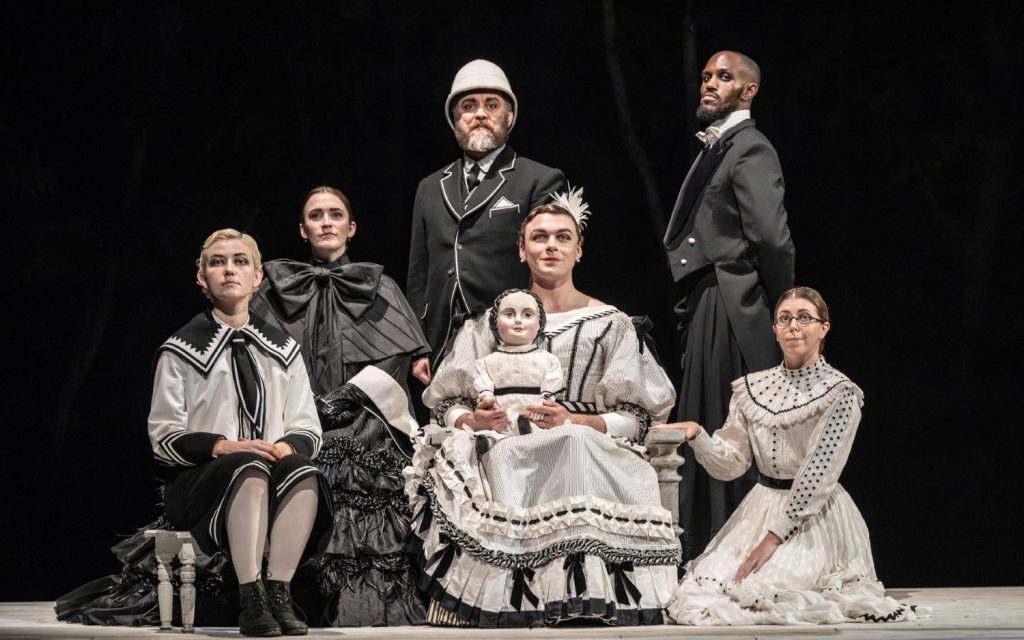
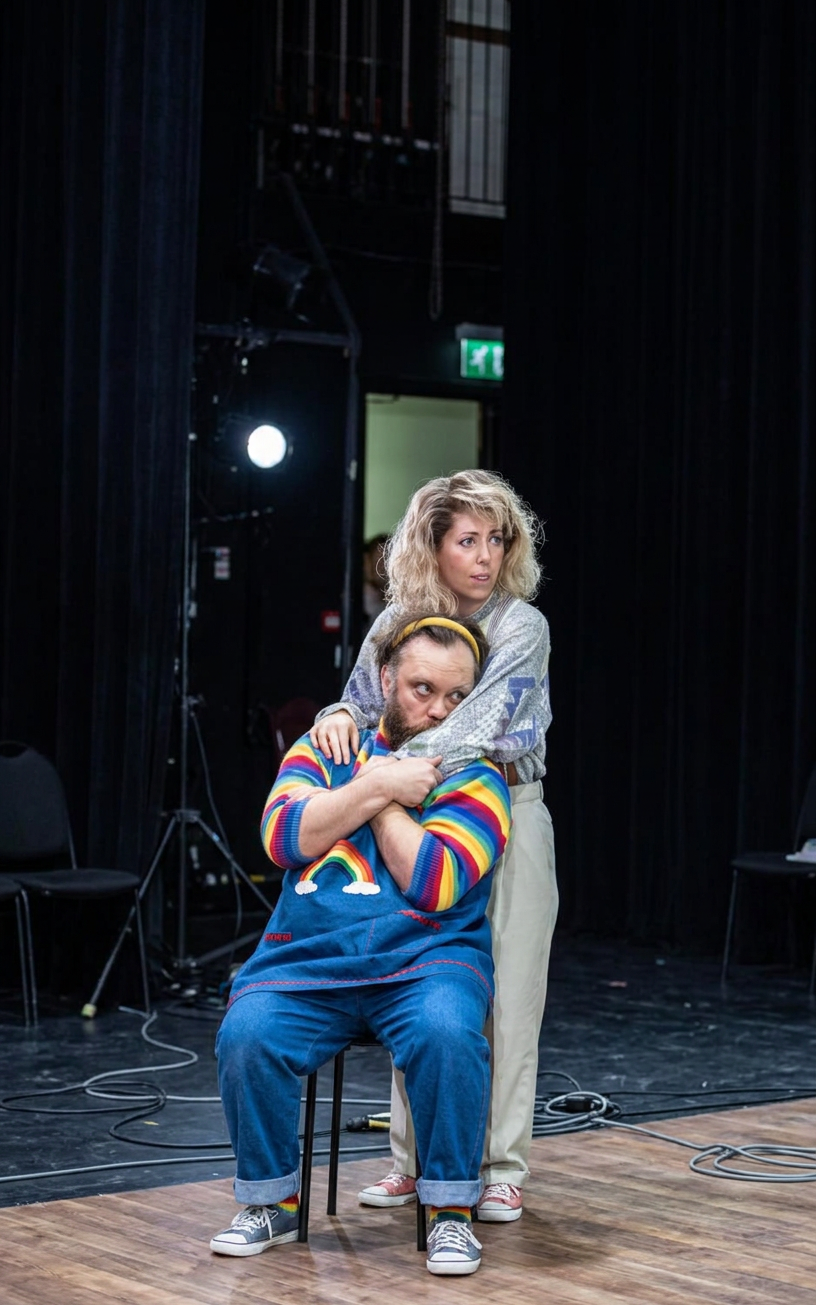
Dominic Cooke’s production, and Miriam Buether’s highly enjoyable designs, set the play on a platform – the floor of a colonial bungalow in ‘Africa’, surrounded by dark, impenetrable jungle. This is presented behind a gilt-columned proscenium arch and swags of red velvet curtain. After the interval, as the action projects the cast fast-forward in time – gaining a quarter of a century in age, but still reaching 1979 from the High Victorian colonial era – the proscenium arch has collapsed and its remnants are piled on the stage, where they create a bomb-site style playground. The shift between eras creates some delicious parts which the cast pile into. Sam Troughton has perhaps the most fun. He plays head of the family Clive in part one, absurdly stiff-upper-lipped, sending the women inside when there is ‘trouble’ in the jungle, commissioning murders on behalf of the Empire and sleeping with the dashing Mrs Saunders (Rebecca Humphries giving a very funny performance). In Part 2 he is Cathy, a 5-year old dressed as a girl but still with a beard, romping around the set without inhibition, the precise opposite of his buttoned-up Victorian persona. The gender confusion includes a mention of other children teasing him, telling him he is not a girl.
Charlotte Ritchie makes the sharpest transition, from Victorian grandmother Maud in a vast black crinoline dress (some remarkable costumes by Samuel Wyer) to leather-coated 70s mum Victoria who explores a throuple, presenting hope of a new way forward for society. Tom Mothersdale is great as dashing, closeted Harry Bagley and Victoria’s detached partner Martin. Eloka Ivo is Joshua, the devoted servant who claims his “soul is white”, full of deeply surpressed anger, and Gerry. Betty, Clive’s wife, is played with hilarious stiffness by Stuart Thompson, who then becomes Edward, her grown-up son, who is openly gay by the 1970s. Ellen Robertson plays Edward as a boy in the first half, a starched sneak of a child, and the older Betty in the 1970s. The latter, dressed like the Queen during that era, is navigating life post-husband and Empire, and talks of her tentative attempts to overcome the repression that has defined her life.
Fifty years on, the era of Cloud Nine is starting to seem a long time ago, yet Churchill’s play is still unusual, unpredictabel and occasionally shocking, both in its freedom with theatrical form and its clear-eyed view of the hypocrisies that defined society then, and do so now. Cooke’s revival is a fine piece of theatre, and a sign of a National Theatre with the confidence to bring classics to the table as part of an ongoing national reckoning.

