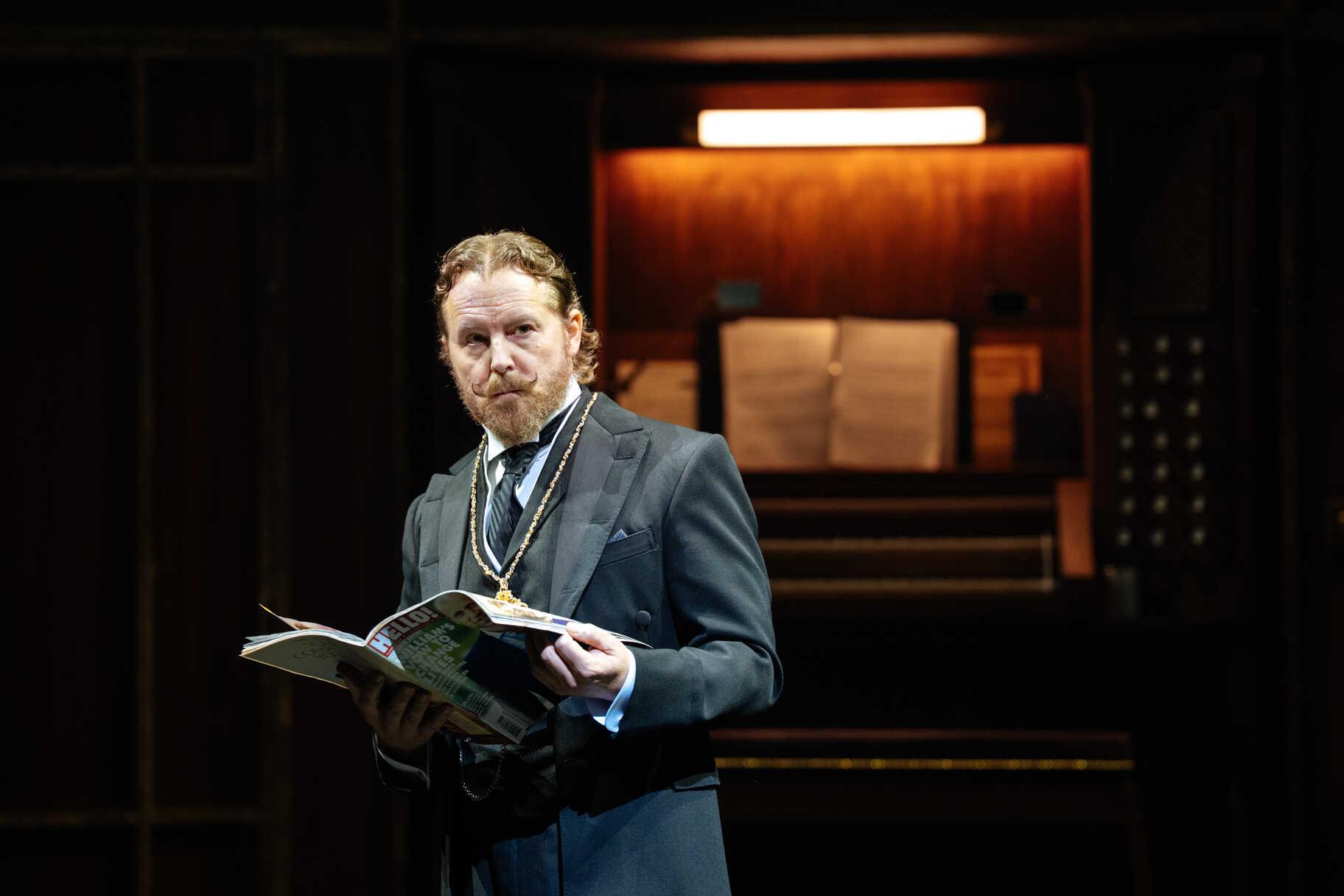
Bog Witch

Photo by Lucy Powell

Bog Witch by Bryony Kimmings – Soho Theatre, Walthamstow

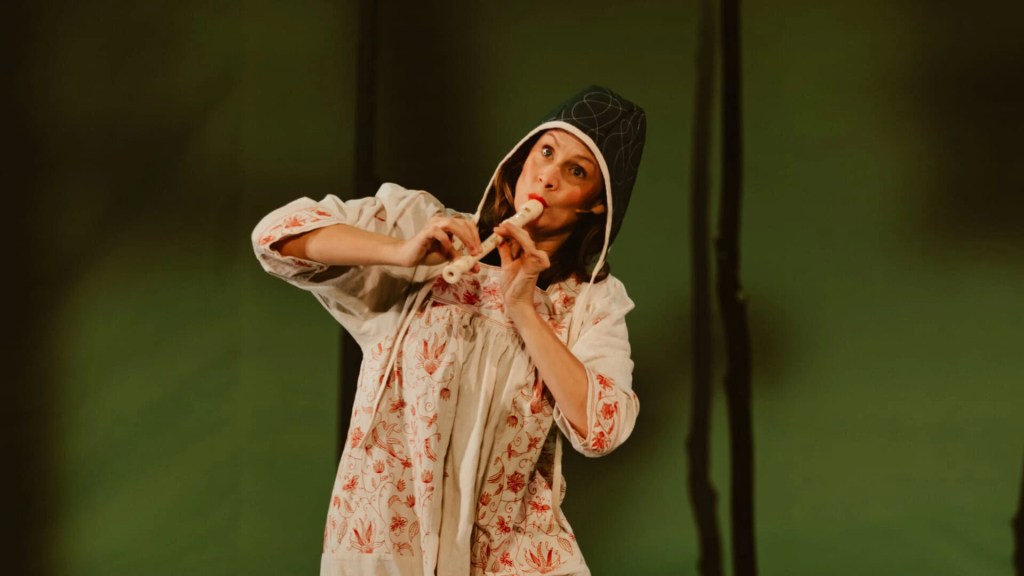
Bryony Kimmings’s last show was in 2018, in a different era. Her disturbingly personal and raw shows made her a 2010s fringe star. Her unpredictable, apparently chaotic style proved highly influential on the style of alternative theatre performers. Now she’s back with her first show since having a son, separating from her partner (Tim Grayman, well known to audiences from their joint show, Fake it ‘til you Make it), and moving to the countryside with a man called Will. Bog Witch unpicks this experience. To some extent it is classic Kimmings. She is disconcertingly direct, about herself and the way she feels, tells rude jokes, and wears ludicrous costumes. She is a very engaging performer, always undercutting herself with double takes at her own explanations. The audience loves her, and there is a very welcoming atmosphere in the vast, gleaming, newly refurbished Walthamstow branch of the Soho Theatre.

However, Bog Witch does not deliver the energy levels of previous Kimmings work. The size of the venue does not help. Beautiful although it is, the new venue is much larger than any comparable fringe venue and there is a sense that this show would have worked better in a more intimate space, more suited to Kimmings confessional style. Working (for the first time?) with a co-director, Francesca Murray-Fuentes, Kimmings works hard to occupy the cavernous stage, using everything from a long white backcloth to an epic witch costume, rustic paraphernalia and an amusing ‘burning at the stake’ tableau. However, the work to achieve this detracts from the show, with Kimmings often engaged in moving props around.

There is also a lack of the wildness and abandon apparently promised by the title. Bog Witch is a controlled show, which threatens to flatline at a couple of points in the second half (not that there is an interval, despite the near 2-hour running time). The themes she is addressing are very grown-up – depression, miscarriage, social compromise, climate responsibility. She (her performance persona, that is) seems changed by her experiences of getting older and having to compromise more, with some of her edges rubbed away. We have to buy into her changed self to stay involved in the show. The story of redemption she has to tell lacks excitement at times, and the audience-participation finale is somewhat flat. Although watching Kimmings on stage is always a good use of time, this is not the most driven or electrifying of her shows.

L’Addition

Bert & Nasi. Photo by Vincent Zobler.

L’Addition by Tim Etchells / Bert & Nasi – Battersea Arts Centre, London

Published at Plays International

As part of Forced Entertainment’s continuing  40th anniversary celebration, co-founder Tim Etchells has devised a two-hander in which reality is pushed to its breaking point through the basic mechanism of a classic farce set-up. A restaurant customer sits down at a table, the waiter offers him wine, pours a little, he tastes it and nods approval, then the waiter pours him a glass – but he carries on pouring until the glass overflows across the table. There’s mild panic from customer and waiter, when he realised what he’s done, he sweeps up the tablecloth with everything on it. Then they begin again.

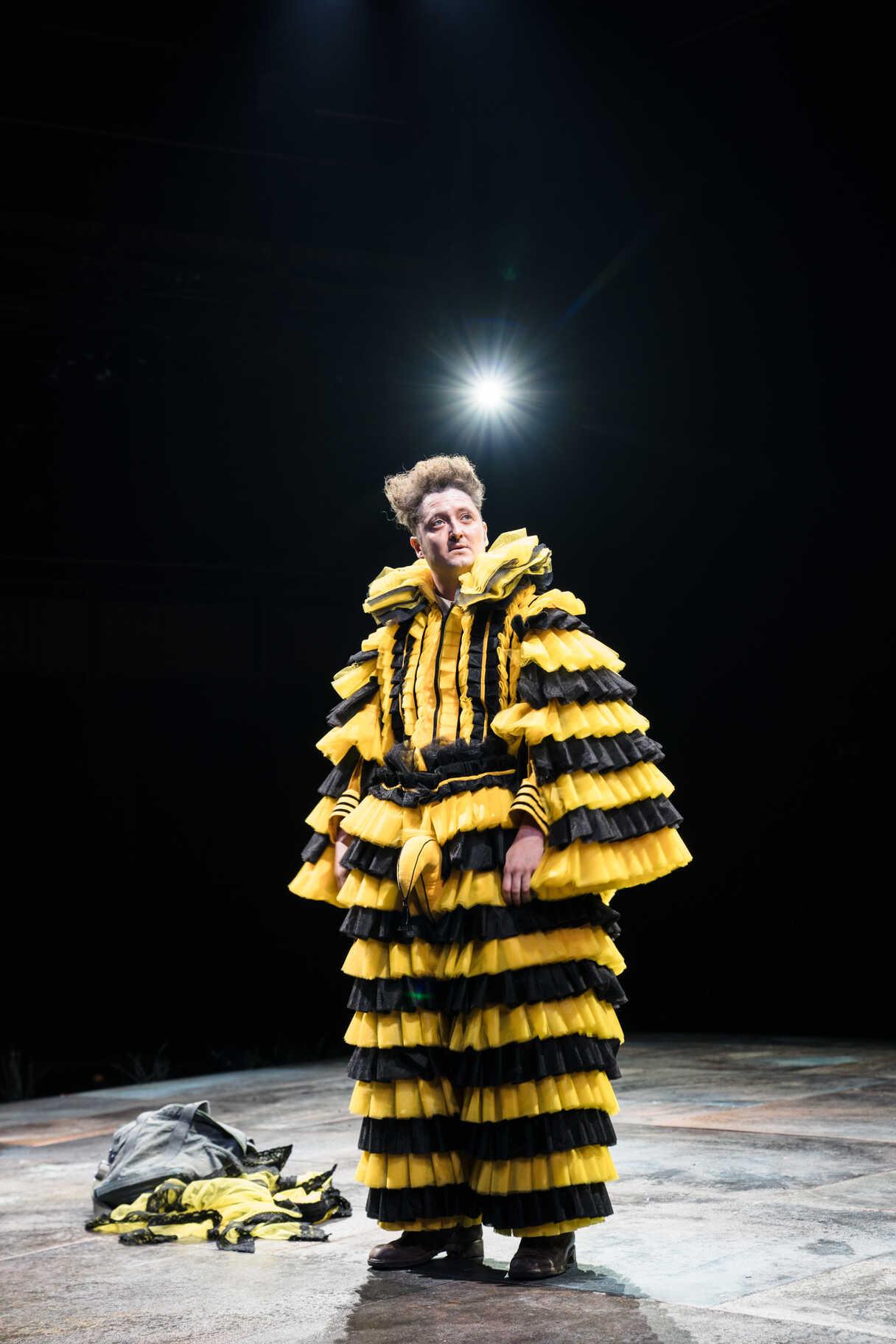
From the moment they walk on stage, the performers, Bert and Nasi, are a comic timebomb always threatening to go off. Bert is English, bluff, matey, confident, and usually wrong. Nasi is French, smooth, conciliatory, and also usually wrong. Together, the pair are a well-oiled machine displaying comic skills that it is a joy to behold. Much of L’Addition is very funny. The comic scenario breaks apart continually under examination, becoming more and more ludicrous and hilarious. The performers know how to hold back comic gratification so that, when it comes, it is a true release. At one point Bert as the waiter, constantly laying and relaying a tablecloth, finally loses it completely and performs a strange, wild dance with the cloth which seems to continue for several minutes as Nasi looks on, astonished. The audience are beside themselves.

However, like all classic comedy L’Addition is buoyed on a tide of existential sadness. The underlying themes in Etchells’ piece are barely stated, but it becomes apparent that the show is concerned with , existence, ritual and death. There is a moment that stops everyone in their tracks when the pair fast forward to a point 50 years in the future, when they are still performing their skit. Then it dawns on them that much of the audience will no longer be alive, at which point it sinks in with each of us too. The process of ritualising and mythologising existence is examined too, as the scene becomes something different through constant repetition, a tribute to its original self enacted by people who cannot remember the original, or why they are doing it. But they know they have to, just as we know we have to eat, sleep, repeat to exist.

L’Addition, which was originally presented in French at last year’s Festival d’Avignon, is a brilliant piece of theatre. Tim Etchells, Bert and Nasi work together with a precision that most performers can only aspire to. In the influential tradition of Forced Entertainment, the show’s power is in inverse proportion to budget, complexity or pretension. It belongs to the tradition of silent film comedy, of Samuel Beckett, and of entertainment that takes nothing seriously, but means everything. It is assured, side-splitting and unmissable.

Dr. Strangelove

Steve Coogan and Giles Terera. Photo by Manuel Harlan.

Dr. Strangelove by Armando Ianucci and Sean Foley – Noël Coward Theatre, London

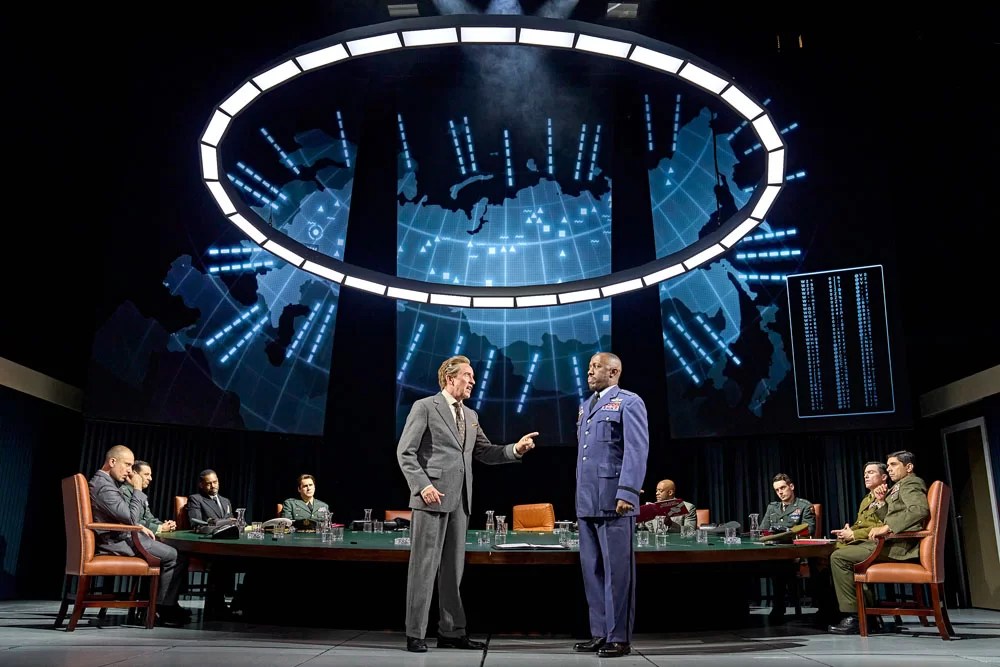
Sean Foley and Armando Ianucci have adapted Stanley Kubrick’s 1963 satire, Dr. Strangelove, for the stage, powered by the willingness of Steve Coogan to go one better than Peter Sellers, and play four parts (Sellers bailed on Major TJ Kong, who was played instead by Slim Pickens). The concept of staging the film is attention-grabbing, and the issues it satirising more current than they’ve been for decades. However, it is not ultimately clear why this story needs to be on the stage. The adaptation, , and Sean Foley’s direction, are very faithful to the film apart than the odd update such as a acknowledgment that the cast is almost entirely male, which does not change the fact it is still almost entirely male. Part of the problem is that it is less a story than a series of set-piece scenes, which work well on film and less well on stage. The film is oddly set-bound, which may have made it seem suited for theatre, but somehow the show never quite takes off.

Coogan is accomplished and highly professional in all four roles: frightfully posh English officer Captain Mandrake; US President Muffley, trying to be reasonable in the face of insanity; Major TJ Kong, perhaps his best role, the gung-ho, bomb-riding B52 pilot with a strange attitude to women; and Dr. Strangelove, wheelchair-bound not-very-ex-Nazi scientist. The play is, inevitably, mostly focussed on him – and the substitution of lookalikes with their backs to the audience while Coogan changes into another costume quickly become distracting. There is also the sense that Coogan never really lets it all out. His performances seem controlled and script-bound, and the moment when he unleashes the madness never arrives.

There is limited space for other cast members to shine, and indeed there appear to be several senior military figures who spend much of the show sitting around the War Room table, never speaking. However, John Hopkins has a lot of fun cast, slightly surprisingly, as the mad General Ripper, who launches a nuclear assault on Russia without permission. His performance has an unpredictable edge to it that is lacking elsewhere, and his conspiracy-theory fuelled spiral seems alarming current. Giles Terrera has fun as General Turgidson, cheerleader for ‘pretaliation’ against the Soviets, but he can’t animate the War Room scenes on his own.

Hildegard Bechtler’s set recreates the look of the film very well, but inevitable involves filling the stage with large immovable objects, notably the giant oval War Room table, and the cockpit of a B52. This does not aid the production’s fluidity. Nor does the fact that the large back-projection is invisible to the substantial section of the audience in the balcony, and has to be replicated on very small tv screens. In fact, the Noël Coward Theatre seems the wrong place for this show, which is too constrained on its tight proscenium stage. It would have worked much better in the Olivier.

The characters, conversations and events of Dr. Strangelove are terrifying close to real life. Much of the film is a documentary in disguise, dramatising the insane thinking of senior US military figures such as Curtis Le May and Thomas Powers, who actively encouraged a nuclear conflict in which they were quite willing, as General Turgison says, for 20 million American to die, as long as even more Russians were killed. The revived nuclear threat following the invasion of Ukraine makes this satire both timely, and as important now as it was then. It is just a shame that the stage version delivers more of a tribute show than a rebirth.