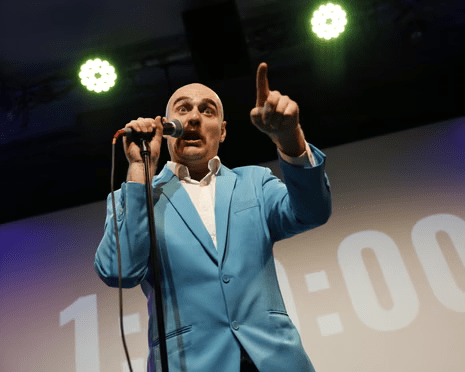
Man Sings the Same Song Over and Over Again for an Hour by Conk and Quiet Riot – Summerhall
He does, and it’s a very clever idea, conceptually simple but completely fascinating. Australian comedian Conk (Connor Dariol) hits on something special which is hard to described without identifying the song, which would spoil the surprise when the audience first recognises the introduction. It would be safe to say that everyone’s reaction is ‘whaaat?’ Not only has Conk chosen to repeat himself for an hour, he’s chosen a song that many people would avoid listening to just once. But the choice is part of the show’s purpose. As he repeatedly performs the song (15 times) his style changes from a fully energised crowd-pumping hand gesturing performance to something more doubtful. As we hear the dated, sexist and somewhat disturbing lyrics again and again, we are forced to think about what they mean, and what kind of a culture, a generation ago, was producing this material. It’s funny but completely compelling as a show because it isn’t really comedy. An hour with Conk is closer to conceptual art – specifically Ragnar Kartjansson’s A Lot of Sorrow, a film in which The National perform their song ‘Sorrow’ live again and again – than to any stand-up show you might see at the Fringe.

Foriegner by Koan Brothers (Sohrab Haghverdi, Benjamin and Mason Rosenthal) – Summerhall
Foriegner (sic) is an exceptional performance from Sohrab Haghverdi which uses all the power of live performance to get confrontation with his captive audience. He does not feel the need to win us over, as is evident from the first scene of the show, which is simply him coughing over and over for what feels like 10 minutes. He then goes on to crawl around wearing a rug, to talk endlessly about ejaculation and urine, and to excoriate a long list of religions and ethnicities including his two Jewish directors. He intersperse film clips of Summerhall Arts CEO Sam Gough, talking in arts world platitudes. And, yes, he does produce and then drink his own urine on stage. The rationale for such an unpredictable and off-putting performance is political. Sohrab is Iranian, trying to escape from the Iranian regime, which he hates, and settle permanently in the US, which he’s not particularly keen on either. He has no wish to tell the refuguees story we expect, and has decided that doing ‘crazy’ things on stage is the only way he can get a visa, through the exceptions offered to ‘genius’ artists’. A scene in which he plays a sperm quoting the philosopher Rumi, who tells us to kill our false selves to live honestly, is brilliantly weird, and a neat summary of Sohrab’s intentions. Foriegner is a startling and original piece of theatre, much more sophisiticated than it would have us believe.
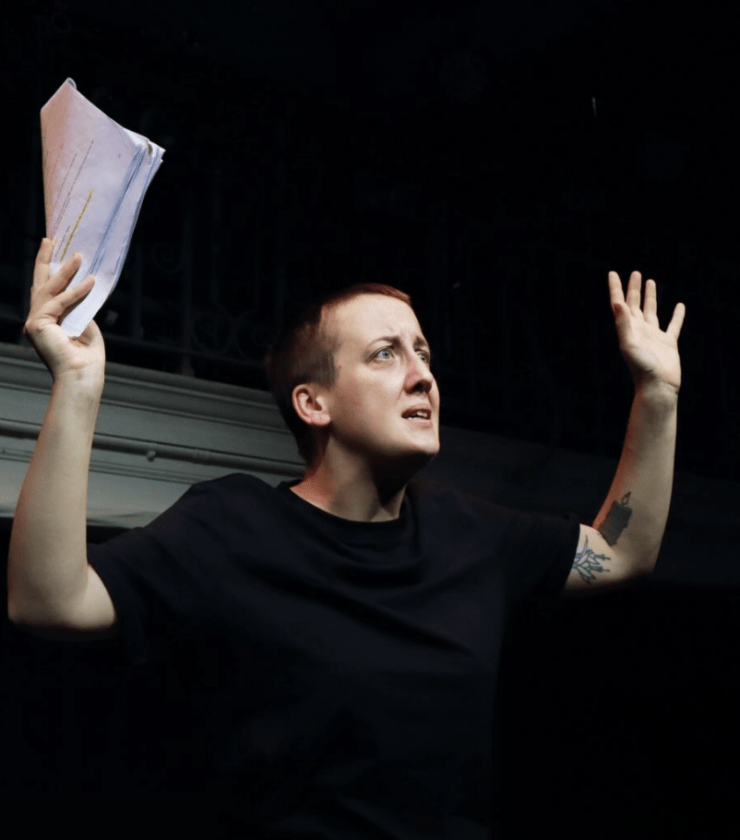
Toast by Jude Green – Summerhall
Jude Green’s show is based on her own experiences of navigating the Universal Credit system to keep her head above water while trying to maintain a career as an actor. It is rather too close to the nose, I imagine, for many Fringe performers, depicting as it does in excruciating but almost comic detail the Kafkaesque bureaucratic nightmare that comes as a mandatory accompaniment to a benefits claim. Green, who claims not to know what Kafkaesque means, plays a helpless character, alone on stage responding to the disembodied voice of the Universal Credit helpline, which also becomes the voice of her equally high-handed agent – played from the gallery by Jack Whateley, also the show’s tech operator. The cycle of jobs that pay nothing or cost her money to take, and general hostility to a sustainable career in theatre becomes increasingly absurd, eventually absorbing the very show we are watching, but the message is loud, clear and important. Who can afford to work in theatre any more?
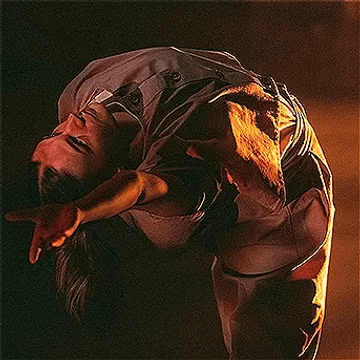
Celtic Collective by Dance and National Youth Arts Wales – Dancebase
Two pieces performed by the National Youth Dance Companies of Wales and Scotland. The Welsh dancers perform Momentum, moving around large mirrors to music by composers from James Blake to Tchaikovsky, which keeps the action somewhat static until they break free late in the piece and the energy starts to flow. The Scottish dancers, performing Afterglow are a larger company and perform in 1920s party costumes in orange, gold and black, with more than hint of David Bowie’s Ashes to Ashes video. They move freely and energetically, impressing with the quality and confidence of their dancing as they appear in changing combinations, crossing and recrossing the stage. An impressive and enjoyable hour of emerging work.
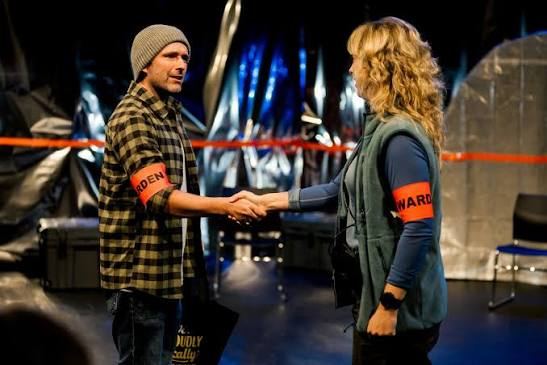
Werewolf by Binge Culture – Summerhall
New Zealand company Binge Culture’s Werewolf is a shaggy dog show, which is silly but entertaining. The audience is confined to the auditorium for five days and nights as part of a national effort to contain an outbreak of lycanthropy. Things start cheery, with breathing exercises and health checks, but the three safe house supervisors become suspicious of one another, and increasing scary things start happening a night, with the house lights off. Members of the audience are given roles which they are not allowed to reveal, so things gets very unexpected and it’s fair to say it doesn’t end very well. It’s an exercise in how much you can wind up an audience in the space of an hour, but it turns out more funny rather than frightening.
EXIT by Circumstances – Zoo Southside
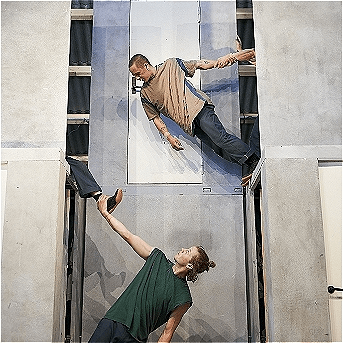
Circumstances are four Belgian circus and dance performers, in a show choreographed by Piet Van Dycke. Their set begins as a set of doors, and they move through them in increasingly complicated patterns, emerging in different costumes and from unexpected directions. The backdrop is white, which makes them look like a human cartoon – specifically like a Morph animation by Tony Hart, with their slightly exaggerated movement giving the impression of characters who are not entirely human. So far, so enjoyable, but the show steadily increases the pace and the stakes, when the central section of the set, 15 feet high, starts to revolve around a central axis, reversing the position of the door then, eventually, spinning wildly. All the while the performers move up, through, around and over it, risking decapitation several times a minute. Their movements are daring bordering on the ill-advised, but coordinated to an incredible degree of precision. It is entirely mesmerising, and the piece gains an irresistible momentum, bringing the audience with it until we reach the end, barely believing what we have seen. It is a tour de force.
Badgers by Malaika Kegode – Traverse Theatre
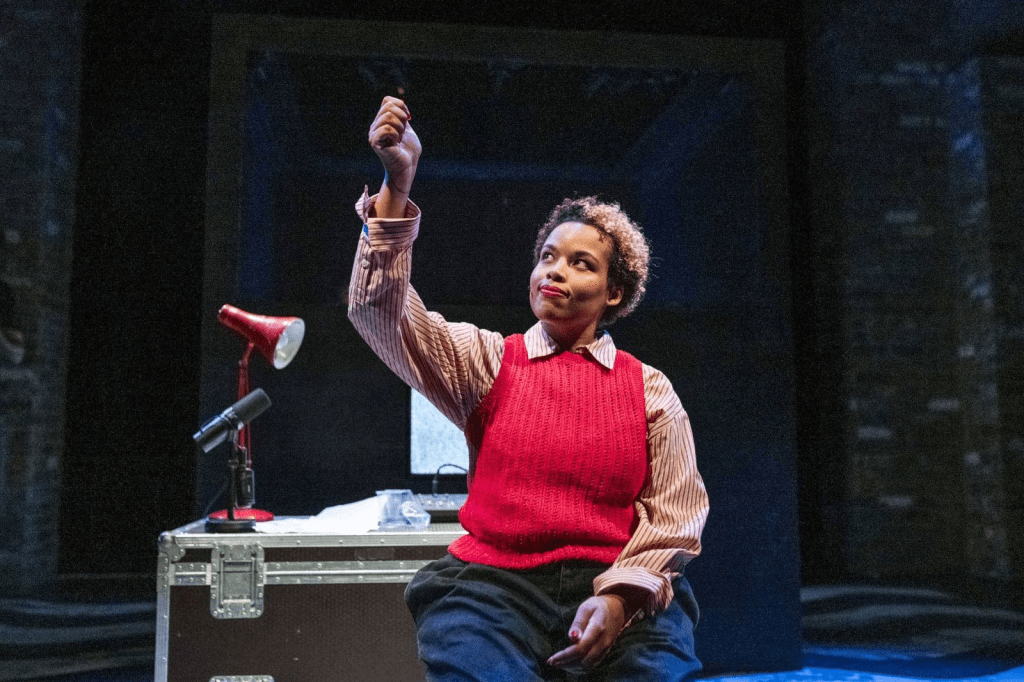
Badgers is written and performed by Malaike Kegode, with backing from a two-person band who perform in a booth behind her – Beth Roberts and Joe Williams. The story she tells is about a folk musician who disappeared ten years ago while recording an album, and may have stumbled on a song with supernatural powers. Unfortunately, this is not a convincing premise. The story seems wilfully whimsical, a characteristic of the worst folk music, and lacking in wider resonance. The characters are highly dislikeable, especially Kegode’s, a podcaster called Meles Costas who combines naïvety with a complete lack of moral principle. She seems to represent a sature of the content-producing era, but we also seem to be expected to engage with and follow her. Kegode’s performance is underpowered – she is miked up in the Traverse’s small studio space which actually makes her harder to hear – and the writing is not of the quality for which the Traverse is justly known.
Soft Spot by Olo Company and Cluster Arts – Zoo Southside
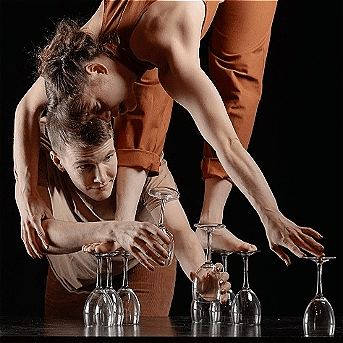
A Swedish piece, Soft Spot is performed by Stina Otterström and Arttu Lahtinen. She is a handstand artist, and he is a juggler. They show their skills through the use of a lot of wine glasses in ways that make the audience hold their breath, partly in terror and partly in disbelief. Lahtinen does not juggle in the traditional sense – he moves, manipulates, spins and stacks wine glasses in ways that are highly precarious. He also arranges them so Otterström can perform handstands on them, upturned, in groups at first and then in smaller and smaller numbers. Eventually they bring on a box ostensibly filled with their breakages and tip a mountain of broken glass over the stage. The barefoot Otterström sweeps a path through the shards, which are all too visible in the stage lighting, and stands on her hands on glasses in the centre of the chaos. The underlying them of the show is trust and interdependence: the two work closely together and everything, including their safety, depends on the other getting it right. It’s ridiculously impressive – hard to classify, but certainly unlike anything else on offer at the world’s largest festival, which is an achievement in itself.
Gameplay by Carmen Collective – Pleasance Dome
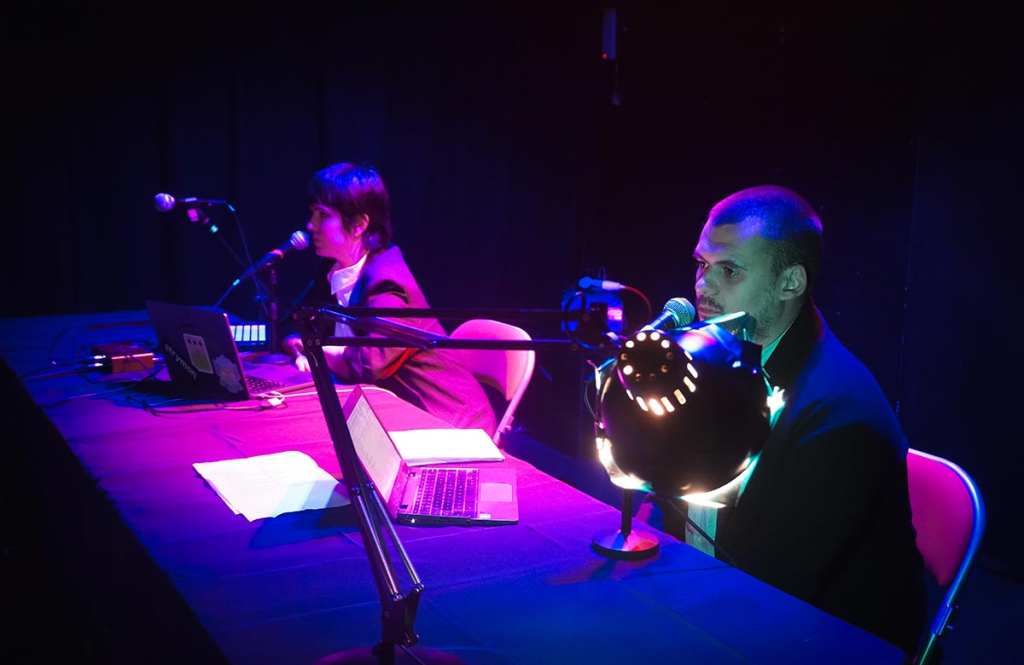
Carmen Collective are performer Sam Rees, musician AJ Turner and producer Ella Dale. Gameplay is a show in which very little happens, but a great deal is described. Rees stands behind a lectern and tells the audience what they are seeing, which is him and AJ Turner, behind a laptop. It is as though he is describing the scene for audience members without sight, before the actual show begins – and this is partially true. The show is designed as an accessible performance, but the descriptive style becomes the show itself, as Turner builds a slow burning electronic soundtrack in the background. Rees tells us about Vasili Arkhipov, an executive officer on the Soviet B-59 submarine, which was off the coast of Cuba in 1962. He is credited with refusing, under enormous pressure, to fire a nuclear torpedo at the USS Randolph, an aircraft carrier it believed was depth-charging them. In doing so, he almost certainly prevented nuclear apocalypse. This story is one of the most consequential in human history (although Arkhipov is, terrifyingly, not the only Soviet individual to have single-handedly prevented nuclear war), and Rees’ matter-of-fact narration builds an unforgettable picture. His detached explanation of the sequence of events that would have ended humanity is reminiscent of Ontrorend Goed’s masterful World Without Us, in which it gradually dawns on the audience that the narrator is describing a world without humanity – a comparison that reflects the clarity and ambition of Carmen Collective’s work. The Arkhipov story is intertwined with a strange, melancholy story from the point of view of notoriously reactionary Daily Mail theatre critic Quentin Letts, attending the theatre and finding himself disconnected and disappointed by everything. In some ways, it seems the show was devised to meet the brief of dropping a nuclear bomb on Quentin Letts, which makes it funny as well as formally daring.
Supposing by Zinnie Harris – Traverse Theatre
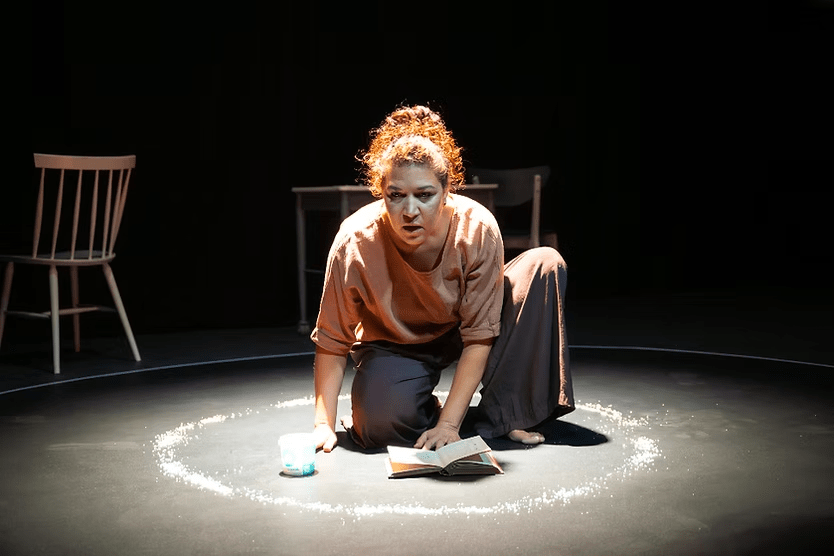
Zinnie Harris’ new play, which she also directs, is about the experiences of a woman who thinks she has been cursed. Sally (Nicole Cooper) falls down a hole in the pavement while going about her everyday business, and afterwards finds herself beset by a Greek chorus who insist, sometimes physically, that she behaves in a way that fits their perceptions of how a Greek drama should be structured. Meanwhile, she gains a Cassandra-like ability to foresee future disasters, and naturally no-one will listen to her. Richard Conlon, as her husband, does his best to be sympathetic, even agreeing to tell the neighbour who hates them that Sally has foreseen she has cancer, but he draws the line at scouring the city for an unidentified young refugee woman who may be about to lose her baby. Performed on a bare set with only a white chalk circle (designer Alisa Kalyanova), the cast are excellent at bringing Harris’ funny but strangely believable writing to life. Cooper is thoroughly likeable, and makes others feel bad for doubting her. But is it all in her head? The truth of what is happening is not really the point – it is ultimately a play about the strains on a marriage, filtered through the extremities of the classics. It is also a play about our times, with the far right and the refugee crisis floating around the margins of the narrative, expertly handled and never overstated. Supposing is an intensely imagined drama which shows us our own concerns through a lens that makes them seem wilder, stranger and more urgent.
How Strange It Is (The Neutral Milk Hotel Show) by Salty Brine – Summerhall
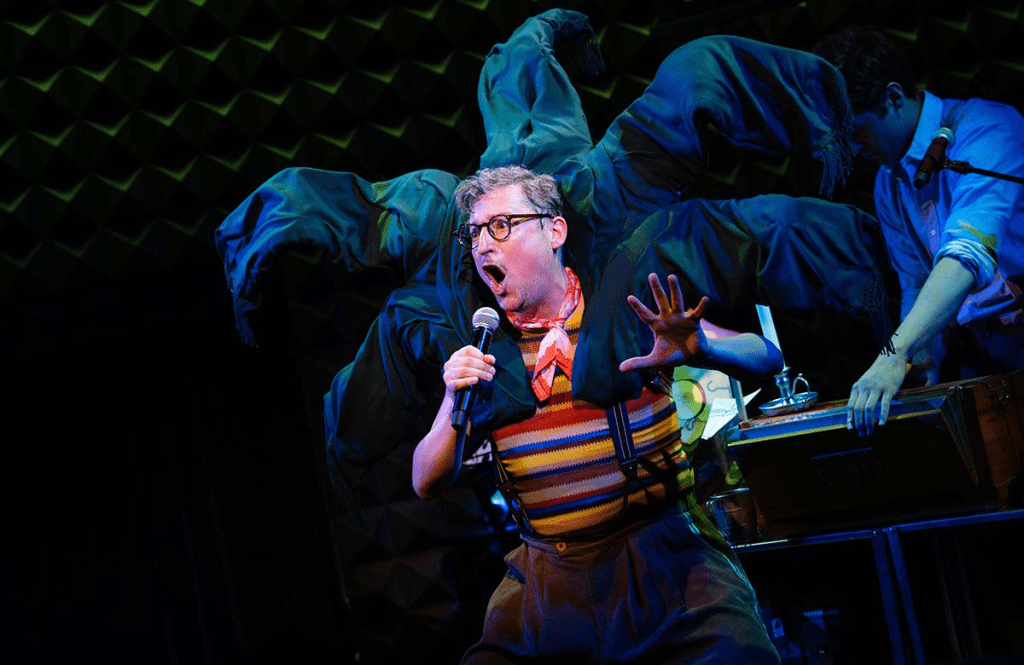
Salty Brine’s 2024 Edinburgh run in ‘These Are the Contents of My Head (The Annie Lennox Show)‘ was a triumph, and has allowed him to scale up (at least in terms of the experimental theatre hiearchy) to a booking in the flagship Disseection Room at Summerhall for his new show. It’s no more than he deserves. Salty combines a book and an album to create cabaret-esque performances that are uniquely his. After Annie Lennox and Kate Chopin in 2024, ‘How Strange It Is’ brings together Neutral Milk Hotel’s 1998 album In the Aeroplane Over the Sea and Anne Frank’s diary. The concept sounds bizarre: the reality is absolutely top notch theatre-making. Neutral Milk Hotel’s guiding spirit is Jeff Mangum, a somewhat enigmatic character who incorporated his fascination with Anne Frank’s writing into a record which has gained a cult follow. Salty somewhat overstates Mangum’s reclusiveness and reluctance to talk about the album – I well remember him curating and headlining a 2012 edition of All Tomorrow’s Parties in 2012 – but the album is gorgeous and it’s succession of irresistible tunes conceals multiple levels of meaning. Against this, Salty winds together his reading of Anne Frank’s coming of age with Peter van Pels, a story that shines out far beyond its tragic context, and his own awakening as a gay man. No-one but Salty could pull this off, delivering a full, astonishly dynamic performance of the album with a backing band while weaving a wider story out of the music. He’s done it before, but it keeps getting better. There is absolutely nothing to dislike about this show, which leaves everyone lucky enough to see it elated.
QFWFQ by Gregory Nussen – Summerhall
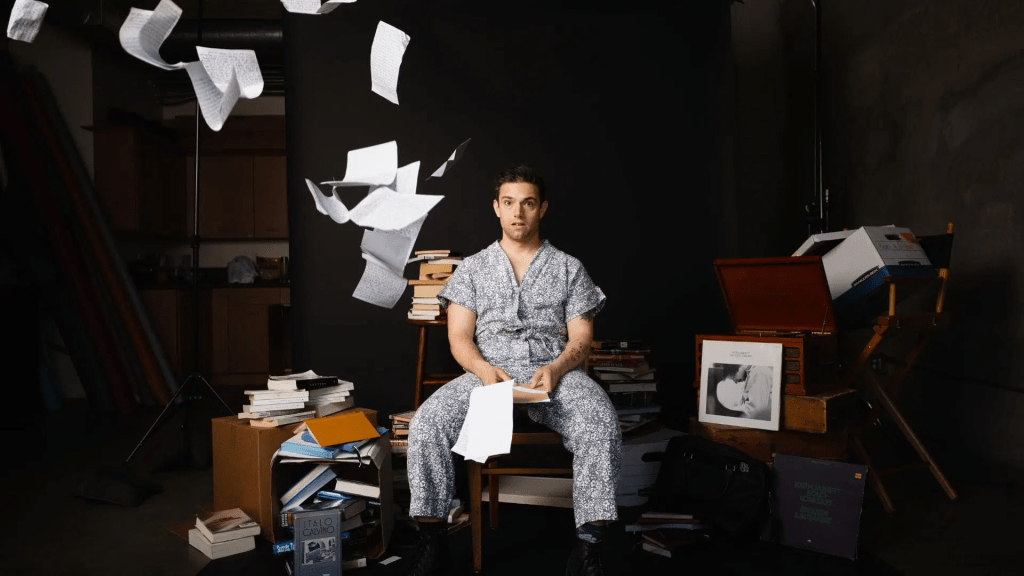
Gregory Nussen’s one-man show has its roots in Jorge Luis Borges. Named after the narrator in Borges’ Cosmicomics, the performance starts with Nussen’s plan to write a show based his book If On A Winter’s Night A Traveller, which is famously a novel about the novel itself and the experience of reading it, rather than any conventional subject. Although he frames the show with lots of self-reflexive material, including interventions from audience members secretly given scripts who claim to be assigned by ‘The Institute’ to inspect his storytelling, it gradually reveals itself to be personal. A story emerges, which becomes increasingly alarming, about his Jewish US upbringing, the messages he was fed, and what happens if you challenge the conventional narrative about the legitimacy of Israel and its actions. What Nussen himself describes as a failed exercise in experimental performance morphs into a powerful exploration of one of the most prominent political issues of our time. Nussen’s charm and self-deprecation work very well to set up a show that tells a story no-one wants to hear – a definition of theatre that matters.
Border Bodies by TF Ciade Dança – Dancebase
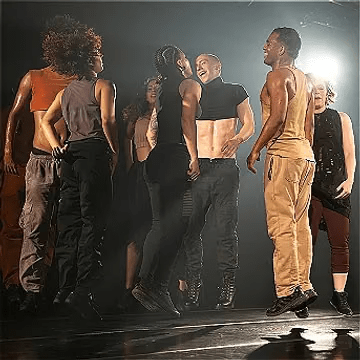
Sāo Paolo dance company TF Ciade Dança perform a work choreographed by Igor Gasparini, which dials up the energy from zero to something way past eleven over the course of an hour. The eight dancers, a mix of genders, ethnic backgrounds and body types, begin with barely perceptible movements as though they are trying to escape shackles. Then they explode into life, to a soundtrack of pulsing beats, moving as group, writhing into stylised, fluid poses while lit like a Caravaggio picture. They are mesmerising as they put their all into a technically very precise sequence in which they constantly move around one another, before finally breaking out into individual sequences, dancing as though they are at club. It’s an exhilarating experience.
Mother, Maiden and Crone by Ewan Burns – Bedlam Theatre
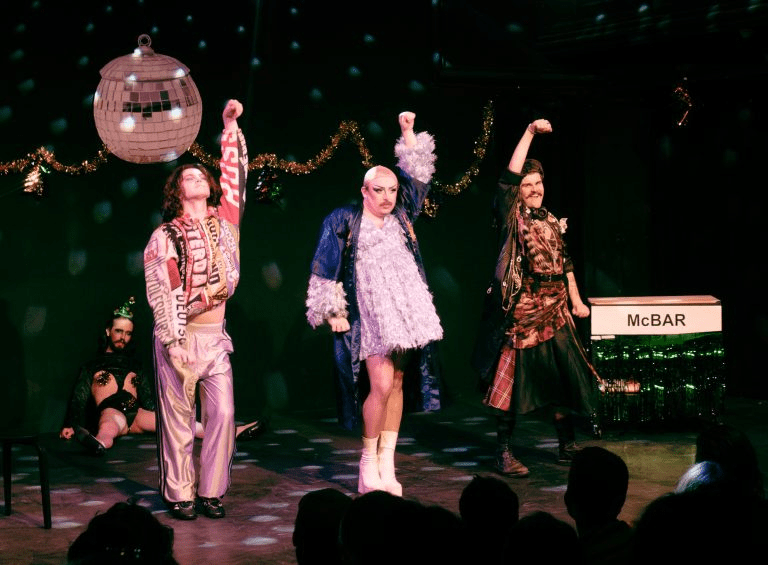
I doubt that anyone except the performers and the group of their delighted friends in the audience understood what was going on during Mother, Maiden and Crone, but that doesn’t mean we didn’t have a good time. The Bedlam Theatre is a last bastion of the old Fringe, before it became significantly more corporatised. The walls of the bar are plastered with Fringe posters going back half a century, and the atmosphere is one of unbridled, unfunded experimentation. It feels essential to the spirit of the festival, and stills draws good audiences and wins awards. Mother, Maiden and Crone is effectively a queer pantomine, about three queens running a club dealing with the horror of hosting a hen night. Parallels with Macbeth are extremely loosed, although it does give a great excuse to kill characters. The performers don’t need the Festival for their show: you get the impression they’d be here anyway, with most of their audiences, trading in extensive in-jokes and scene motifs, essentially playing themselves and not worrying too much about the lines. There’s more corpsing than I’ve seen on stage for years, and it feels like two fingers up to the worst inclinations of the Fringe, which come closer to a hen party than is generally admitted. A show that sits outside star ratings and conventional expectations is, in many ways, something special.
Julius Caesar Variety Show by Joy Nesbitt – Summerhall
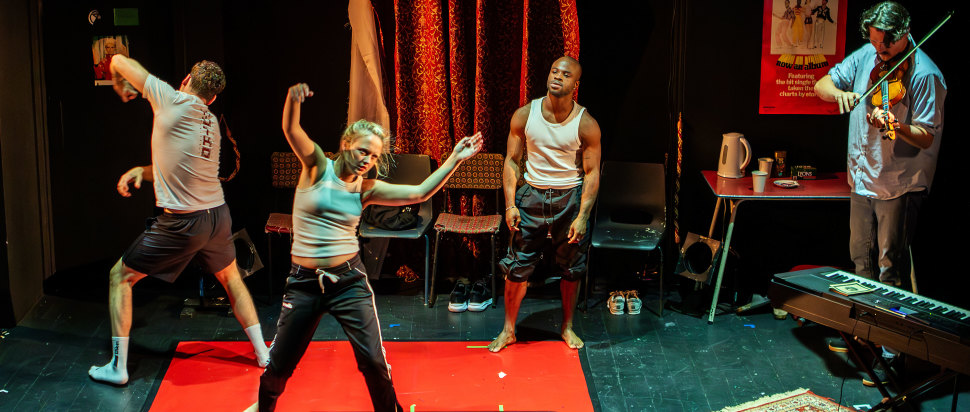
Joy Nesbitt’s play, set in an audition for a production of Julius Caesar, is a satire on the cult of the director, and on people who play lip-service to diversity. It is also set in Dublin during far-right riots resembling those that took place in 2023. As the threat builds outside, the three performers feel threatened in different ways, especially Black actor played by Loré Adewusi. Meanwhile, the preening and tyrannical director (Ultan Pringle) is an obnoxious bully, constantly clamning that the actors must trust his ‘process’. The scenario is promising, but under delivers, principally because the characters are too extreme to feel real, and too annoying to make us care, while there is not enough comedy to drive the play as a satire. The director character is a larger-than-life monster, while interactions between Adwewusi and the gaffe-prone Daniel Mahon seem contrived. Pattie Maguire, as the only woman in the room, plays a character who never seems to settle. The connection to the riots is never fully explored or developed either, beyond the somewhat vague suggestion of parallels with the play. A bloody ending that comes out of almost nowhere, while amusing, feels like something of a cop-out.
Tell Me by Sadiq Ali Company – Summerhall
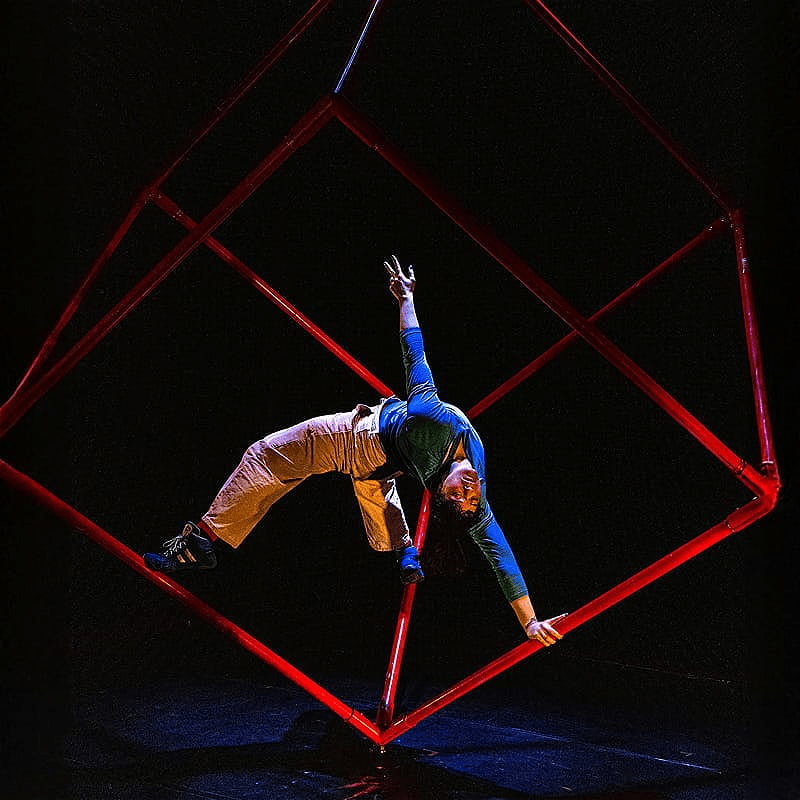
The Edinburgh-based Sadiq Ali Company are circus performers, and Tell Me is an inventive and powerful piece of work. It deals with two diagnoses of HIV, for a man in the 1980s and a woman in 2026, and traces the very different options and trajectories, showing how far we have come in being to prevent a disease which killed so many a generation ago. The purpose of the show it to highlight the threats to this progress from far right politics and funding cuts. The narrative is delivered through a selective voice over, but the medium of expression is the three performers’ remarkable skills. They perform on a metal frame, two metal cubes suspended within it. Their feats of flexibility and strength escalate, to the audience’s astonishment, as they pull off moves that are more and more risky and unlikely. It’s not just a display of skills though – the choreography is coherent and highly expressive, and the show is moving and complete.
Collaborator by Ockham’s Razor – Pleasance at Edinburgh International Conference Centre
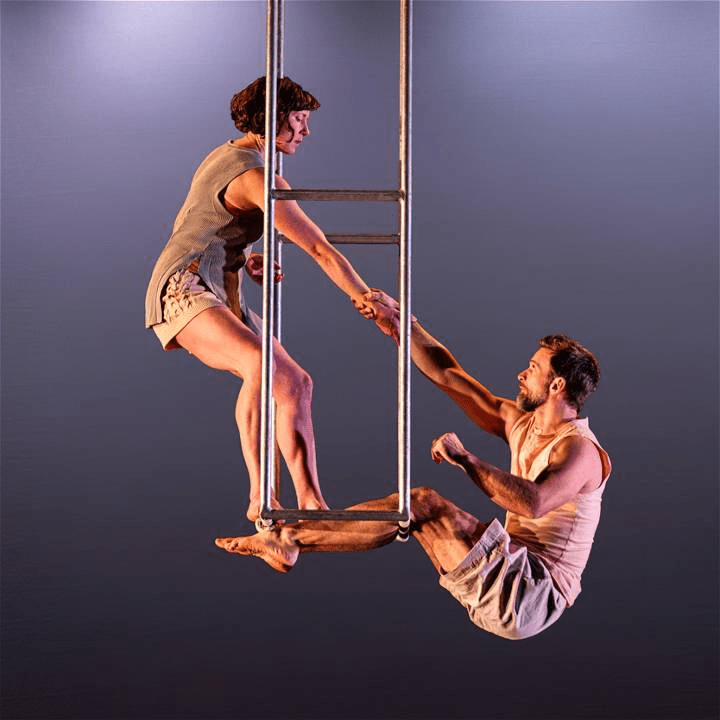
Ockham’s Razor are led by circus performers Charlotte Mooney and Alex Harvey, who met at circus school twenty years ago, married and started performing together against their best instincts. They went on to build a company and fascinating CVs, but it’s been a while since they performed as a couple. Now 47, they do it one final time, devising a show which is just the two of them, and expresses the trust and tensions of marriage and interdependence. Collaborator is genuine and moving, and a huge physical achievement. Much of the show is performed inside an open, metal box suspended 20 feet above the stage. Even hanging from this height would be too much for most of us, but it’s their resting position as they prepare for fluid sequences of intertwined moves, as they raise, support, lean and lie on one another, all in mid-air. It’s mesmerising to watch, and the couple’s charm is unmistakable, down to Charlotte’s need to find her glasses every time she talks to the audience. The show has several segments, including sequences using pendulums and digressions on wave theory, some of which work better than others. However, at its best – when they are showcasing their circus skills – Charlotte and Alex own the stage one final time.
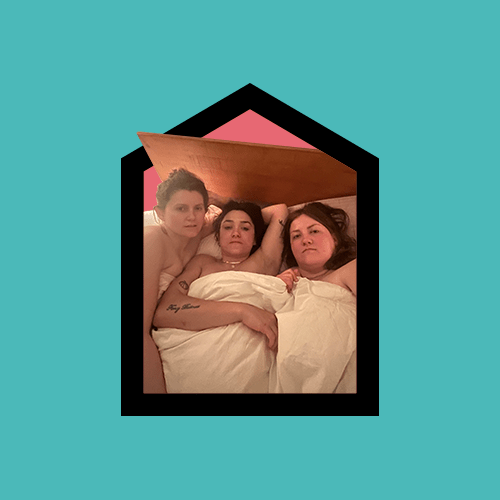
Bits of In Bed With My Brother – Shedinburgh at Zoo Checkpoint
In Bed With My Brother broke through with their exceptional, unpredictable show Philosophy of the World at the 2025 Fringe. For one night only they reprised highlights of their previous career, which goes back to 2016 when they got together in Exeter. Nora Alexander, Dora Lynn and Kat Cory claim to have performed this succession of very silly and highly entertaining sketches before, but it is quite possible they were making all this up. They also open the show by describing them as ‘shit’ and, having lowered expectations, are to do precisely as they please for the rest of the evening – a very freeing strategy. This includes a whole series of throwaway non-sketches including Soup and a Towel, which is like Vic and Bob with more nudity, and a game of Guess Who? in which they ‘flip’ members of the audiences. Kat takes all her clothes off and pretends to heat up a vindaloo in a microwave. They show a dance they claim never to have got right and eventually, invite a trio of pre-briefed young men up on stage, who do it perfectly. Then they have to finish because the stage manager says they’re 10 minutes over. Everyone in the room enjoys every minute of a show that illustrates what is possible with the confidence to be as silly as you can possibly be on stage.

