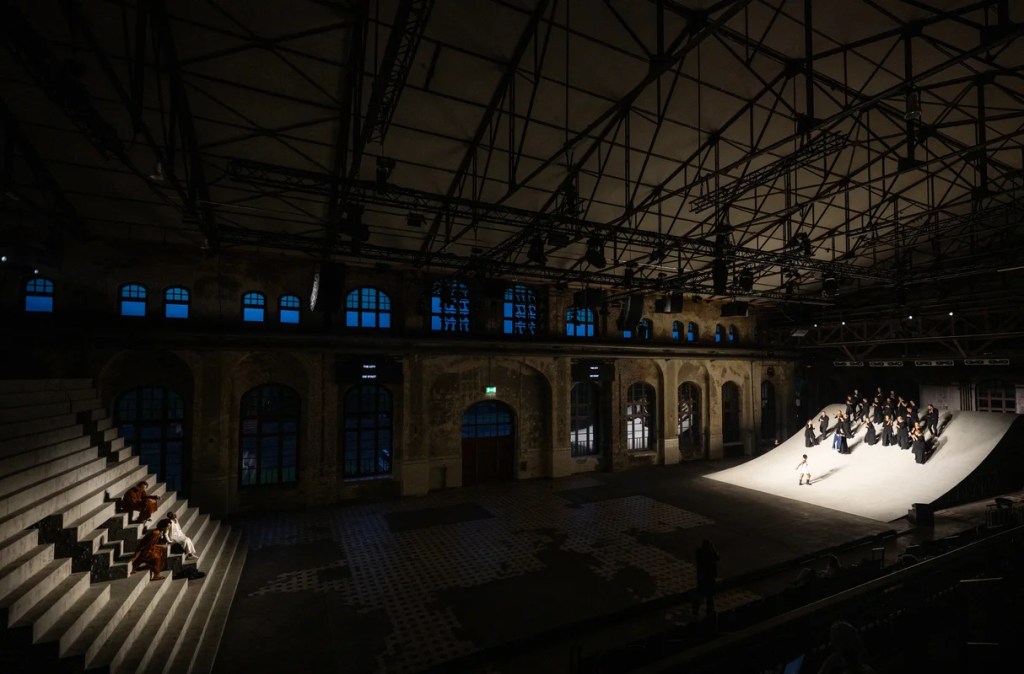
The huge Maschinehalle, once the engine house for the Zweckel coalmine in the heart of Ruhr, looks as much like a mansion as a place of work, with balconies, staircase and a space inside like a ballroom. Standing alone, surrounded by forest, it makes a bewitching venue for Lisaboa Houbrechts’ production of Siddhartha, adapted from the novel by Herman Hesse about the journey towards enlightenment made by a young prince in the time of the Buddha.
Siddhartha by Herman Hesse, Lisaboa Houbrechts, Caroline Shaw, Latvian Radio Choir – Maschinenhalle Zweckel, Gladbeck
The scale of the production matches the space, which is especially wide, and ideally suited to the grand, symbolic gestures which structure the production. Houbrechts not only directs, but has also written what is described as ‘the libretto’. The production has a cast of 27, most of whom are members of the Latvian Radio Choir, providing a chorus which is varied, and at times stunningly, performed. They move through the production as a group of fully committed extras, directed and managed in great detail, contributing throughout. They combine singing with movement, resulting in a series of very memorable moments. The cast process, slowly and deliberately, in copper robes, carrying flaming brands, and performing a piece using only intonations of breath. It is as though an ancient ritual has sprung to life in front of us. Dressed in black and white they form a village, and later a town, while performing a varied, impressive soundtrack which includes the entirety of Caroline Shaw’s ‘Partita for Eight Voices’. At one point the choir also sings the first lines of ABBA’s ‘Lay All Your Love On Me’. That they not only pull this off, but make it a moment of extreme poignancy, is testament to the production’s confidence. The show has a musical leader, Christian Balvig, and Casper Clausen working on soundscapes, while Kaspars Putnins conducts the choir on stage as part of the ensemble. The scale and impact of a choir, filling the space both physically and musically, is a result of many people’s work.
Credit must go to Oumar Dicko, whose costumes are a key part of the setting, and to set designer Sammy Van den Heuvel. He bookends the remarkably wide stage with a set of white steps on one side and a long white slope on the other, each a good 20 feet high. The steps represent the hard way, and the slope the easy way, but the latter of course is not as easy as it seems. Houbrechts has adapted Hesse’s novel by changing the gender of the Siddhartha, who becomes non-binary, played by a woman – Belgian singer-songwriter Meskerem Mees. Her lead role is demanding, as she has to not only sing but at times express her struggle through pure physical movement, and she does occasionally feel a little lost in the space. The show works best when it fills the room with people, but is anchored by some key performances, including from Sufi singer Zila Khan as a harrumphing, chuckling Buddha, and Claron McFadden as Siddghartha’s mother.
The production achieves some remarkable moments. One is the boat – in the form of a floating wheel – which drifts across the stage as it becomes a river, apparently of its own accord, in a piece of bold stagecraft. Another is the use of the Machinehall’s big windows, open to the trees beyond, as the backdrop to the entire show. The sun sets as the evening progresses, and the natural light fades, bringing us closer together in the room. When the central doors are flung open to the outside, once at the start as Siddhartha begins her journey, and again near the end as the Buddha appears, the effect is simple but startling.
Siddhartha has been five years in the making, and is a fine example of a clarity of vision, purpose and ambition which characterises the best theatre in Germany and the Low Countries. It plays at Antwerp’s Tonelhuis over the winter, before touring, and is very much worth a trip across the Channel.
A simple show, but completely absorbing. Three performers dance to rave music, with a set consisting of coloured strip lights. Yes enough to create the atmosphere of a warehouse party. The dancing is free like a rave, but choreographed, with all three moving in unison. The performers become more sweaty and exhausted as the show goes on, grabbing gulps from a table of plastic water cups. It becomes an endurance test for them. Watching people moving in a situation where you would only ever take part gives surprising perspective on an activity that is expressive, involving and strangely fascinating.
The combination of dance and Holocaust memory is unusual but effective. Roger White has recorded interviews with his grandmother, whose father was Jewish. The family left Germany in 1939, and Marianna’s memories provide a vivid account of the day-to-day persecution and the terror that one day her father wouldn’t come home. He was saved by a tearful policeman, and her recollections include more humanity than might be expected. The darkness is underlined by the dancers whose angular movement is sinister but also tender.
Valentina Tóth is a very accomplished classical pianist and singer, a child prodigy who hated performing. She reclaims performance on her own terms, with a brilliant show that ties together stories of ‘hysterical’ women. She draws on Dutch misogyny and sex abuse scandals with a set of songs that also cover her domineering Russian piano teacher (her mother in disguise), menstruation, revenge (in the persona of a Southern belle) and a song about a rape. It’s tuneful, remarkably well performed and unrelentingly dark and confrontational. She even gives us the Queen of the Night aria. She is very convincing, totally in control and remarkably good.
Ontoerend Goed are a cut above most alternative theatre companies. They strip back the assumptions an audience brings to a production, leaving a blank slate which they then fill in ways that are entirely original. Thanks For Being Here is a remarkable example of their work. The audience is shown itself – footage of everyone entering and finding their seats, and live film of everyone in the auditorium, watching themselves. There is no narrative, and no need to persuade us we are interested. The performance is the event, it’s happening live and it is us. The concept is so simple it sounds like nothing, but it is really something. Everyone is fully engaged, present and hanging on what will happen next. It’s strangely moving and profound, a real masterclass in stripping theatre back to its essence: people together in a room.
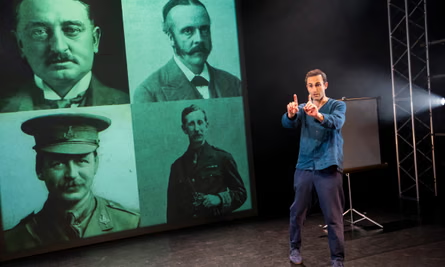
Khalid Abdalla’s one man show is about a lot of things: his family history of political activism in Egypt; his life as an actor, including playing the lead hijacker in United 93; British colonialism in the Middle East; Abdalla’s arrest on a Gaza protest in London; the death from cancer of his friend. He is a charming, charismatic presence and he holds our attention throughout, using a range of theatrical techniques in a production by Fuel. It’s often like an illustrated lecture, with clever camera and projector work. But the show really comes to life when Abdalla uses movement. As a poised, posh performer it comes as a visceral surprise when he expresses his feelings physically. Although enjoyable throughout, Nowhere tries to cover too much territory, leading to history lessons of limited value. It’s at its most engaging when Abdalla communicates his helplessness in a world he cannot change.
Two male dancers are rehearsing a piece, overseen by a rude, cherry tomato-eating director. The comic framing is silly but fun. The dancing is exceptional, with the pair combining contemporary and street dance techniques in a tight knit performance which is exciting. And they do it twice, with a second run-through: very demanding, and compelling to watch.
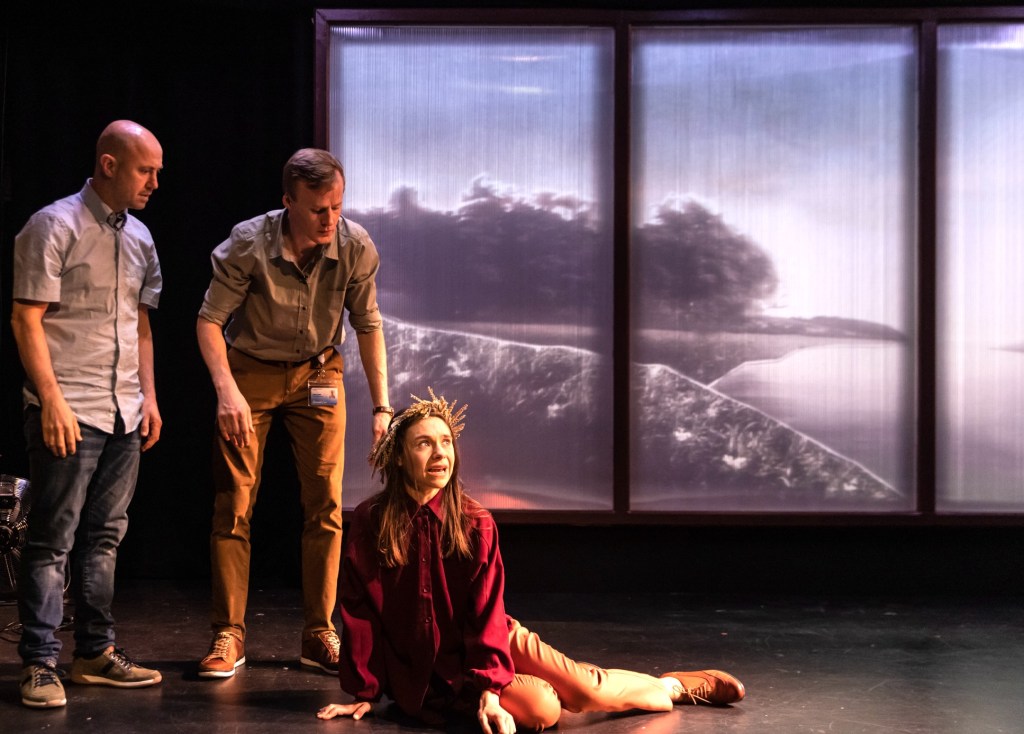
This show creates a fantastical scenario in which an aging actress with dementia is supported in a care home by a small team perpetuating her belief that she is rehearsing King Lear. Her son, whose relationship with her is messy, is asked to communicate with her in character, sometimes and Goneril or Regan, sometimes Cordelia. This Lear, however, has a happy ending in which Cordelia forgives her father. The actor is played for much of the show as her younger self, by an excellent Venetia Bowe. Later she’s a brilliantly handled puppet, then an older woman. The staging, directes by Colley, is very high quality but the scenario does not provide the insight needed to take this to the next level.
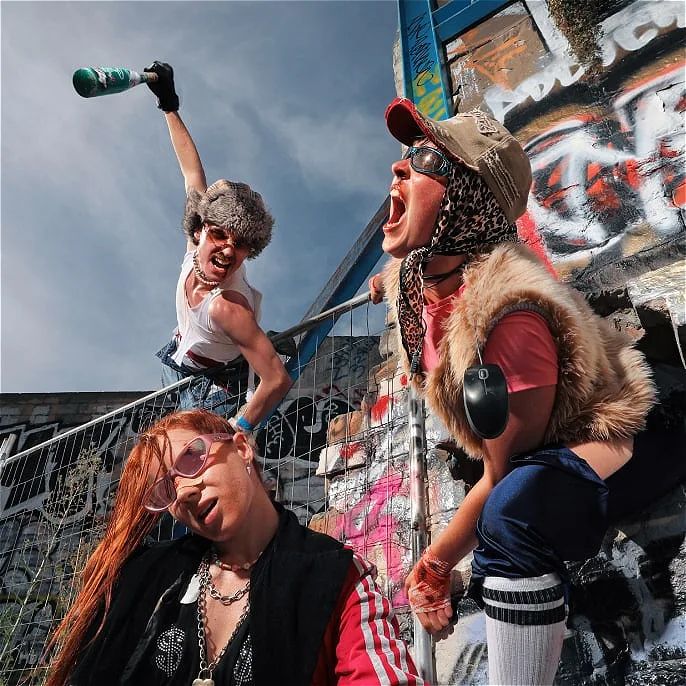
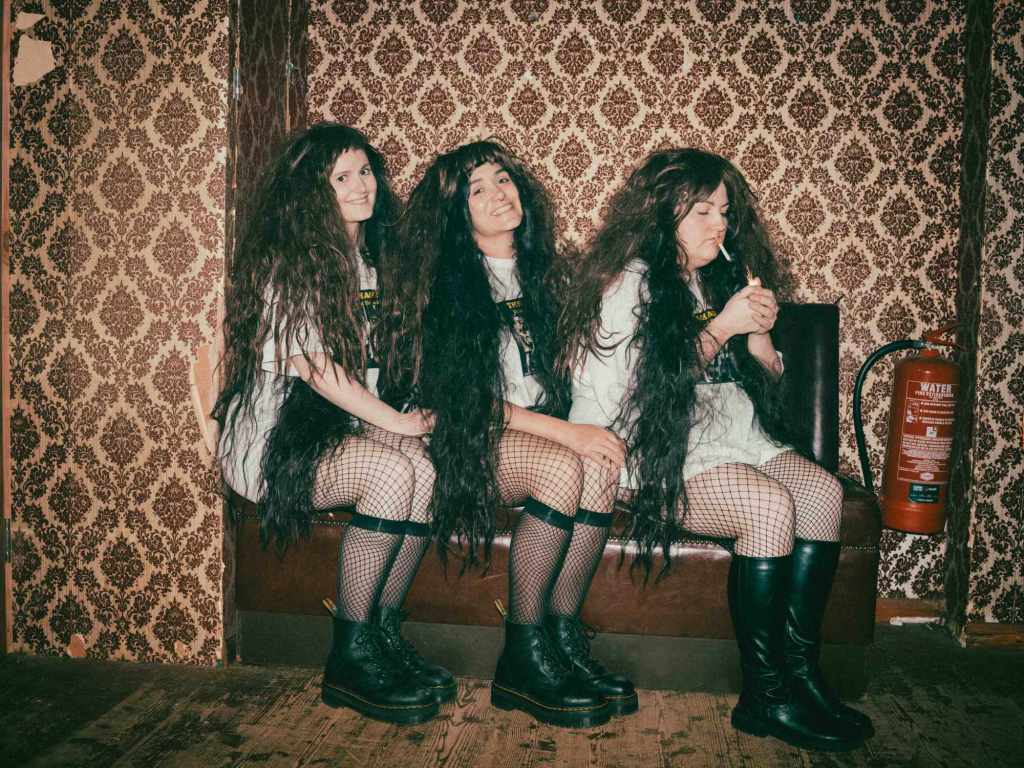
The Shaggs, rediscovered in the 1990s, were forced to rehearse and perform by their coercive father despite having no apparent musical talent. They became proto-punk heroes, but it didn’t do them much good, although Tom Cruise owns the biopic rights l. The three performers who are In Bed With My Brother approach their story in the style of the band – as though they’ve never seen theatre before. None of the conventions of performance are acknowledged, and the show is anarchic, bizarre and brilliant. Their roadie, who doubles as the Shaggs appalling father, is murdered by the trip multiple times and keeps coming back to life. He’s outside selling t-shirts at the end, covered in blood. He represents the patriarchy, which is the real focus of the show’s anger. The story of the Shaggs is told in captions, accompanied by pummelling music and gunfire, but Nora Alexander, Dora Lynn and Kat Cory focus their energy on the society around them, from the male music industry to the arms industry. They are chaotic, confrontational and, despite the impression they work hard to create, rigorously political.
Breaking Bach by Kim Brandstrup / Orchestra of the Age of Enlightenment – Usher Hall
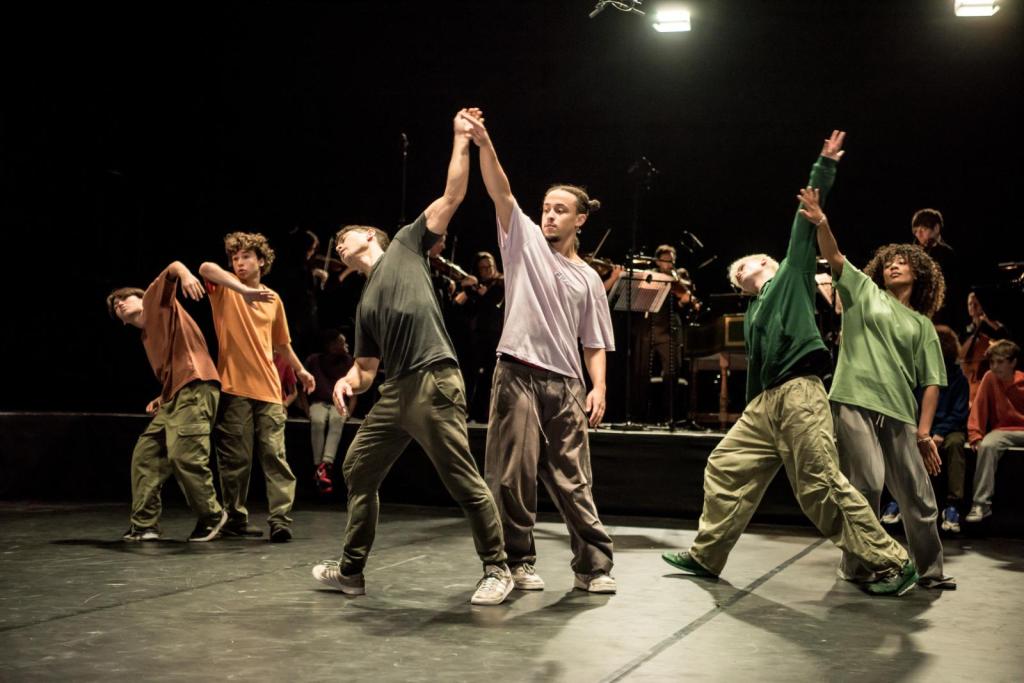
The unlikely combination of The Orchestra of the Age of Enlightenment and street dance, choreographed by Kim Brandstrupz is strangely brilliant. A slimmed down version of the Orchestra plays rhythmically tight Bach, which creates a grid of sound for the troupe combining professionals and young break dancers. They perform on a reflective silver dancefloor, with the OAE perched on a platform above them. The dances are performed in different combinations to Concerto for Two Violins, Brandenburg Concerto No 3 and shorter solo cello pieces. It’s clever and thrilling.
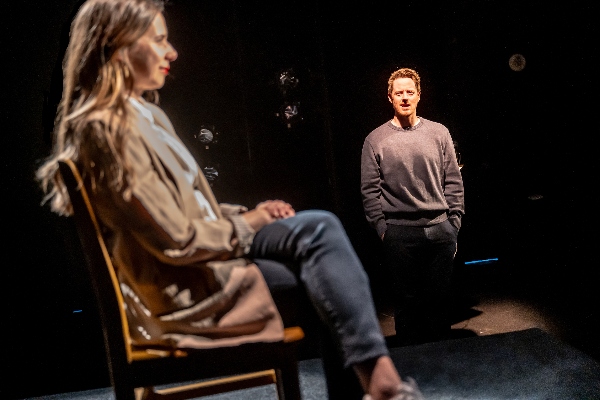
Red Like Fruit is stripped down to two voices – a man and a woman. The woman (Michelle Monteith) is a journalist investigating a domestic violence story with political repercussions. It triggers memories of sexual abuse in her teens, both from a tour guide and her older cousin. She is taking part in group therapy in a gloomy Toronto hospital room We only know this because she has asked a man (David Patrick Flemming) to speak on her behalf. She says little, but her distress is very apparent. The man reads from a script, but at various points she asks him direct questions about what he thinks. The crux of the play is the insidious use of power that leaves women thinking, decades later, that what happened to them may have been their fault. Hannah Moscovitch’s writing is excellent – honed, insightful, lacking cliche. Combined with a simple, devastating production, it makes for some of the best theatre you’re likely to see.
Swiping Right by Sophie Anna Veelenturf – Zoo Southside
Sophie Anna is in her mid-20s. She has been dating on Bumble and, while the majority of her partners are left wingers like her, she’s had short relationships with three politically right wing men. An engaging and sophisticated performer, she tells a story very well, using verbatim performance from interviews she has conducted with ex-boyfriends and people who date across the political divide. The subject isn’t quite up to it though. Her set-up seems too artificial to carry wider meaning. She is someone to watch, and with stronger material she could be exceptional, but it’s hard to shake the feeling that the men in question don’t have well-thought-through political convictions, but are just not great partners.
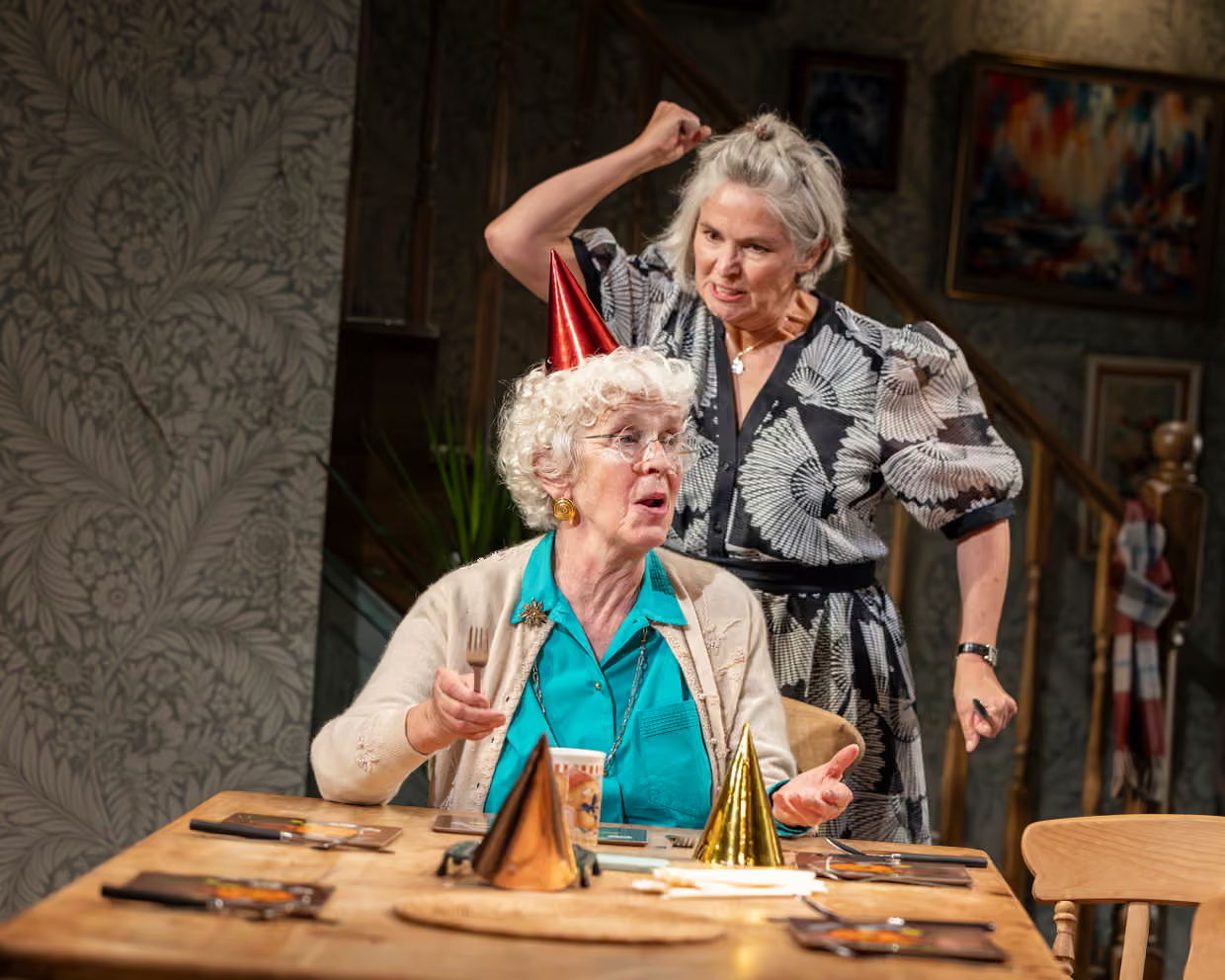
Kelly’s play is firmly in the territory of the Irish kitchen table family drama, in a lineage from Martin McDonagh and Marina Carr. Four generations of women gather for a celebration but it becomes very clear that something is wrong. The play has high quality elements and is often very funny, but is also uneven. The great granddaughter, Muireann, is a bundle of clichés about over-sensitive Gen-Zers. The great grandmother Eileen (Julia Dearden) is a foul-mouthed force to be reckoned with, and Dearden’s performance is the highlight of the show. The remaining women are neither Gothic caricature, nor believable individuals, leaving the play stylistically stranded. It’s funny and dark, but it is never really clear why it needs to be written now rather than a generation ago.
THIS IS NOT ABOUT ME. by Hannah Caplan and Douglas Clarke-Wood for WoodForge – Summerhall
Hannah Caplan’s play is about an on/off relationship between Grace and Eli. It’s told in reverse, partly, in a sequence of timestamped scenes going back several years. Performances, from Amaia Naima Aguinaga and Francis Nunnery are both charming and involving, working the audience expertly in a tiny Summerhall room. They are actors to watch. The writing lacks focus, with too many themes swirling but unresolved – addiction, S&M, depression – all within the structure of a meta drama about writing and truth. It’s promising, but there’s too much for it to hang together.
Mimi Martin’s play, which she performs, is personal. She writes about the Hong Kong democracy protests from the perspective of an expat teen, looking for fun while her parents are away, but caught up in violence. Her writing and energetic performance are very effective at conjuring the terrifying atmosphere of HK as the Chinese police machine brutally crushes demonstrating schoolchildren, including her friend. With the democracy movement shunted off the UK front pages, this feels like a politically important show, but it is also atmospheric, impressive theatre by a talented young performer.
The Ego by Anemone Valcke & Verona Verbakel – Zoo Playground
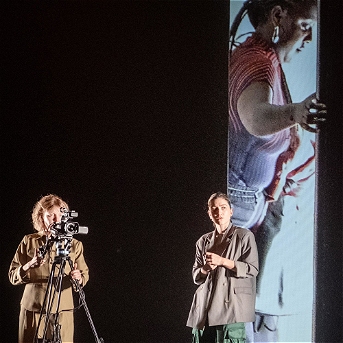
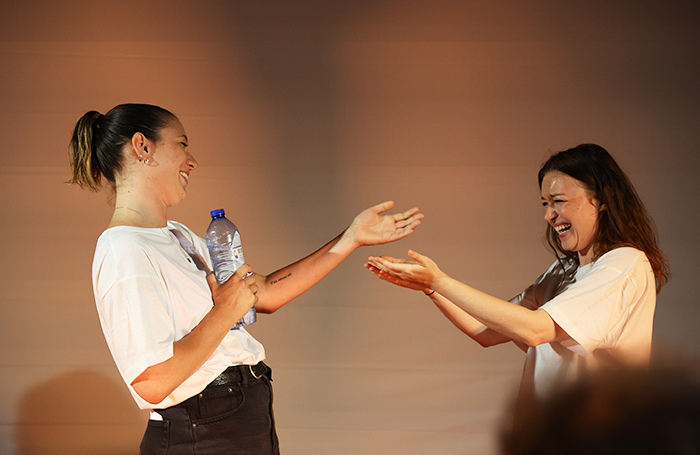
Anemone and Verona are two Belgian actors with limited public recognition and, they claim, more famous friends. Their show is stripped of convention as Verona, then Anemone, present their stories. At first it seems they are telling us about the difficulty of making a living in the industry, but it becomes apparent they are really discussing sexual abuse. Both experienced exploitation as young actors, and some upsetting video footage takes us back to how they felt. It’s not often a performer shows us themselves, outside a role and completely vulnerable. Verona’s video diaries are genuinely shocking. The pair also use music to stunning effect: a version of The Winner Takes It All, playing on its dark lyrics; a wild, exposing, sex simulating dance to Marilyn Manson which is a savage satire of sexually exploitative male directors; and a highly loaded performance to Sinead O’Connor’s Phoenix From the Flames. There’s humour too, as supposedly more famous colleagues from Ontoerend Goed appear in filmed segments. The show is exceptional: uncompromising either in subject or performance style. Flemish theatremakers show us how it should be done.
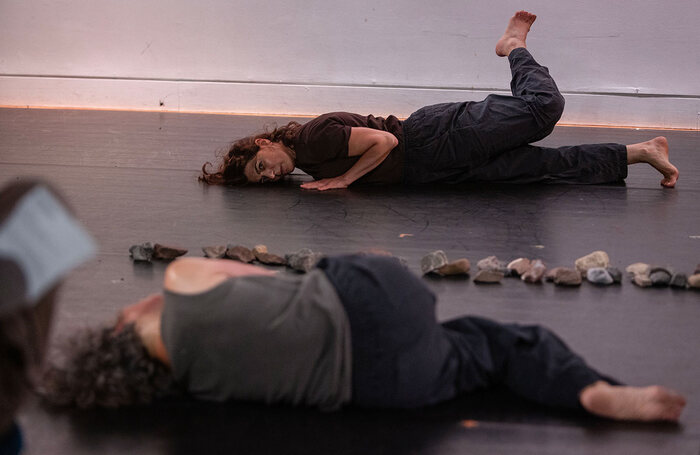
Dancers Merav Israel and Claire Pençak spend much of the performance moving stones around the stage. It sounds a little beyond parody, but actually the experience is mesmerising. The two women take turns to arrange and rearrange rocks in shades of iron and chalk in spirals, circles and heaps. Then they move around them together in a mutually supportive dance. They position stones on one another’s bodies, and move around the space, at one point opening the balcony door. It’s as though they are marking the space in a long, slow ritual. There’s no explanation, and no apology – and by the time it ends, we feel as though we’ve been initiated into something special.
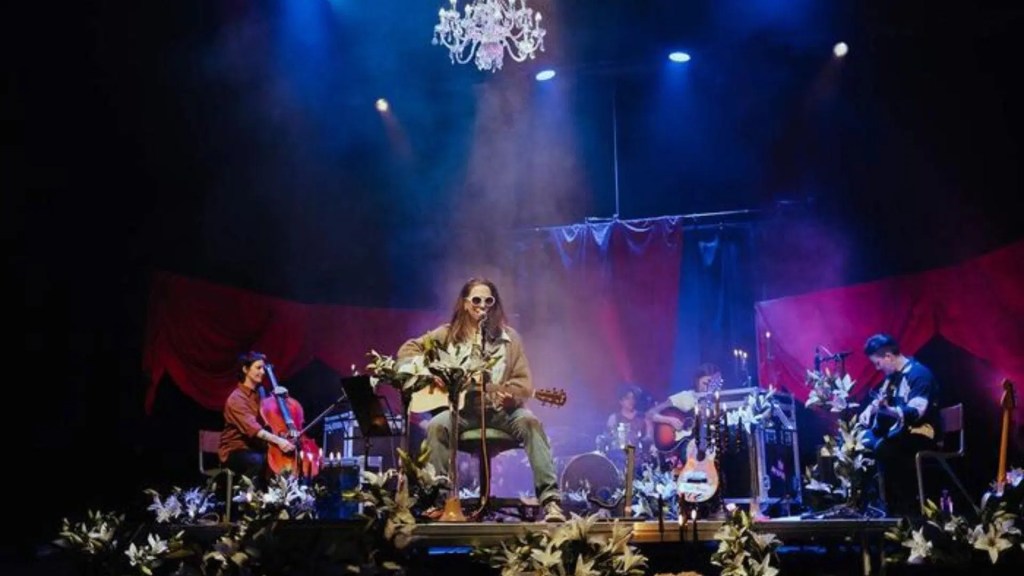
Emma Frankland is a trans woman strongly influenced by Kurt Cobain, and specifically Nirvana’s MTV Unplugged performance. She plays with the internet conspiracy theory that Cobain was trans. While he certainly wore dresses, the significance is more in the cultural weight he could have lent to beleaguered trans identity if it has been true. Emma plays a raw version of All Apologies, drips black candle wax over her bare torso, smashes her guitar, sets fire to the case and performs an Icarus sequence. Despite powerful ideas she spends a lot of time moving props around. It’s impossible to take issue with the heartfelt plea for trans rights, but the show lacks coherence.