Mustard

Mustard by Eva O’Connor – Summerhall, Edinburgh

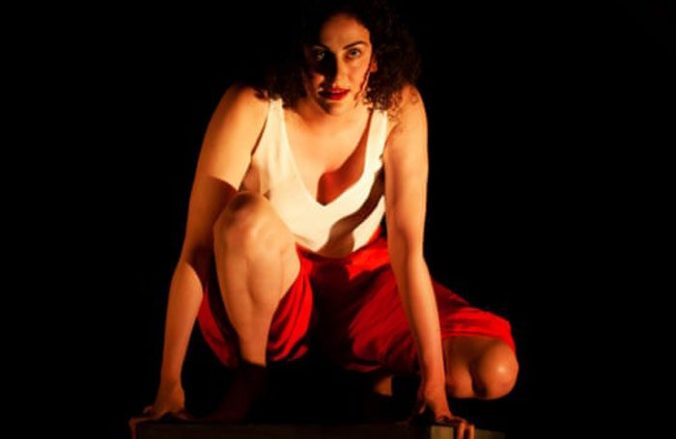
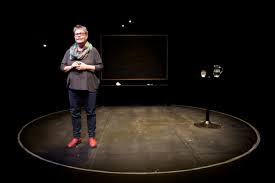
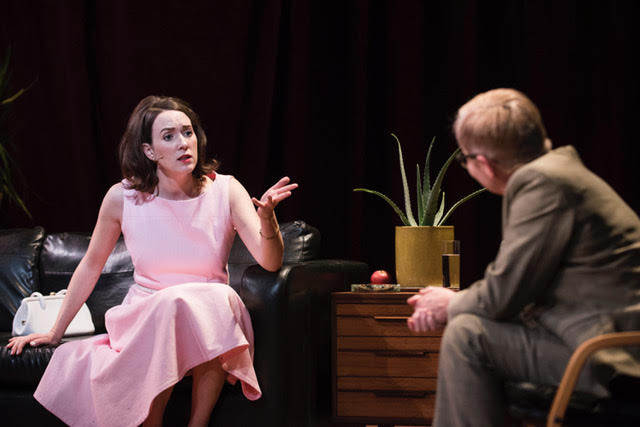
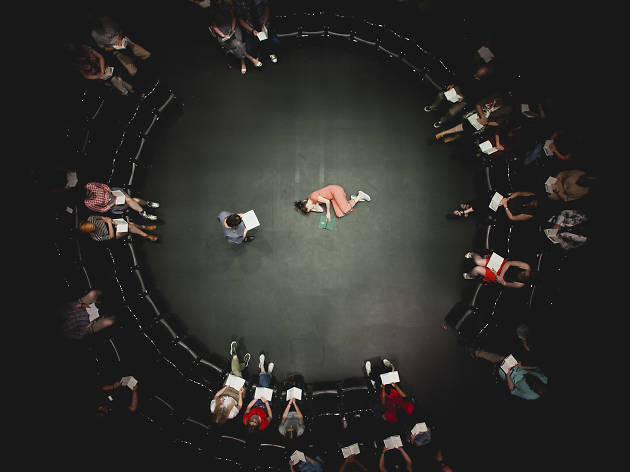
An Irish woman tells, in her own words, the story of her relationship with a cyclist with a large house in Crouch End. He is arrogant, and she comes second to the bikes. But she has her own issue, not least that she is obsessed with mustard. It clouds her mind and, in a memorable scene, covers her body from head to foot. Eva O’Connor’s monologue is energetic and direct, sexually revealing, but also traditional in form. The script is wordy and, at times, hard to believe. The boyfriend is a complete bastard with not redeeming features, which seems two-dimensional. And the central mustard theme is loose. It is not clear whether it is a metaphor for addiction and instability, or actual mustard. The latter just seem unlikely, particularly in the context of a show that focuses on the banality of life-changing events. A memorable performance, but a tonally uneven piece.

Crocodile Fever

Crocodile Fever by Meghan Tyler – Traverse Theatre, Edinburgh

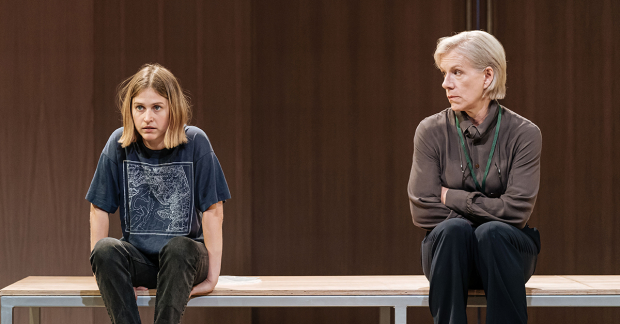
Meghan Tyler’s wild ride of a play takes the patriarchy apart, literally, with a chainsaw. It also takes the same chainsaw, wielded by two woman pushed to the edge, and uses it to dismember the stereotypes of Irish drama. Set in South Armagh, it is a gleeful, Martin McDonagh-esque black comedy with women in the driving seat.

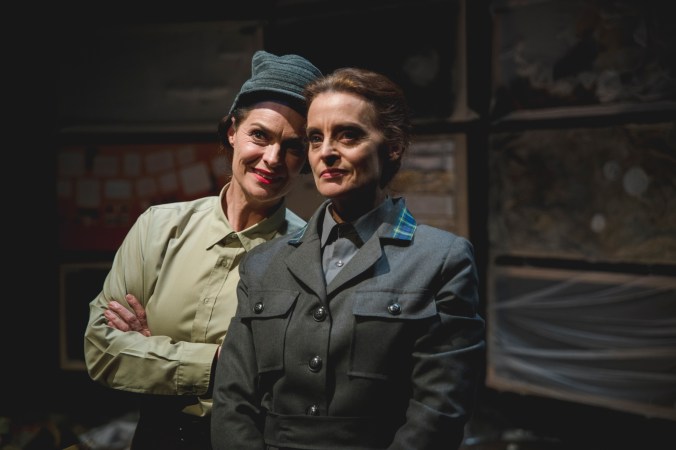
The main characters are sisters, the good one and the bad one. The former, in Mrs Doyle glasses, buttoned down and obsessed with cleaning, is trapped looking after ‘Da’, paralysed upstairs. The other is a rebel, just out of prison and in the IRA. The actors, who are clearly having a fantastic time, perform with immense verve. The plot encompasses a saintly, dead mother, the Paras, a priest, and the tyrannical, abusive father. The surreal, hilariously grim trajectory of events is a delight, as is the writing. Contrasting, skillful moments include a monologue about the true meaning of ‘Africa’ by Toto – Tarantino via Armagh – and the sisters’ realisation that neither can abide the smell of their father’s pipe. No more is said, but it tells us all we need to know.

Tyler takes on the tropes of the Irish stage, from the claustrophobic family to the black terrorist comedy, and puts the women in charge. Crocodile Fever is a confident, seriously entertaining evening, but also a play with meaning layered behind the surreal antics.

Knot

Knot by Nikki Rummer & JD Broussé – Assembly Roxy, Edinburgh

Nikki and JD are a couple, or so they tell us. Standing in front of microphones they explain their story, but how much of it is true? The lines between performance and reality are blurred, but they are dancers and acrobats who express themselves through movement. When they dance they tell the truth. Many of the physical feats in Knot are absolutely terrifying, not least those that involve Nikki standing on the crown of JD’s head before diving headfirst to the floor. He catches her, every time. Many of their moves need a slow motion replay to fully appreciate what they have just done, but their dance is subtle and moving as well as spectacular.

There is no way anyone could perform with such mind-blowing physical commitment without complete, mutual trust. The nature of that trust is unpicked as Nikki and JD reveal themselves, their personal lives and the strange dependence of performers. Knot is both an examination of the everyday cost of being on stage, and an astonishing demonstration of why it matters.

Working on My Night Moves

Working on My Night Moves by – Julia Croft & Nisha Madhan – Summerhall, Edinburgh

I am increasingly convinced that performance artist/theatre maker Julia Croft is a genius. Following unclassifiable shows that have somehow been impossible to forget – most recently Power Ballad – she returns to the Fringe with a show in which she spends a lot of time rearranging the furniture. In an auditorium that seems unprepared, she makes us watch her work. She moves ladders, sets up lighting and, gradually, suspends a stage full of utilitarian objects from the ceiling. In the midst of turning the world upside down, she creates moments of intense, weird magic from nothing, except a well-chosen prop or two. These include an unnerving dance, her head obscured by a cloud of black balloons, to ‘The Spy Who Loved Me’; a space walk, wrapped in foil, to the Killers, and some very odd moves dressed as Dorothy from the Wizard of Oz. Throughout, she is assisted by her sound woman, dressed identically, who helps with the heavy lifting.

The show is both oblique and direct. We cannot help being activities that, on paper, could scarcely be classified as theatre. They seem to reveal the prosaic reality of work and endeavour,and the overlaps between performance and life. There is also an underlying feminist meaning, the slog of women remaking the world laid out as a challenge. Working on My Night Moves is experimental, beautiful, strange, clever. It is the kind of theatre the Fringe, at its best, is all about.

Who Cares?

Who Cares? by Matt Woodhead – Summerhall, Edinburgh

A fierce indictment of cuts and callous indifference, Who Cares? comes straight from the mouths of young carers in Salford. Verbatim specialists LUNG have taken interviews with schoolchildren who have the weight of the world on their shoulders, and turned them into heartbreaking theatre. Three actors play young people who spent years caring for their parents stricken by injury, illness, depression or misfortune – all while trying to keep up with school. An incredibly isolating experience is unpacked in dark detail, as they are ignored and sidelined by adults, bullied by classmates, and then punished for by teachers for being late because they’ve been dealing with a crisis.

LUNG make it clear, through segments where we hear from councillors and social workers, that Government cuts of more than 50% to local authority budgets have left young carers without support, cueing up a disastrous social legacy and failing the youngest and most vulnerable. The show is campaigning – there’s a petition to sign – but it’s also lively, compelling and beautifully performed by its cast of three, who switch between roles with ease to give a voice to those who need it most.

Equus

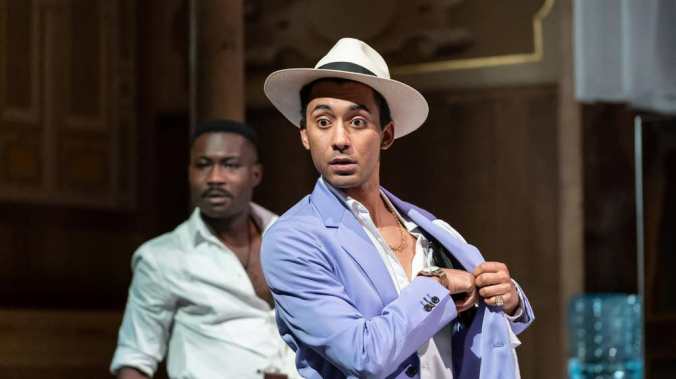
NEW-TheatreIra Mandela Siobhan as the horse Nugget, and Ethan Kai as Alan.

Equus by Peter Shaffer – Trafalgar Studios, London

Ned Bennett’s production of Equus reveals a play that is still troubling and involving as it must have been when first staged at the National Theatre, in 1973. A psychiatrist, Martin Dysart, attempts to communicate with a teenager, Alan Strang, who has committed a horrific crime. Their conversations, and scenes from Alan’s past, are played out in an empty space surrounded by white curtains – an interior space invaded by memories  that burst through the curtains, or slide out suddenly from under them, for example four sandcastles that instantly transform the scene into play’s central memory on a beach. The designs, by Georgia Lowe, help the audience see the isolation of both Alan, the patient, and Martin, the doctor, whose coffee mug surrounded by an open expanse of stage is the only indicator of authority.

Martin, in a remarkable performance by Zubin Varla, is the epitome of a buttoned up, professional of his era, on the brink of collapse and smoking incessantly as the only way to stave it off, while longing for Ancient Greece. He sees in Alan, whose inexplicable blinding of six horses horrifies everyone, a reflection of himself. Martin is increasingly oppressed by normality, and starts to believe that helping Alan to become ‘normal’ could be worse, even, than what Alan has done. Ethan Kai brings a thoroughly believable teenage uncertainty and intensity to Alan, but Bennett’s production highlights a theme that seems to have been missing from previous versions. By showing the horses – usually played by actors in masks – as muscled and gagged hunks of sexuality, it becomes clear that Alan’s repressed attraction to men is at the play’s core.

Alan’s family is tied up by religious and social constraint, and there is a delightfully awkward scene in which Alan and his girlfriend Jill (Nora Lopez Holden) run into his mortified father (an excellent Robert Fitch) at a porn cinema. The moment that haunts him, standing between him and ‘normality’ and causing him to mutilate the horses, who have seen his failed attempt to have sex with Jill, was on a beach. A man riding a horse swept him into his arms and onto its saddle. Horses, whose flanks he strokes and whose sweat he licks, are a metaphor and substitute for a sexual connection with men. This makes direct sense of a play which has been seen as concerned with more abstract themes of freedom in a modern society. Bennett has created an entirely compelling evening, which reveals new layers to Peter Shaffer’s play that we can now only see because we have changed as a society since it was first performed – a sure sign of a classic.

Tao of Glass

5.Tao_of_Glass_Phelim_McDermott__Sarah_Wright__Janet_Etuk__MIF2019__c__Tristram_KentonImage: Tristram Kenton

Tao of Glass by Philip Glass & Phelim McDermott – Royal Exchange Theatre, Manchester

Better known as a director and creator of theatre with Improbable, Phelim McDermott performs Tao of Glass as a one-man show with puppets and musicians. His account of developing he work with Philip Glass is a strangely old fashioned affair, full of inconsequential detail that detracts from the original music, composed by Glass, which accompanies the play. The show is the story of its own making, a genre that is by no means original. At one point Glass, who McDermott is courting in New York for a joint show, notes that he has a thesis for a show. He is spot on, and McDermott’s approach is a rambling, biographical account of inherently uninspiring events loaded with his research into eastern concepts of reality. The title refers partly to a glass coffee table that gets broken by builders, an event that fails to gain in significance when it is narrated in detail on stage. McDermott is a likeable presence, but the feeling persists that Glass was happy to be involved at a distance in a show that is self-indulgent and lacks a core rationale. McDermott gives up little of himself in his harmless, self-deprecating anecdotes and there is no sense of danger at any point. The show’s puppetry, involving scrunched up sheets of music, also offers little new. The one point where everyone holds their breath comes when a player-piano rigged Steinway grand plays back Glass’s improvisation, as though he were in the room. He is not (his agent features a lot, batting away demands) and his declaration, reported by McDermott, that he is “a Steinway artist” and they have an new piano suggests a man fulfilling his sponsorship requirements rather than committing to a creative process.

The Nico Project

The-Nico-Project-at-Manchester-International-Festival.-Credit-Joseph-Lynn.Image: Joseph Lynn

The Nico Project by Maxine Peake & Sarah Frankcom – Stoller Hall, Manchester

A disconcerting figure in a long black coat wanders the stage, smoking a cigarette. She seems to be making contact with former Manchester resident and counter-culture enigma, Nico. When an orchestra of girls in Hitler Youth uniforms join her on stage, the performance becomes officially haunted. An intricate and highly original performance revolves around the relationship between the troubled-yet-uber-cool Nico and an increasingly anxious orchestra.

The exceptional playing of the girls from the Northern College of Music delivers subtle but punchy versions of Nico’s intense, disturbing songs, but they are also integral to the action. When Nico’s deep voice floats out of the ether over the strings, it takes a moment to realise that the sound is coming from two singers on stage, in their teens. Together they produce a sound they have no right to make. Gradually, as Maxine Peake’s captivating performance becomes more agitated, the orchestra starts to act as one. They take their shoes off and their hair down, and stand on their chairs. Their collective possession reflects the demons in Nico’s life – Nazism and heroine being just some of them – without running through her biography. Frankcom and Peake, whose continuing collaborations are producing a series of exceptional productions, have created original, experimental and unclassifiable theatre that gets inside your head.

Juliet and Romeo

Juliet-and-Romeo-by-LOST-DOG-photo-by-Jane-Hobson-2Photo by Jane Hobson

Juliet and Romeo by Lost Dog – The Place, London

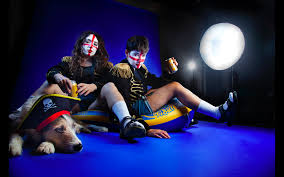
Lost Dog’s productions are unmistakable, effortlessly combining drama and dance across the divide between conventional theatre and dance. It seems so natural that it’s easy to forgot they are pulling off something extremely difficult. Their latest show, Juliet and Romeo, is sophisticated, multi-layered and utterly engrossing. It is funny, sad and, above all, deeply original. Directed by Ben Duke and performed by him and Solène Weinachter, the pair are Romeo and Juliet. They are in their mid-40s and, it turns out, never died. Shakespeare sexed up their story for effect, and their relationship has been haunted by the failure to live up their legend. They suffer from the standard problems of middle-aged couples growing apart from one another, dealing with the pressures of raising children and the disappointments of reality. This clever take unpicks fame, self-mythologising, and the qualities required to deal with life as it is, not as you wish it were.

This inquisition is delivered with irresistible lightness, and a number of dance set pieces that are simply brilliant. The couple perform a clumsy arm-in-face bed wrestle, cleverly catching the experience of sleeping with the same person for years. Juliet likes to reenact Shakespeare’s version of their story, meaning that Duke dances with a dead weight Weinachter, leaving no doubt about how hard work it is, despite her petite form. The two have rather different recollections of the moment their eyes met across the room. Duke dances a very funny, very ludicrous swagger accompanied by The Beatles’ ‘I Want You (She’s So Heavy)’, while Weinachter wants him to glide across the floor to ‘Wild is the Wind’. The humour is balanced by particularly moving scenes, including one in which Romeo tries to distract a dead-eyed Juliet, following a miscarriage. The show is exceptionally accomplished, a top quality performance that disregards art form definitions to leave the audience delighted by Lost Dog’s conceptual insight, physical expression and instinct for theatre.